Search This Blog

Tuesday, March 16, 2021

A To Z Challenge 2021 - Theme Reveal


It seems everyone intending to have a go at this year’s A to Z challenge is already doing a theme reveal. So, here’s mine.


This year I will be posting about Greek myths, including books written on that theme. I’m not a folklorist by trade, but Greek myths and legends have been a passion of mine since I was in primary school. I read Robert Graves’ The Greek Myths when I was about eight or nine. Nobody told me it wasn’t for children, so I just read it - cover to cover, including the footnotes. My sister had to borrow it from a library four times before I finished. Boy, was I disappointed, a bit later, to read a children’s book of myths from my school library! 


I’m quite sure my friends were a bit confused when I told them about the Triple Goddess and the Sacred King. There will be no goddess or sacred king in this lot of posts unless you request them, just the stories and some amazing fiction I’ve read based on them. 


The real pleasure is knowing I shouldn’t have too much trouble, this year, finding a name for the X post! 

The Ides Of March...And Fiction About It

 Yesterday was the Ides of March and everyone was talking about it, both on Twitter and in the newspapers. The newspapers were talking about it because of a political stoush happening here in Melbourne; after the conservatives were wiped out in Western Australian elections on the weekend, our own conservative opposition held a leadership spill, which failed, even though the leader has a popularity rating of 15% in Victoria. But the papers and tweeters enjoyed talking about the coincidence of the date. 

Coin with Caesar on one side,Venus on the other.

And I was busy editing and pruning a story on this very subject. 


In my alternative universe, the Greek myths and some others were more or less true. More or less because various creatures from the myths roam the earth,  but are species, not the individuals from the myths. Gaius Julius Caesar is rescued from assassination by his ancestress, Venus, who leaves an automaton built for her in his place. 


But Venus, while she cares about him, wants him, in exchange, to stop special animals being rounded up and taken to Rome for the Games. 


I figured that if there were hydras, centaurs, etc, the Romans would have hunted them to extinction.


I was also intrigued by the huge success Caesar, not a physically attractive man, had with women. His lovers included patricians and Queens(not just Cleopatra). What if he had that success because the goddess of love/lust, mother of Aeneas, was his ancestor? His family did claim descent from Aeneas and Venus. 


I like this story, but I’m having to prune it savagely. Kill my darlings, so to speak. If I hadn’t written all those words I would never have finished it, so I did, but 9300 words was way too long for an anthology asking for 5000 words. I’m hoping that “around 5000 words” will be able to be stretched, but not by much. If you want to sell a story, you follow the rules. So far, I’ve cut around 3000 words, still not enough. But I may just have to rewrite altogether to get it down to even “around” 5000 words convincingly. Wish me luck! 


Creative Commons


Meanwhile, there are quite a few historical novels in which he appears as a character. Colleen McCullough’s Masters Of Rome series, for example, is a lot of thick as a brick tomes. That one is seen from the viewpoint of a number of historical characters, but Caesar is one. It starts with his parents and family. 


Shakespeare’s Julius Caesar is the one we all know best, of course. An interesting piece. Shakespeare’s Brutus is a decent man who feels he has to live up to his ancestor who wouldn’t allow kings to return to Rome. But Shakespeare can’t write approvingly of getting rid of a ruler, not with Elizabeth as Queen. Well, yes, there was Richard II, but I don’t imagine she was happy about that. At the end of Julius Caesar, he is honoured as the only member of the assassins who did it for the right reasons. 


Here is a link to books on this theme, reviewed on Goodreads.

https://www.goodreads.com/shelf/show/julius-caesar


He appears regularly in the Asterix comics, in which the Gauls of Asterix’s village are the only ones not conquered by the Romans. In Asterix In Britain, the Romans are able to defeat the Britons by invading on the weekend and during hot water breaks(the Britons don’t yet have tea).


Just one more which I have read was Taylor Caldwell’s A Pillar Of Iron, though the hero of that was Marcus Tullius Cicero, who was of his generation and, in this novel, goes to school with him. 


That was years ago, and she somehow managed to sneak in some Christianity before it began... 


Anyone have a favourite Julius Caesar book? Including the ones he wrote, of course!


Sunday, March 07, 2021

For Women’s Day - A Few Favourites!

 In honour of International Women’s Day, here are some of my favourite heroines. These are just a few off the top of my head, there are plenty more I admire. Only one of those mentioned here is still alive, but I thought it simplest to mostly stick to historical heroines.


 Hildegard of Bingen - featured in my children’s book, Potions To Pulsars: Women Doing Science. She was an Abbess in the 11th century. As well as writing about science, she wrote what may have been the first mediaeval play, scared the hell out of (male) heads of the church, was a philosopher, a visionary, a composer who also wrote her own lyrics. You can still listen to her music, which is easily available. I have some CDs, but there is plenty on YouTube, and believe me, it’s glorious stuff! Here is a link to a YouTube post. https://m.youtube.com/watch?v=G8MGiPo5IxU&list=RDEMpkCeOPHCumrjqOP395xk5A&start_radio=1 Wander over and have a listen.


 Oh, and she scored sainthood.


Ada Byron Lovelace -  The mathematical genius daughter of the poet Lord Byron. Her parents were separated early in her life, and her mother had her taught maths and science so she wouldn’t become a poet like her good-for-nothing father. Ada worked with Charles Babbage, known as the Father of the Computer. She was the world’s first computer programmer. Unfortunately she died early, of cancer. She has her own day, in October, so nice to know at least this woman has been recognised. By the way, she appears as a character in Doctor Who(Spyfall, Season 12).


Jane Austen - author of some of the best rom coms I have ever read. And whatever anyone says, I, at least, need rom coms, stories that I know will end well, in this sad world. She has influenced so many later stories, and not only ones directly based on her books. I once saw a production of Shakespeare’s rom com Much Ado About Nothing performed in Regency costume, a definite tribute to Austen’s Pride And Prejudice.


Rosalind Franklin - the British scientist who discovered the double helix of DNA in the 1950s. Unfortunately, she wanted to be sure she had it right before publishing, and a group of male competitors who had no such hesitancy used her notes to get it right and published first - and got the Nobel Prize and the credit ever since. (At one stage, these geniuses were working on a triple helix theory). She was dead by then and dead people don’t get that award, but who knows if she would have been a part of the prize if she had been alive?


She did score a play about her, Photograph 51, mentioned on my blog, in this post. https://suebursztynski.blogspot.com/2019/11/of-women-in-science-and-play-about.html 


Jocelyn Bell Burnell - Irish astrophysicist discoverer of pulsars, in 1967. She was a PhD student at the time, so the Nobel Prize went to her supervisor instead of her. She wasn’t upset about it, saying it would demean the prize to give it to a student. Still, we know who discovered pulsars. She is still around, by the way, I contacted her about my chapter about her in Potions To Pulsars. Such a nice lady! 


Do you have  any favourites? Please share.

Tuesday, February 23, 2021

Children’s Book Council Of Australia - 2021 Night Of The Notables!


Last night I went to the CBCA Night of the Notables, the celebration of the Children’s Book Council long list - virtually, anyway. The last time I went in person was back in 2019, of course. I saw friends and well known authors and publishers and they fed us, nibbles and drinks, very nice. Yesterday it was on Zoom and I sat comfortably on my sofa, with a bottle of tap water. I hadn’t had time to make dinner, as I went first for an eye test at the Alfred Hospital(as far as I know I’m okay), then to the city to buy a hot plate, because my stove has finally died on me, years after the oven. I will have to make quite a few arrangements for replacing it, beginning with getting my cupboards above the stove   replaced because I need a range hood before any plumber will install a new stove, but I am still doing something about my carpet, so for now, I bought the hot plate, had a cuppa and rushed back for the Night of the Notables.


There were pre recorded interviews with Jane Godwin(publisher, children’s writer and Notable author herself) and Leigh Hobbs, author and artist, whose illustrated books about Old Tom, Horrible Harriet and others have entertained many, many children over the years, and who has done a stint as Australia’s Children’s Laureate. Leigh told us he had based some of his characters on children he had taught when he was a teacher, while Old Tom and his mother were based on his relationship with his own mother. 


Finally, before the announcement of this year’s Notables, there was a talk by Bren McDibble, who writes for younger readers - her first novel, How To Bee, won that year’s CBCA Award. She spoke of how there were precisely two books in her country home in New Zealand, something called Baby Island and Frank Herbert’s Dune.  With no local libraries school holidays meant no books at all, as the school library was closed. 


She seems to have made up for it since then, and there was a lot of lively discussion of her favourites in the chat section of the Zoom meeting! 


I am posting a link here to the CBCA web site, which has the list on it, rather than trying to post all the screen shots I took last night. Check it out, there’s some great stuff there! 


https://cbca.org.au/notables-2021


 I have just joined, to learn stuff and get the news, and they do have forthcoming events, such as the Clayton’s short list, which celebrate books that should have made it to the short list, but didn’t! It’s called Clayton’s because, many years ago, there was an ad for a non alcoholic drink by that name, and the slogan was “the drink you have when you’re not having a drink.” 


I noted with interest that the CBCA judges are now handling individual sections - Older Readers, Picture Books, etc - instead of trying to read hundreds of entires in all sections. I do wonder if they were going to do it anyway, or if they took a suggestion I once made in my feedback survey, that this is the way the Aurealis Awards work. I guess I’ll never know, but glad that they have made it easier on themselves; the judges used to read up to 750 books each! 


I have only about three of the nominated entries out of the lot, so time to get stuck into them! Then I’ll buy some more, or borrow from  the library.


I’m off to read now! 

Monday, February 22, 2021

Just Finished Reading... Becoming Superman by J.Michael Straczynski


 This book was shortlisted for a Hugo Award last year, at ConZealand, the World Science Fiction Convention, in the category of Best Related Work. It lost to a two paragraph acceptance speech by an author from the previous year. That set a precedent, I suppose, though if there is another acceptance speech winner in this category this year, I will not be impressed. 


What does impress me is this book, which I received as a PDF document in the Hugo reading and have just bought and read properly. My jaw dropped to realise that the author and creator of the Babylon 5 TV series had a truly horrible childhood and youth, with a very dysfunctional family, a violent, drunken father who had been a Nazi collaborator in his teens, along with his mother, Joe’s grandmother Sophia, who had affairs with Nazi officers and - no, read it, it’s too horrible to describe here. 


But in the end, if you can get through all the dreadful stuff that happened to him, the book sends a positive message. The title says it all: in his childhood Joe Straczynski aspired to be Superman, not for the super powers, but because Superman is kind and decent and cares about other people. He had a Superman badge which he pinned inside his clothes, as Superman wears his costume inside his clothes. It gave him courage. In the end, he succeeded, because he refused to let anyone tell him he couldn’t do anything - and urges his readers to do the same.


He has been through pretty much every type of writing, refusing to change his career, even when he was starving and nearly out of money. If he was cut off from one kind of writing, he tried another, so has done everything from journalism to animation to TV and film to comics. Even if you have never seen Babylon 5, for which he is most famous, you almost certainly have seen or read something he created.


A lot of the changes were because he refused to compromise when it would have meant destroying something he had worked on, and simply resigned. His agent protested every time that he would never work in that area again... and he got a job in another area, but always in writing.


But he does have a degree in psychology, which helped him not only in the writing, but to pick up problems that members of his Babylon 5 cast were struggling with. 


Speaking of Babylon 5, if you are a science fiction fan, you may have noticed the similarities between this show and a science fiction series in a certain other SF franchise. Well, he suspects it too, and talks about it in this book. 


There is a touching feel of imposter syndrome in this author, who keeps mentioning how amazing it felt to be hanging out with famous people he admired and being allowed to create comics about Spider-Man  and - wow! - Superman. Never a boast of “I deserve this!” but the attitude “I worked hard, but wow! They liked my stuff! I got to write about my childhood hero! Me, the poverty stricken boy from New Jersey! And you can do it too. Don’t give up.” I doubt if I’m ever likely to write award winning TV shows, but I do see his point.


He came to Melbourne for Aussiecon 3, the World Science Fiction Convention, when I was on the committee(running the children’s program) and sent us a letter asking if he could help. Could he help? Oh, yes!


Thing is, in his memoir he mentions that he is terribly shy about speaking to groups even now, but he hid it well in his guest of honour speech. I remember that day. The entire convention shut down to hear him. I closed even the children’s room. He was wonderful.


If you are interested in media and writing and what’s behind it all, this is the book for you. It is powerful and inspiring, and once you’ve read it you can see what is behind his writing. I’m reading his first Superman comic now, and can see Joe Straczynski peering out from Clark Kent’s eyes.


Easily available on the usual web sites. I bought my copy on Apple Books.


Thursday, February 18, 2021

Creepy Creatives - The Author And The Work!

 So, can we separate the work from the author? 


I have read yet another discussion on Twitter on the subject of whether or not we should continue to enjoy the work of people who have proved themselves to be dreadful human beings. The person asking was asking genuinely. She said that Harry Potter and Buffy were her comfort reading/viewing. (Joss Whedon is the latest celebrity to disappoint his fans with his behaviour, possibly worse than J.K Rowling, who has been piled on for saying something stupid and offensive, whereas he harassed some of his cast quite badly. Most replies were telling her that it was up to her, and meaning it. One said that her children were Potter fans and she was going to leave it for now, till they were old enough for her to have a chat with, and even then it would be up to them. 


Someone irritated me by saying that if she must read this stuff, she could borrow from friends. So...it was evil, but other people should continue having this stuff so that those who disapprove of it can still read or view it?


I didn’t respond to that tweet. I have kept out of this whole debate on Twitter, as people can get nasty about it. But it seems to me that you either read it or you don’t. If you just don’t want them to get money out of it, there are libraries, though a word of warning: in Britain there is Public Lending Right, which pays a certain amount for anything by the number of times it’s borrowed. We do have lending rights here too, and you just have to have a book in the library to get payment, but as you have to be local to access it, it wouldn’t benefit anyone outside the country. So, Aussies can borrow all the Harry Potter books they like without benefiting the author.


I was one of those who said it was up to her, and pointed out that there were a lot of truly horrible people who had created amazing stuff.  If it’s not just a matter of giving the creator money, there are plenty of dead authors we can boycott, if that’s what we have in mind.


Agatha Christie? Antisemitic, though to be fair she did change her mind eventually. However, her presentation of Jews was, “He’s a Jew, but he’s quite nice.” And characters tend to call people from outside England foreigners even when it’s the English character who is the foreigner! Mind you, that may just have been a typical British attitude of the time.


 There is one Poirot novel that I may not read again, due to its racism against an African student who was shown as a comical character, too dimwitted even to be considered as a potential murderer. I might donate it to a second hand or op shop. 


Despite all that, I’m still reading Agatha Christie.


And speaking of Africans and racism, did you read any of the Doctor Dolittle novels as a child? I read the first two as an adult, but couldn’t read any more. A dimwitted African Prince appears in the first book and turns up again in the second, in which he joins the Doctor and his friends on their voyage, as ship’s cook, and isn’t too good at it. He gets accused of laziness by a damned parrot, who uses the n word. Yet some of the same people who were talking about burning their Harry Potter collection were chatting enthusiastically on Twitter about Hugh Lofting’s wonderful Doctor Dolittle books. I can only assume they haven’t read them since childhood. 


Enid Blyton? Sexist, classist and racist(anyone remember those golliwogs in the Noddy stories? That was a huge thing many years ago). Yet her books are more popular than ever. And how many of us will ever write as much as she did? Or as widely, genre-wise? Publishers have, mind you, rewritten them, such as making the nasty schoolteacher Dame Slap into Dame Snap, because people might think there was violence against her pupils going on... Well, yes. That was the whole point. Characters have been renamed for the American market. Still. If you want to boycott her and refuse to let your children read her books, fine. Go ahead. They will probably find them somehow, just as I found comics when my mother wouldn’t let me read them at home. I read them at a friend’s place.


Sir Thomas Malory? Author of the book that has had the most effect on how we see Arthurian literature? Powerful stuff, written by a man who was in prison at the time. He even says so at the end, asking his readers to pray for the poor knight in prison.


Do we know why? If he is the Thomas Malory mentioned in documents of the time, he was in jail for something other than being on the wrong side in the Wars of the Roses, though he was (Lancastrian during the reign of Yorkist Edward IV). There is mention of burglary, robbery and maybe even rape. 


Beethoven? Horrible to his nephew, and not someone you’d want for a next door neighbour. But composer of some of the most wonderful music ever written! 


Wagner? I don’t even need to go into detail about his antisemitism, which is very well known. But nobody is banning his work, except in Israel, and I’m guessing that if the rule is still up now, it will be phased out when the last Holocaust survivors die. Between you and me, I’m no fan of his music anyway. It’s loud and vulgar, IMO, and I think the stories are stupid. The other year I went to see my last Wagner opera, which was on my Australian Opera subscription, and said to myself, “Enough! No more!”


But he influenced the likes of John Williams, whose music is glorious! 


Last year, during the World Science Fiction Convention, George R.R Martin, author of the Song Of Ice And Fire books, aka Game Of Thrones, annoyed - really annoyed! - fans sitting through the Hugo Awards by waffling on about himself instead of getting on with it, making the ceremony a lot longer than necessary, and, even worse - talking a lot about John W. Campbell, who was one of the major founders of science fiction, but also a racist, whose award for new writers had recently been given a new name, something Martin surely knew. I think he may have been forgiven by now, as I haven’t heard any more about it. 


Harlan Ellison and Isaac Asimov? Brilliant science fiction writers, both of them, but known in fandom as men who groped women. I hadn’t heard that their work was banned or burned. It’s still in print.


If you want to know the nastier side of Marion Zimmer Bradley, author of some classic fantasy and SF, I’ll let you look it up - it’s too horrific to describe here. But her books are still on sale, and as far as I know there is still an anthology series with her name on it. Fans know! But she has been gone for a while, and people will forget, and young fans won’t have heard of the accusations against her.


One thing I won’t have is book burning, though. On Twitter I have unfollowed and muted a number of people who were talking about burning their J.K Rowling books - and one who said she wanted to reach for her matches when she saw those books in the bookshops. Her business, but I don’t have to read anything else she says on social media.


 I won’t have it! When you start book burning, you are standing with certain other book burners in history. I understand people feel let down and disappointed, all the more because people who loved her books are now referring to them as “trash fires”. They are hurting. I totally get that. I won’t buy any more of her work. Borrow from the library, maybe, if curious, but I doubt it. The Potter books were her masterpieces. I quite enjoyed two of her crime novels, but can live without the rest. 


But talk of book burning makes a shiver run down my spine. If you start by doing that to books you disapprove of, you will have to accept that the nut cases who ban or burn books you approve of are entitled to do that too. In fact, the Harry Potter series has been banned by religious schools that have completely different reasons for doing it, something ironic.


And for the record, there were some nasty books in my library, including a couple bought before my time for Year 11 Politics, and I didn’t burn them, though you couldn’t separate those from the authors. If I withdrew them, it was because Politics was not being studied any more. But nothing went into the furnace. 


So, what do you think? Can we sometimes separate the author from the work? 


Sunday, January 24, 2021

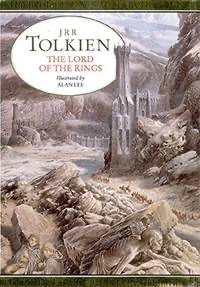
Lord Of The Rings Male Characters - Who would I Date?


 Today, I read this article.


 https://screenrant.com/lord-of-the-rings-male-characters-romantic-partner-potential-ranked/amp/


Basically, it’s about the romantic potential of each of the main characters in the Lord Of The Rings films. The author added Faramir, who wasn’t one of the Fellowship, but since Gandalf has no romantic possibilities, so will I. And I will write about the novel more than the films, which were faithful to the spirit of the book, but were still different. 


Anyway, here is my choice, a bit different from the article. See what you think. I rate them 10 to 1.


10. Gandalf doesn’t count, really, as he is basically an Angel, and whatever YA novels tell you, angels don’t tend to have romances. Also, even as a friend, while I’d be happy to go to the pub with him, it might be uncomfortable to hang out with someone who knows better than you and is always right! 


9. Legolas - very good looking and he has the virtue of being the only non smoker in the Fellowship, and thinking that smoking is dumb. I admit I would be pleased to trust him to protect me on a dangerous journey, but romance? Nah. He’s a couple of thousand years old at least. It would be like going out with your many times great grandfather, plus, like Gandalf, he would probably always be right. I’m not even sure he would be much fun to go to the pub with. 


8. Frodo - a kind, decent and terribly brave person. He has a good sense of humour, too, when with the other hobbits, and knows some great songs. However, he has a lot of troubles and a bad case of PTSD after his dreadful adventure. I’m not surprised he ends up going to the Undying Lands. I’d go with him to the pub, but not to the marriage celebrant! Like Bilbo, he is pretty much a confirmed bachelor, even before the Quest.


7. Boromir - a pity he gets tempted by the Ring, because really, he is a decent person and wants to save his homeland. He makes up for what he did by defending Merry and Pippin from the Orcs. Now, the dying book-Boromir doesn’t waffle about Captains and Kings. He just says, “I tried to take the Ring from Frodo. I am sorry. I have paid.” He is a good person, yes! And his younger brother loves him. But - no sense of humour. He is downright grim - and according to the Appendices in the book, the young Boromir was fanatical about the military history of Gondor. Would you want to date him? I wouldn’t. I’d be happy to have him for a bodyguard, even a friend, but probably not a boyfriend.


6, 5. Merry and Pippin: about even for me. The book versions are not the same as the film characters, who are mostly comic relief, with their “second breakfast” and “Where are we going?” Pippin is the curious one, who drops a stone down a hole in the Mines of Moria, where it could draw the attention of scary things, and, as if that isn’t enough, sneaks the Palantir, the seeing-stone, from Gandalf’s bag, to have a look. That does cause trouble, and Gandalf has to take him to Minas Tirith, the capital city of Gondor for safety. 


Merry goes to Rohan and pledges himself to its king. He ends up helping to kill the Witch King of Angmar, when he and warrior maiden Eowyn, neither of whom are supposed to be there, encounter him on the battlefield and save the day for the good guys.


I love both these boys and their cheerful good humour and songs. They are not dumb, despite the way they are presented in the film, and I would cheerfully date either of them. But there are others whom I’d rather have as boyfriends.


4. Gimli the Dwarf - a romantic at heart, and an artist. He managed to get three hairs out of Galadriel, that beautiful Elf queen, when she refused even one to a fellow elf whom she thought was creepy, way back in her earlier years. He wants to make something beautiful with those hairs, to encourage reconciliation between Elves and Dwarves, lost centuries ago. He worships her from afar, which clearly touches her. But he goes off with Legolas in the end - and I can’t help thinking that any woman in his life would have to put up with those two having fun challenging each other. Their friendship, touching in a novel or film, would get in the way of a relationship. And then they go off to the Undying Lands and that would be that for Gimli’s family! 


3. Aragorn is worth considering. He is smart and strong. He has a sense of humour. He is loyal to his friends and brave enough to risk everything to give Frodo his chance to reach the Cracks of Doom, the only place where the Ring can be destroyed. Above all, he is kind! Poor Aragorn feels really bad about Eowyn, who falls in love with him, when he can’t return it. He heaves a sigh of relief when she and Faramir become an item! If you could win his love, he’d be well worth taking. However... he is rather older than he looks - and he has been faithful to the same woman for most of his life. That is a virtue, but it means that the rest of us would have no chance to win him. Too bad.


2. If it was a question of which Fellowship member would make the best husband and father, it would definitely be Sam Gamgee. He is fanatically loyal, if you can win his love. He can cook. He can garden. He is a family man, and the last scene of the novel shows him returning home after seeing his Mr Frodo off to the Undying Lands, back to his wife and little daughter. Merry and Pippin are both members of the Hobbit aristocracy, but Sam is an ordinary person - mind you, in the Appendices we learn that he becomes Mayor of the Shire several times. His pretty daughter Elanor becomes a lady in waiting to Queen Arwen, and marries upwards. And he, too, travels to the Undying Lands at the end of his life in Middle-Earth, as a Ringbearer, which he was briefly when Frodo was out of the picture. But his temptation to turn all of Middle-Earth into one big garden is overcome by his common sense. Yes, definitely the best of the Fellowship for a relationship.


1. But as a human, I wouldn’t mind dating Boromir’s brother, Faramir, and not only because he resisted the Ring(in the book. In the film, he was briefly tempted). Faramir is a scholar. He does what he has to, fighting for his country, but really, he is a nerd who would rather be in a library than on the battlefield. He is deeply kind - and in the end, he marries a young woman who did want to be on the battlefield, because she has been raised to think that fighters were more important than others. She does change her mind, but he is willing to help her do whatever makes her happy, and respects her choices. I have always thought of him as the sort of guy who would remember your birthday, and who wouldn’t be offended, if you were out at dinner, if you got out your laptop to work. In fact, he’d bring his own, and you could have a pleasant evening together, working and chatting. 


So, that’s my order, from 10 to 1. What order would you choose? 


Friday, January 22, 2021

Just Finished Reading... House Of The Patriarch by Barbara Hambly, Severn House 2020. Benjamin January Series, # 18


This novel is part of a series which began some years ago with A Free Man Of Color. It is, in fact, the eighteenth of a series of historical crime fiction novels by an author who has also done fantasy and horror fiction. 


Benjamin January is an African American surgeon and musician living in New Orleans in the 1830s and 1840s. He was born into slavery, but given an education courtesy of his mother’s protector. Due to his colour, he is mostly a musician, playing the piano and giving music lessons to make a living. But he is also a very good private detective, who is hired to solve mysteries. In New Orleans his two best friends, Abishag Shaw and Hannibal Sefton, are both white, which comes in handy when he needs to travel without being kidnapped by slavers. Shaw is a policeman, Hannibal an Irish violinist who often plays with Benjamin in orchestras. In this novel, Hannibal is sick and Abishag Shaw doesn’t appear at all. 


This novel is set soon after the events of Lady Of Perdition, in which he travelled to Texas to help a former piano student in big trouble. This time, Benjamin January travels to New York with his sister’s protector, Henri Viellard, and his wife Chloe, who had introduced him to an English couple, the Russells, whose daughter has disappeared, possibly joined a cult somewhere outside New York City.


The Patriarch of the title, the Reverend Broadax, runs a farming community which also gathers to speak to beloved dead, through a woman called the Shining Herald. Is it the real thing or is Broadax just another con artist who has persuaded people to sign over their farms to him? And where is young Eve Russell? 


Fortunately he has some help from a self-confessed humbug, one P.T Barnum, who is at the start of his con artist career, well before his circus was a thing...


In an earlier novel, Good Man Friday, January had help from another historical person, Edgar Allan Poe, who was in Washington D.C to look for work. (It was implied that January inspired him to create his detective C.Auguste Dupin!) The author does usually set her novels at a time when a real historical event was happening and slide in some real people.


 I have to admit, I enjoyed this particular character, who is shown as a likeable rogue. 


It’s remarkable how, after eighteen books, Barbara Hambly’s series is still going strong. Benjamin January is still shown as a decent human being, with compassion and kindness, who is able to solve mysteries despite the problems that having a black skin in this time and place brings, knowing that if he isn’t very, very careful, he could easily end up sold back into slavery. 


I bought this book in Kindle, spending some of an Amazon gift card given to me at Christmas. It was well worth spending half of my gift card!  


Thursday, January 21, 2021

Just finished reading... Black Klansman by Ron Stallworth


In the 1970s, an African American police officer in  Colorado Springs, Ron Stallworth, impulsively applied to join the local branch of the Ku Klux Klan. He found an ad in the local newspapers - imagine that even being possible in our own time! - and answered it. Soon after, he received a phone call from the branch leader, and invited to meet. 


That was the start of a large police sting. The aim was less to arrest anyone than to learn as much as possible about the Klan’s local activities and prevent the worst of them from happening. Ron requested a white partner to play as him and attend Klan meetings. In the book, which is a memoir, not a novel, the man who did this job was an officer called Chuck(no surname given). In the film, which I saw first, the white partner was Jewish, putting him in great danger. The role was played by Adam Driver, whom most people know better as Kylo Ren in Star Wars! 


Chuck was wired for sound so that Ron and his colleagues could listen in. As a result of this, and phone calls direct to Ron himself, they managed to avoid a number of cross burnings, as police cars cruised the area. Asked about it later, Ron said that it was well worth doing, because there were a lot of children who never had to go through seeing those cross burnings. 


The sting became bigger than Ben-Hur, as other police departments heard about it and joined in. When Chuck was asked to take over leadership of the group, it came to an end and Ron was ordered to destroy all the files he had kept. He disobeyed, taking most of them home, and eventually used them to write his book.


In the meantime, there was a lot of bizarre stuff going on, such as Ron being sent  by the police to act as Klan Leader David Duke’s bodyguard during his visit to Colorado Springs. Ron had a bit of fun with this; the scene even appears in the film. 


The whole business was bizarre, in fact, and the police managed to  fool the Klan completely, though I assume they know now! 


The film changed a fair amount, and having read this, I do understand why. Nothing went wrong, or came close to going wrong, in real life. The police were very careful, and nobody went out without backup.


A film must have excitement and drama, and there must be at least a possibility of things going horribly wrong. So extra stuff was added, from a love interest(in real life Ron was already dating his future wife, who played no role in the story)  to a bomb being planted. It had a final scene in which footage from the 2017 Charlottesville riot was shown. 


I found the book easy and interesting reading, but do see the film as well. Both are well worth a read. 


Thursday, January 07, 2021

Look What I got Secondhand!


Look what I got! It arrived from ABEBooks a couple of weeks earlier than it was due. ABEBooks is a web site that sells secondhand books from bookshops around the world. I have only bought two books through them before, one called Schmoozing With Terrorists, which I heard about on the radio, but wasn’t available in Australia. The other was the autobiography of Murray Beresford Roberts, one of the crooks I was researching for my book, Crime Time: Australians Behaving Badly. 


The good thing about this web site is that each book they offer is described in detail so you can decide if it’s worth spending the money. And they keep sending you information about books you have asked for till you buy the copy that suits you. 


This one came from the US, is a former library book, nicely covered and is in better condition than I was expecting from the description. 


I really wanted this author’s Encyclopedia Of Fairies, which is out of print and doesn’t seem to be available in ebook. But this is a sort of abridged version which, however, according to the introduction, has some extra stuff in it. And I had got to the point where I really wanted something, after years of emails offering books that were either not in good condition or cost more than I was prepared to pay. So, when this one was reasonably priced and in fairly decent condition I bought it. 


I used books like this, on folklore, when researching for my novel, Wolfborn, but this is regarded as a classic, written by a top British folklorist. It’s easy reading and, I suspect, has a young audience in mind. I have been curling up with it when I had some peaceful time to myself, and am enjoying so far. 


I’ll let you know how it goes! 


Sunday, January 03, 2021

Of “Celebrity Authors”

 Recently, there has been a lot of discussion on social media on the subject of celebrity authors. You know the kind - famous actor or Duchess or whatever publishes a book and it sells because of the name on the cover. I’m not even talking here about the ghost written autobiographies, which are, of course, published for the same reason. I have a few of those. Some have the name of the actual author as co-writer, some just have the name of the actor or whoever. We expect those to be ghost written, although they aren’t always. 


I’m talking here about fiction written with the name of someone you wouldn’t normally associate with writing. It has been going on for a very long time. 


Here are some of those I remember from a long time ago. Some are ghost written; they tend to be the better ones; being an actor doesn’t mean you can write, but the books will sell.


Star Wars, with the name of George Lucas on the cover, was actually written by SF author Alan Dean Foster.


The Tek War series: name on the cover, William Shatner(known to his fans as Captain Kirk). Author: SF writer Ron Goulart.


 Avon: A Terrible Aspect was written by Paul Darrow, one of the stars of British science fiction show Blake’s 7. He played the brooding anti-hero Kerr Avon, very popular with female fans, who bought his novel and raved over it. You could never mistake it for a ghost written book, it was so awful. And he did say that he had worked on it in his dressing room while doing stage shows. I bought the hardcover when it came out, and quickly dubbed it Avon: A Terrible Novel. It really was. I asked my library technician to cover it, to keep it in good shape so I could lend it to curious friends so they wouldn’t have to pay for it. 


I had Year 7 students who were much better writers. Apart from the poor  quality of the writing, the science was non existent. He thought the Magellanic Clouds were giant clouds in space, and had his hero travel between two planets in the solar system via the Magellanic Clouds. He had telegrams being sent between planets. Oh dear... not even the TV series had that! 


Poor Paul was a fine actor, but he couldn’t write to save his life. That didn’t matter in the case of this celebrity writer. Fans bought it and loved it, because hey, it was by Paul! It even went into paperback. I very much doubt it had any editing at all, or the editor was told to let Paul have his way. 


You can sort of see why publishers would publish this stuff. It makes money. 


But not all celebrity authors are awful. Some discovered that they could write after another career. 


Thomas Tryon was an American actor. He was very good at that and did a lot of films and TV roles. Then he discovered he could make a living from writing, and quit the acting. I have read one of his books, Harvest Home, an impressive horror novel in the style of Stephen King, before anyone had even heard of Stephen King. (I think King’s first novel came out soon after) That one became a TV miniseries. 


Charlie Higson is a British YA novelist who is also known as an actor and comedian. I’ve never seen him act, but I did have many of his books in my library. They are very good. Two series are The Enemy and Young James Bond, which he was commissioned to write, and which compares nicely to Anthony Horowitz’s Alex Rider series, but set in the 1920s, when Young James was a student at Eton. Elsewhere on this site, you will find an interview he kindly agreed to give to a member of my book club. Selena adored his books. The Enemy is a series of novels, set in London, in which anyone over about fifteen is likely to become a flesh eating zombie. So children have to hide and learn to hunt for food and deal with family members who are willing to kill and eat them. Scary and very well written! 


David Walliams, best known as a comedian, is a children’s writer. For reasons I haven’t yet been able to find out, he is being abused on social media for being a celebrity writer, but guess what? Kids love his books! I have heard primary school teachers reading his books to their classes. Some of my literacy students brought in their own copies. They loved them! 


In Australia, there is Felice Arena, a top children’s writer and qualified primary teacher. Here is my interview with him. Probably most people here have forgotten by now that he used to be an actor. He was one of the cast of our popular soap Neighbours, then did stage work in England. A very prolific writer, he started off with football novels, the Specky Magee series. This series was hugely popular but has been followed up with many others. Most recently he has been writing historical fiction for children - three so far, set in Sicily during WWII, Paris early in the 20th century and Berlin just after the wall went up. He is working on another, though keeping the details secret. Children these days don’t usually care for historical fiction, but these three have all been short listed for YABBA Awards, which are the ones which children nominate and vote for.  


He is one of the few authors in this country who is able to make a living out of writing.


A celebrity author? Not now, though his co-author on the Specky Magee novels was Garry Lyon, a football star. However, they were friends from their school days, so nothing cynical there, just two friends writing a book together, and one of them an expert in the theme. 


Any celebrity authors you can think of?