Search This Blog

Tuesday, March 15, 2016

An Interview With Jaclyn Moriarty: A Tangle Of Gold Blog Tour


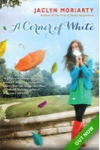
Today's guest on The Great Raven is YA novelist Jaclyn Moriarty, whose final volume in the Colours Of Madeleine trilogy, A Tangle Of Gold, has just come out. In honour of the occasion, Macmillan is running a blog tour, on which this is a stop. If you haven't read the trilogy yet, I do recommend it. It's funny and sad, over the top and just plain entertaining. When it's clear the author is having fun, why shouldn't the readers? But begin with the first volume, A Corner Of White, in which the heroine, Madeleine, first discovers a corner of white paper sticking out of a parking meter in a street in Cambridge and finds herself corresponding with a cute boy in another universe, one in which seasons can change overnight and colours - or, rather Colours - can be dangerous....

To remind you, here is my review of the first two volumes, 

Thank you, Jaclyn, for kindly answering some of my questions about the trilogy. Without further ado, here she is! 


Why "The Colours Of Madeleine”?

Madeleine likes to wear bright colours because she is searching for colour and magic in her life.  She’s also trying to figure out her identity, and what she’s made of: her mistakes, her memories, her thoughts, her friendships, what?  So it’s like she wants to know if she is made of bright colours, complex colours, dull colours, selfish colours, blinding colours or dangerous colours. 


Why the Cambridge setting for the World? (Have you been to Cambridge?)

I lived in Cambridge, England for three years while I was doing a PhD.  I had an attic bedroom with sloping ceilings and a window that looked over a garden overgrown with wild grasses and flowers.  An owl used to hoot in a tree outside the window by my bed.  The place is magical to me, so it seemed like the right location for a crack through to the Kingdom of Cello. 


I've read the entire trilogy now and am still wondering just how important are the wandering seasons of Cello, given that you left them in even after you were  told that farming would be impossible in such a situation? 

Ha!   Wandering seasons are an integral part of Cello: I couldn’t write about Cello without mentioning them!  That would be like describing Paris and leaving out the Eiffel Tower.  And don’t worry, my farming friend was only joking when he said that farming would be impossible with wandering seasons.  There are plenty of places in the world where weather changes are frequent and dramatic so that farming is very difficult.  But people figure out solutions.  When the English first came to Australia they thought it was a barren land where nothing would ever grow.  And don’t forget that living things - including plants -  always find a way to survive.  Plants grow in the most unlikely places and most extreme conditions - in concrete, in sand, in clay, in darkness, in zero oxygen.  The crops that grow in Cello have evolved to resist the extremes of wandering seasons. 


Your characters eat a lot of delicious baked goods, both in Cello and in the World! There are cafes and tea rooms and characters baking at home - is this something you enjoy? 

Yes, this is something I enjoy a lot.  Even your question makes me happy and hungry.  Also, when I first came up with the idea of the Kingdom of Cello I was eating a chocolate croissant. 


Cello has a wide variety of cultures within the one kingdom, from the old style living of Olde Quainte to the high tech of Jagged Edge. What did you have in mind when you were working on this? 

I think the idea might have come to me from places like Europe - where many contrasting countries co-exist in a relatively small geographical space - and the United States, where there are such vast differences between some of the states, and the attitudes and lifestyles of their inhabitants, that it’s almost as if the states are different countries.  I wanted to play with this concept.   


What research did you have to do for this trilogy?

I read many books on Isaac Newton, Byron, Charles Babbage, Leonardo da Vinci and other famous historical figures, as well as books on science, physics and colour.  Also I had conversations with physicists, farmers, pilots, motocross enthusiasts, and other experts.  And I got my aura read and I learned to play the cello. 


In A Tangle Of Gold, we learn more about the Cellian connections of Isaac Newton, Leonardo da Vinci, even Byron and Vivaldi! Was it fun working them into your world? And, if you can tell us without spoilers - why these particular historical figures? 

I loved reading about these people: they are all brilliant, fascinating and flawed, and there is an element of mystery in all of their lives.


This is probably a question for the cover designer, but you might know - why was there a flying umbrella on all three covers? 

I think it’s because when Jack first sees Madeleine she’s walking down the road with a brightly-coloured umbrella?  And because it rains a lot in Cambridge?  Maybe it’s also a reference to the wandering seasons in Cello?  (See, that’s another reason I couldn’t take them out: they’re on the cover.) 

 Now that the three volume epic is over, what's next in your writing schedule? 

I’m writing a book about a girl whose parents have run away to have adventures with pirates leaving her to deliver treasure to ten aunts; a book about a woman who has enrolled in a course that will teach her to fly; a time travel book; a book about my great-grandmother; and a new Ashbury-Brookfield book.  


Find Jaclyn Moriarty on Twitter @jaclynmoriarty.

A Tangle Of Gold is now available! 


Monday, March 14, 2016

On Having Your Letter To The Paper Published

I've been published on the letters page of the newspaper a number of times. Some of my comments have been published in the on-line editions. Over the years I've taught myself, through observation, what is likely to be accepted and what rejected and why.

But not always. Despite the page of "why my comments were not published" on the web site of my main paper, I have seen them publish comments that go against their moderation rules - and been rejected for some of my comments that didn't go against the rules. The moderators are only human, I suppose. They might be in a bad mood that day. They might disagree with you enough to stop you from having your say, even if they feel guilty about it later.

Yesterday, I received a call from the letters editor of the day who was considering publishing my letter about how science stories can be made more engaging by employing children's writers to tell them. The paper had published an article on the theme of making science stories exciting. My argument was that children won't put up with pages of technical language or with the "beautiful language" that would satisfy adults without actually telling a story. If you can excite children, I argued, you can excite anyone.

The lady said that it sounded like a plug for myself, because - ta da! - they know I'm a children's writer! I said good, but hardly anyone else does, outside the school and library system. The newspaper folk only know because they Googled me. Nevertheless, she argued, I should declare my interest. Could they publish the words "children's writer" with my name? Just to declare my interest. I agreed, adding that it would be nice if they did that more often, as they have published quite a few letters by people who hadn't declared their interests. (One of them is a high ranking member of a racist organisation, the other one practically runs her organisation. Neither of them has been phoned to confirm that they have no interest other than their opinions). "Oh, you should have told us!" she said and I agreed to do it next time, though I was thinking, "And you should have Googled them on their controversial topics, as you did me about my fairly innocuous one!" but didn't say it.

They have published my letter, cutting my sentence about children's writing being the last refuge of storytelling and adding a typo in the interests of removing my contraction. "Doesn't" became "doe snot." Ouch! I'll take responsibility for my own typos, thanks, and goodness knows, I get plenty of those due to the prediction software on my iPad, but this is a national newspaper.

A bit like the late unlamented Bulletin that published a letter from someone who declared "Jews are dupes of Satan!" but rang me when I responded, to make sure I was okay and then told me they weren't going to print my letter "because we haven't the space."

Ah, well, the newspaper at least published my letter, even if I did have to jump through a few hoops!

Saturday, March 12, 2016

Class And Race In The Wizarding World

I've been rereading the Harry Potter books recently, mostly as bedtime comfort reading, and thinking, not for the first time, of the distinct flavour of class difference and racism among the people of wizarding society. 

When I say "racism" I don't mean white wizards and black wizards hating each other. They don't, as far as we know. It's rather similar, in this respect, to Terry Pratchett's Discworld in which black and white and brown humans will happily unite against green non-humans. The race thing in Harry Potter is literal - humans uniting against giants and cheerfully enslaving house-elves. They are more wary of the goblins, who, after all, control their money and make it quite clear they have contempt for humans, though they are willing to work with them, as long as it's profitable. I suspect they own Gringott's Bank and employ humans, not the other way around. And they have fought wars against humans in the past. 


House-elves, on the other hand, grovel to humans despite having powerful magic of their own; even Dobby, the closest thing to a radical the house-elves have, insists on receiving only a token wage and time off, as a matter of principle; I suspect if he'd been working for the Weasleys, for example, or even(initially) for Hogwarts, he wouldn't have wished for freedom. It's a house-elf culture thing, but wizards are happy to take advantage of it. 

And everybody is terrified of giants. Well, nearly everybody; Hagrid's parents were a human and a giant, so his Dad was more broadminded than other wizards. Not to mention the fact that whatever the differences, there is enough that's the same for them to be able to interbreed! 

What I have noticed most, though, is the class structure reflecting the one in the Muggle world. Not entirely; in this universe, working class wizards get a chance to have the boarding school experience they would never have outside wizard society. Colin and Dennis Creevey, children of a Muggle milkman, mingle with the likes of Justin Finch-Fletchley, who was planning to attend the highly upper-crust Eton before getting his Hogwarts letter. Mundungus Fletcher and Stan Shunpike, as lower-class as you can get, would both have attended Hogwarts in their time, as did Tom Riddle, who came straight from an orphanage(though he was descended from the wealthy local squire and Salazar Slytherin, making him technically upper-crust on both sides, even if the Gaunts were the wizarding world's answer to Harper Lee's Ewells!). This is probably for the practical reason that children with magical abilities can't be allowed to run wild in the world at large, Muggle or wizarding, whether they can afford the fees or not. They need the training. I do sometimes wonder what happens when Muggle families whose children are offered a place at Hogwarts say, "No, thank you." It's not compulsory, of course, but it must worry Dumbledore when it happens - especially after what happened in his own family.

Within the wizarding world, however, it's fairly clear that there are a lot of people who attend Hogwarts and then go back to being farmers or shopkeepers, bus conductors or even petty thieves. Not everyone works for the Ministry of Magic. 

There are, of course, the issues between "purebloods" and Muggleborn or "halfbreeds". But even among the purebloods there are class differences. The Weasley family are poor by pureblood standards. They have hand-me-down wands and secondhand robes and have to scrape to find the money for textbooks and equipment. At the same time, Mr Weasley has a Civil Service job that enables him to make laws, including adding loopholes that let him fiddle with that car. That's not a job for a Clerk Class One! He may be poor, but his family is not lower class in the same way as Mundungus Fletcher or Stan Shunpike. 

Rich families like the Malfoys gang up - usually - on poor ones, even those who are also pureblood, as well as on Muggleborn and halfbreeds. Ironically, Lord Voldemort is a halfbreed, but that doesn't matter to him or his followers; none of the Deatheaters would dare to say, "Hang on, aren't you...?"

Well, he is a descendant of Slytherin, after all! 

And then there's Severus Snape. I think, from the evidence, that his father Tobias was a Muggleborn wizard rather than a Muggle. Little Severus takes the wizarding world for granted in a way he might not in the household of a straight Muggle, even if his mother was a witch; he is there to introduce young Lily Evans to her heritage. But judging by his Spinner's End home and the fact that even the very Muggle Petunia refers to him as "that awful boy" in a sneering tone, for being from the wrong side of the tracks, I believe Snape is as lower class as Fletcher and Shunpike, though we never find out, in the books at least, where his mother came from. All we know is that she was running the Gobstones Club at Hogwarts. He presumably made better use of his time at Hogwarts than the petty crook and the bus conductor, and has risen to become one of the inner circle of staff there. It does help him with the Deatheaters that they think he is still one of them and that he seems to favour the Slytherins.

I occasionally wonder about the author's attitude too. Of the heroes, Ron is poor but of the gentry. Hermione's parents are professionals - not upper-crust but well off(which doesn't stop her from being sneered at as a "mudblood"). Even Harry, that male Cinderella, is the son of a wealthy pureblood wizarding family and a Muggle family that is at least well off enough to snub the likes of young Severus. And he's the Chosen One, the long lost prince. Characters like Colin Creevey, the milkman's son, are presented in a comical light, though it's a pity what happens to him in the end; it wasn't necessary, IMO. Hagrid is a wonderful person, loved by our heroes, brave and honourable, but also shown mostly as comic relief. 

Sirius Black rejected his family's Deatheater sentiments, but in the end, he's an aristocrat too. His favourite aunt, Andromeda, married a Muggleborn, Ted Tonks, and was considered dead to her family, but there isn't the same grime about their cottage and their lives as there is in Snape's family home. I suspect Ted is a poor gentleman like Mr Weasley, rather than working class. 

Whatever Lupin's family is or was, he suffers from prejudice against werewolves, due to something that was done to him as a child. He's poor because nobody will take a chance on giving him a job before Dumbledore(though he must have had a teaching job somewhere some time as his battered trunk has "Professor Lupin" in peeling gold letters on it - or maybe it was just a glitch on the author's part). At Hogwarts, the Slytherins, who don't yet know what he is, sneer at him for being poor, before finding a better reason to sneer. 

And then there are the Squibs. There is one in the Weasley family, as Ron mentions in Harry Potter And The Philosopher's Stone that they have a relative who's an accountant, but says they don't speak of him. Neither do we ever meet him. He's presumably settled nicely into the Muggle world. There's Argus Filch, who insists on living in the wizarding world and as a result is desperately unhappy and takes his revenge on the students as best he can. He is disliked by the students for being unpleasant, not because he's a Squib, which they don't know, except Harry and his friends. He's another comical character - and I doubt he started life in an upper-crust family, who would surely never have allowed him to embarrass them as he must do in his caretaker job at Hogwarts. No. Filch is working-class - and sent up by the author. Would a Weasley-type caretaker be shown in this light? Probably not. He would be poor-but-honest, kind to the students, making the best of his life, despite his Squib nature. But bear in mind, the only Weasley Squib is an accountant, ie a well-paid professional! 

Mrs Figg is sent up before we actually meet her, as the crazy cat lady, but when she finally appears in Order Of The Phoenix, we learn that she was playing a role, to prevent the Dursleys from suspecting she was there to keep an eye on Harry for Dumbledore.  She gets a brief mention at the end of Goblet Of Fire as one of a team who must be contacted, so she lives in the Muggle world but is in touch with the world of her roots. Again, I doubt she was nobly born; she would not be living in the kind of home she does if she were. But she must have at least enough standing that the Dursleys have bothered to speak to her, even as babysitter for their despised Cinderella figure; they are such snobs!

I believe that class counts in the universe of Harry Potter, and not only from the viewpoint of the villains. 

Please note, this post is based only on the evidence from the books; if JKR has said anything to the contrary on Pottermore, please excuse me! I just don't have time to keep up.

What do you think? 

Wednesday, March 09, 2016

Coming Soon! Interview With Jaclyn Moriarty!


This is just to remind you that next Wednesday, my interview with Jaclyn Moriarty will go live, as part of the Tangle Of Gold Blog Tour arranged by her publishers, Pan Macmillan. It has been parked, in draft form, among my posts since February 19. I was asked to give her a month to reply to my questions, but the replies were shot back to me after only a couple of days!

If you're interested, today's stop is at Inkcrush blog, by a Queensland blogger who simply refers to herself as Nomes, why not wander over and check it out? She includes a review and guest questions by blogging friends, so it will be very different from my interview, which just says some nice things about the series and asks a few questions. There's always something new to learn!

To refresh your memories, here is what I had to say about the other two books.

Monday, March 07, 2016

Happy International Women's Day! Celebrating Women Writers!

Despite the Northern Hemisphere  date above this post, it's March 8 here Down Under. Trust me on this.

As I haven't had the time or energy or even help to decorate my school library, I thought I might make today's post a tribute to women writers. Feel free to post your own favourites in the comments section. 

Even in writing, a career you'd think would be equal, not requiring physical strength(except, perhaps staying up late to meet deadlines), there has been inequality. Remember Currer, Ellis and Acton Bell? Otherwise known as Charlotte, Emily and Anne Bronte. Between you and me, I can't see how anyone could possibly have mistaken Wuthering Heights or Jane Eyre for anything written by a man, but then, I wasn't around at the time.

Public Domain

There's that scene in Blackadder 3 in which Edmund Blackadder, the Prince Regent's butler, is talking to his sidekick Baldrick about his epic novel, Edmund: A Butler's Tale, which he sent to Samuel Johnson under the pseudonym of Gertrude Perkins, because everybody is doing it; Jane Austen is a great big Yorkshireman with a beard like a rhododendron bush, according to Edmund. He tells Baldrick that the only real female writer around is Boswell "and that's only because she wants to get into Johnson's britches." 

You can see the joke here, a tribute to this matter of women having to write under male pen names. You'd think it was over by now, but no, not completely. Even in my own area of children's/YA fiction - in fact, especially - there are some women having to hide their female identities to get boys reading their books - at least, that's what their publishers tell them. I don't recall hearing about boys giving up the Harry Potter books after it turned out that J.K Rowling was Joanne. But that was why her name was written the way it is. And you know what? The only takers for Tamora Pierce's books at my school have been boys. And yes, Garth Nix's Old Kingdom books were written by a man, and it has been only boys, so far, whom I could persuade to read the adventures of his strong heroines. Not a single female borrowed of Sabriel, Lirael and Abhorsen.

But I'm wondering how many kids these days know that S.E Hinton was a Susan? The books aren't as popular now as when they were written, at least not in my school, but I make sure I tell the few kids who do borrow them that they were written by a teenage girl.

Lately, I suspect anyone who writes with initials of being female, though it isn't always the case. 

Even in a female dominated industry like children's writing, there are plenty of men. And yes, there are some wonderful male writers who can write from a female viewpoint. Off the top of my head, I'd suggest Will Kostakis's Loathing Lola, Garth Nix's Old Kingdom heroines and Sean Williams' Jump, Crash and Fall . But if anyone makes them write under female names in this genre, I haven't heard of it. (Romance is different, of course; I believe there are some male romance novelists writing under female names)

It's a bit like teaching: there are both male and female, but in a female-dominated career, guess who mostly gets to be in charge? Not that there aren't some amazing male primary teachers; my brother-in-law is the best I've ever known. And guess what? He was a Principal for a while too, but dropped it and went back to the classroom, telling me he only got to see the children when they had been naughty. The kids are what he's there for; he wasn't going to spend his career doing paperwork and discipline. He's back in the classroom and happy.

So, who are a few female children's writers I enjoy? Please forgive me if you are a writer and left out, I just want to name a few who come to mind. I'll probably remember more when I've finished posting.

In no special order...

Kate Constable, who wrote the Chanters of Tremaris series and has since done some gorgeous timeslip stories set in contemporary Australia. Interestingly, the Chanters of Tremaris series appealed to our boys and the girls have been passing around the timeslip tales by word of mouth.

Gabrielle Wang, who writes gentle fantasies for middle-grade readers. We do have a set of A Ghost In My Suitcase in our Literature Circles sets, and the kids have done very well with this one. There is an interview one group of students did with Gabrielle on this website, and it's in the free ebook as well.

Marianne De Pierres, whom I first met at the Aussiecon writer's workshop years ago, who has done a wonderful YA SF series starting with Burn Bright. That one is for good readers only, but well worth reading.It's about an island where anyone over 18 disappears, but meanwhile parties hard. I knew two girls who said they were fine with that, as long as they got in all that partying. There's an interview on this site with Marianne too.

Jackie French, a fabulous writer of historical fiction in a range from ancient Egypt to the World Wars. Kids are not very keen on historical fiction these days, but they'll read Jackie French.

Rebecca Lim, author of the series about Mercy, a fallen angel who is being hidden by the non fallen angels and does a Quantum Leap thing into various mortal bodies, one in each novel. The girls at my school simply love this series! And I tell them Rebecca lives right here in Melbourne. Nice!

These are all Aussie writers, but my favourite from overseas is Susan Cooper, who is still writing beautiful historical fantasy, long after the end of her classic Dark Is Rising series.

Let's celebrate women writers! Raise your glass in a toast with me!

Saturday, March 05, 2016

Three Dragons For Christmas: Sydney, Christmas Press, 2015 - A MuchBelated Review!


I received this last year, in time for Christmas...along with a lot of other books. Sorry this has taken so long, but do consider buying and putting it away for next Yuletide! Your kids will love you for it, and you'll have less worrying to do in the last minute.

Here is yet another gorgeous Christmas Press publication for children. This time, it's mostly written and illustrated by the staff of Christmas Press - Fiona McDonald, Sophie Masson and Beattie Alvarez pen two stories and a poem, regular artist David Allan is ably supported by Lisa Stewart, who illustrates Sophie Masson's story, "The Christmas Dragon," in which a young dragon, Fiery, dreams of pulling Santa's  sleigh. Signing herself "Frosty the Fabulous Flyer" she manages to get a job interview at the North Pole, only to be told that on Christmas Eve Santa has all the sleigh pullers he needs. Can Fiery help in another way? Read and find out!

Meanwhile, here is a sample page of Ms Stewart's art for the story.


Even if you didn't have the inimitable Sophie Masson writing the story the book would be worth buying just for the art.

David Allan contributes the delightful cover and some gorgeous internal art interspersed between the stories.

Artist Fiona McDonald shows she can write too, writing and illustrating "Dragon Market" in which a mother and daughter toymaking team who had nearly been driven out of business by the competition find that an act of kindness to an old woman, as in the best fairytales, and a handcrafted dragon, help them get back into business. Even though it's for children I couldn't help thinking of the real world in which small businesses can lose out to big ones. 

Finally, we have "The Dragon's Pet", Beattie Alvarez's tribute to Clement Clarke Moore's "A Visit From St Nicholas" aka "The night before Christmas". This time the family is a family of dragons whose pet bunny has messed up their Christmas dinner. Needless to say, St Nick helps out and even washes the batter-covered rabbit! Ms Alvarez, who edited 2014's Christmas annual, in which I had a story, shows she can draw too, illustrating her own work.


Friday, March 04, 2016

Look What I Got - A NEW Jules Verne Novel!


Well, new to me, anyway. This Verne adventure novel has been forgotten in English for some time(not in French!)till Sophie Masson, who read it in French as a child, arranged for a new translation - the first in a century - and new art. Then she did a crowd funding campaign through her imprint, Christmas Press(Eagle Books label). You'll find her guest post about it here.

I pre-ordered, of course, and am very pleased with the product. It's a gorgeous little book with the traditional built-in book mark and internal art of the old style, the kind you see in nineteenth century editions, done by the wonderful David Allan, who, I hope, might one day illustrate something of mine.... Well, I can dream. He seems to be able to adapt his style to whatever the book requires. 

The endpapers are maps of Russia and the pages are gilt-edged. A thing of beauty and that's before I've even read it, as I only picked it up from the Brighton Road post office agency this morning. I am looking forward to snuggling up with it before bed tonight. 

As for you, get your own! It should be available at the Eagle Books website.

Just Finished Reading... The Sidekicks by Will Kostakis. Melbourne:Penguin, 2016


Sydney schoolboy Isaac Roberts is dead. His three best friends have been called into the deputy principal's office to be informed. The thing is, they're not each other's best friends. They don't even particularly like each other. So they can't mourn together.

Isaac meant something different to each of them. To him, they were just his "team" - the Swimmer, the Rebel and the Nerd. Each of them gets to tell his own version of the same story, of events leading up to, and after Isaac's death. 

The Swimmer is Ryan. Ryan is the school's swimming champion, the "Olympic hopeful." Swimming keeps him going. He isn't particularly friends with anyone, but Isaac was supportive to him about his personal problem, that of coming out of the closet. Ryan's boyfriend Todd is not happy about his hanging back. 

The Rebel is Harley. Harley is the kind of person who can arrange to get you stuff through a third person. He was doing that for Isaac, whom he calls Zac. And he was there for part of the evening when Zac fell off a boat. He is wondering whether the death was his fault, whether Zac fell because he was high at the time. And he's grieving himself, for his relationship with a mother who left him and his Dad and scooted off back to the U.S. 

The Nerd, Miles, gets some of the best lines. My favourite is "I do not trust anyone who leaves home without a book."  Miles has allowed Isaac to talk him into running an illicit essay-writing business for some of his schoolmates, with Isaac as his front man. It has paid very well. But he was doing this to bond with Isaac; after Isaac's death, he is obsessively playing Isaac's footage from a film he had made for the school's film festival. In fact, his entire section is written using film script description. "Int. Classroom. Morning." 

I have been reading Will Kostakis's books since his first one, Loathing Lola, was published. Here is my review. Each of the three novels I've read was different. The first was about the absurdities of our fifteen minutes of fame, through a teenage girl's sudden popularity after she lands her own TV reality show. The irony was, the young author would go on to work for Big Brother. The second, The First Third, was about family and friendship and looking after each other, not to mention being Greek, in a funny, touching story that included a few autobiographical elements. (In fact, one of our students fell in love with the hero's grandmother and worried the real one might be dead, but she rang while Will was talking to my book club, much to the girl's delight).

And now we have one with three very different boys who must learn to be true to what they are, a lesson they learn during the grieving process. 

Will Kostakis's books are gentle and wise - and each one is different. For what it's worth, I think he is, in some ways, Australia's answer to David Levithan, another YA writer whose books are gentle and wise, and each one different from the last. (I should add that when some girls who had loved Dash And Lily's Book Of Dares asked me for more Levithan, I had to explain that if they wanted another Dash And Lily, they were out of luck!). Well, David Levithan has never written about being Greek and has a tendency to collaborate on books, but my point stands. 

I think this novel may well end up on some award short lists. It might be a bit late for this year's CBCA awards, but we'll see. 


Tuesday, March 01, 2016

Louise Rennison Is No More!


just heard the news. ANOTHER terrific writer bites the dust - in the course of about three days!

I have no idea of the details. There are plenty of articles that say she's gone and talk about her life, but none of those I've read so far says how. I mean, Umberto Eco and Harper Lee were both in their eighties. Sad, but not unusual. It happens.

But this lady was only in her early sixties. Not an age for "natural causes", surely? If anyone reading this knows the details, please do let me know in the comments.

Louise Rennison was a British YA novelist who wrote funny books for girls. The best known is Angus, Things And Full Frontal Snogging, which I believe was made into a film(haven't seen it), but she wrote plenty, and I have several on my library shelves - the kids love them! There was a whole series about heroine Georgia Nicolson.


I'm currently reading Withering Tights, about Georgia's cousin Tallulah Casey, who has travelled north to Yorkshire to do a summer school on the arts. I'm only about a hundred pages in and Tallulah is already surrounded by a bunch of over-the-top characters, from her kind but zany host family to the  loopy woman who runs the school.


We'll have to have a chat about this at my lunchtime book club on Thursday. 

Friday, February 26, 2016

February 27 On This Day - Happy Birthday, Max!

Today my nephew Max turns eighteen, so I'm doing a February 27 meme in his honour. Max is a musician, a composer, an artist and animator - and he's still at high school! I'm terribly proud of him. 

So happy birthday, Max, and here are some things that happened On This Day in history. Please note, I chose the most appropriate birthdays for this blog, so there are a lot I left out, but you should note it's also the birthday of Roman Emperor Constantine. 

Birthdays

1807 - Henry Wadsworth Longfellow - Best known for the poem Song Of Hiawatha. Lesser known is that he did a translation of Dante's Divine Comedy from the Italian. 

1902 - John Steinbeck - author of some of the most gorgeous prose out there. Of Mice And Men. The Grapes Of Wrath. Sad stuff, both of them. I had to teach Grapes Of Wrath to Year 12 in my first year out. If these two don't make you cry, you have no heart. Also lighter gentler stuff like Cannery Row. And he did an unfinished book about King Arthur which I haven't managed to get hold of. 

1966 - Bill Oakley, who writes for The Simpsons. He was inspired by Mad Magazine as a teen, which says something about his writing. Happy birthday, Bill! 

I know Max would like to know where he stands in music history. 

In 1827, there was the first New Orleans Mardi Gras On This Day. There would have been a lot of music there!

And one major music birthday: 1943 - Jimmy Burns, guitarist, composer, singer, superstar of soul and electric blues. Happy birthday, Jimmy! 

Actors: 

1847 - Ellen Terry, Shakespearean superstar. It didn't mention this in Wikipedia, but I believe she was one of the children photographed by Charles Dodgson, aka Lewis Carroll, and exchanged a lot of letters with him later. She was performing right into old age and made at least one silent movie. 

1892 - William Demarest, who was in about 100 films, including The Jazz Singer, the first sound movie. 

1932 - Dame Elizabeth Taylor, star of many movies. I remember her most fondly in Franco Zefirelli's version of The Taming Of The Shrew. She was stunning in her time - but she could really act, shown by those movies in which she had to be frumpy and middle aged and still performed brilliantly. She didn't need her beauty to show her at her best. 

1957 - Timothy Spall. You and I know him best as Wormtail in the Harry Potter movies, but he's been in the Royal Shakespeare Company in his time and he's done plenty of other films and TV shows(Red Dwarf season 5, "Back To Reality", as the mechanic who tells the Dwarfers they've been playing an immersion video game for five years). I haven't yet seen Mr Turner, in which he plays the artist William Turner, but would like to. 

Today is International Polar Bear Day, created to raise awareness of the impact of global warming on polar bears, due to the melting of sea ice. It encourages us to reduce our carbon footprints. 

Today is also the Yartzeit of Star Trek actor Leonard Nimoy. Rest peacefully, Leonard! 

Wednesday, February 24, 2016

The Wizards Of Harry Potter Are Tough!

I'm rereading Harry Potter And The Prisoner Of Azkaban. Yet again, something occurred to me about the wizardung community of this universe: they are so very tough! True, they can be healed by magic. And true, they seem to have some diseases the rest of us don't have, probably because of the magic surrounding them. (See Harry Potter And The Deathly Hallows for an example of this, when Ron leaves the family ghoul in his pyjamas, supposedly sick, as a decoy).

But kids play Quidditch, an extremely dangerous game. Think about it: would you want your kids flying around on broomsticks high in the air? With the Beaters threatening them with clubs? In The Goblet Of Fire we meet a former Beater who has probably suffered too many bashings in his career and is a bit crazy as a result.

And Harry suffers falls that would kill a Muggle and just needs a night or two in the hospital wing, where the school nurse, Poppy Pomfrey heals him by magic. She couldn't do that if he was dead, though.

In  Prisoner of Azkaban, a Quidditch game is played during a rain storm - imagine what could happen to the players in that! But it's normal at Hogwarts not to cancel for a bit of rain - or a lot of rain, for that matter.

Another thing that wizards can suffer in this universe is splinching, which happens when you get apparating wrong. This means you can split yourself. Nasty! But that too can be fixed and wizards usually seem to survive it.

It could be, of course, inspired by Tolkien's Gandalf, who fell down an abyss, fighting his enemy all the way, then chased it back up. But Gandalf isn't human; the wizards of the Harry Potter universe are.

More or less.

Tuesday, February 23, 2016

An Evening At The Movies: Trumbo!

Today it was 38'C. I decided to shout myself dinner and a movie, for the air conditioning. The movie I went to see was Trumbo. And I so enjoyed it! Hollywood history has always fascinated me, and this era, the McCarthy witch hunts especially. So many people were shown at their best - and their worst - at that time. 

So, why am I writing about a movie on my book blog? And not even a speculative fiction movie? 

It's the story of a writer - a writer whose films I've loved over the years. You will certainly have seen some of them. Roman Holiday, that gentle, funny, sweet comedy which he wrote through a front, and which scored him an Oscar, even if his name wasn't on it. Spartacus, on which his name did appear, because of Kirk Douglas's decision. In an era when epics were more about huge scenes than about people this one was full of characters you cared about and intelligent dialogue. I read the Howard Fast novel on which it was based, definitely a classic, but the film became a classic in its own right. I remember reading Kirk Douglas's memoir some years ago, in which he said the original script by Howard Fast just didn't work and that sometimes the author isn't the right person to do the screenplay.   Dalton Trumbo also wrote the Exodus screenplay. That was a classic in its own right too, though I would have cast a British actor as Ari Ben Canaan if I couldn't find a suitable Israeli, because Ari learned English from the British. But Paul Newman was a star, so... Dalton Trumbo's name was on that too. The McCarthy era was just about over by then, though apparently the HUAC went on till 1975! 

I really enjoyed the film and thanked heaven that I am unlikely ever to be in the position of the hero. It had some great scenes in it. The role of Kirk Douglas was played by Dean O'Gorman, a Kiwi actor I last saw playing one of Thorin Oakenshield's sexy young nephews(not the one who had the romance with the elf maiden, his brother). And he did make a very good Kirk Douglas, if somewhat younger looking than Mr Douglas was at the time. (Apparently Kirk Douglas enjoyed this film too). They replaced Kirk Douglas's face with Dean O'Gorman's  in a scene from Spartacus, nice what they can do now. 


There's a lovely scene in which Frank King, the maker of movie drek, is visited by someone from the black ban bunch, who makes threats about what they can do to his business if  he doesn't fire Dalton Trumbo, who has been writing him scripts under a pen name. King, who is played by John Goodman, grabs a baseball bat and tells him to do his worst, while smashing things; the kind of people who see his dreadful  movies can't read and aren't likely to be reading the propaganda in the papers. 

And I loved the business of him writing in the bath tub. I hear there's a statue of him somewhere, writing in the tub. I wonder if I should try it some time? Not on my iPad, though! 


Monday, February 22, 2016

Currently Re-reading ... Harry Potter And The Prisoner Of Azkaban - And Kids Reading Ahead

Just a short post. I took this one off my shelves on an impulse. Heaven knows how many times I've read and re-read the series. This one is the last of the series in which nobody dies.

I'm thinking of this because my nephew's little boy,. Eden, who has just started his second year of primary school, Year 1, about to turn seven. He is currently reading A Series Of Unfortunate Events, but there's a copy of Harry Potter And The Philosopher's Stone awaiting him when he's ready, a gift from his great aunt Jill. I don't think he will have any problem with that one - he is already a passionate reader who reads himself bedtime stories at night(his Dad tells him and his brother stories off the top of his head). He might even manage Chamber Of Secrets and perhaps Prisoner.

After that - who knows? The series was written with the idea that children would grow up with the books. But now that the whole series is out, the books will be kept together on library shelves. You can't tell kids not to read the lot. I should mention I have seen a little girl of about eight or nine clutching a copy of Order Of The Phoenix. I guess kids will read what they can handle - and I've taught students who read Lord Of The Rings before they were out of primary school. Not The Hobbit - Lord Of The Rings! And loved it. I had to find them adult books to read, because YA just wouldn't do.

I'm thinking that Eden could probably handle Harry Potter up to Prisoner Of Azkaban before becoming distracted. In a year or two I will be presenting him with a copy of The Hobbit.

Or maybe Lord Of The Rings?

Saturday, February 20, 2016

Vale Harper Lee! Vale Umberto Eco!

Two authors of twentieth century classics have passed away on the same day, February 19, 2016. I confess I have never got around to reading anything by Umberto Eco; it may finally be time to do so.

                             
Umberto Eco in 2005, taken from Wikimedia Commons.

 If you haven't heard of his novel, The Name Of The Rose, you have probably been living under a rock. 


However, he wrote quite a lot of other books, including novels - one of them for children - non fiction, short stories and essays. Time to get reading, Sue! I will ask my Italian scholar friend Mirna for advice where to start.  

The other author who passed away yesterday was Harper Lee. 


Public domain photo by Eric Draper.

Harper Lee has been in the news a lot more recently than Umberto Eco, since the release of Go Set A Watchman, the "first draft" of To Kill A Mockingbird. If nobody had ever read anything of hers but Mockingbird she would still have been immortal. It is good, though, that she lived long enough to see the rejoicing(as well as trepidation) accompanying the release of her second published book. I recall that there was a huge celebration in her home town when it came out. 

She loved the film adaptation and became a good friend of Gregory Peck, who named his son Harper after her. And let's face it, the film was as much a classic in its own right as the book was. If you've ever seen the fantasy film Pleasantville, in which a modern brother and sister find themselves in a 1950s town based on a black and white TV series, you'll possibly have spotted the tribute to the film of To Kill A Mockingbird. There's a scene in a courtroom in which all the town inhabitants who have gone from black and white to colour are sitting upstairs watching the trial, based on that scene in Mockingbird where the African Americans("coloured", get it?) are seated upstairs watching the trial. I was teaching Pleasantville to my Year 11 students one year and had to explain, as the kids hadn't seen the original film. 

Mockingbird was, as is well known, semi autobiographical and the character Dill is based on author Truman Capote, who was a childhood friend. He said that even the bit about Boo Radley leaving small gifts in that tree for the children was based on something that really happened in their childhood; he was going to use it in one of his books, but didn't. 


The book has been banned in its time. Amazing what people object to! 

It's sad that we've lost two great writers on one day, so ... a toast to both of them! I'm off to drink to them in Cointreau. Cheers!


Friday, February 19, 2016

Currently Rereading... Guns Of The South by Harry Turtledove


This is one of the books that I found sticking out of my book shelves when I was selecting books to donate to the Continuum fundraising raffle. It's a favourite of mine.

In case you haven't heard of it, Guns Of The South is one of a number of "What if the South had won the Civil War?" novels. Unlike some others, it doesn't depend on a slight difference in a historical event, but begins with time travelling South African racists who give Robert E Lee AK 47 guns as well as warning him about certain future events. They do admit that once history has changed they won't be able to predict any more.

One interesting result of the South's victory in this novel is that a certain Abraham Lincoln isn't assassinated, though he isn't President any more.

The two viewpoints here are Robert E Lee himself  and Nate Caudell, a school teacher who has become a sergeant in the Confederate forces. We share the thoughts of these two men and, through Nate, see what life might have been like for ordinary soldiers. One of these soldiers, by the way, is a woman disguised as a man - something that was actually fairly common in that war. In this case, Molllie aka Melvin is a prostitute in her regular life, so the men in her unit are happy to keep her secret.

I enjoyed it first time around and am still enjoying.

Anyone out there read it? What do you think?

Coming Soon - An Interview With Jaclyn Moriarty!


Yesterday I received the replies to my questions for Jaclyn Moriarty's Tangle Of Gold blog tour. I've set up the post and saved it as draft till March 16, when you'll finally get to read what the author has to say about her three novels.


While you wait, why not read them? A Tangle Of Gold is being released on February 23, next week, but there's no reason not to check out the other two, A Corner Of White and The Cracks In The Kingdom.  Both have been nominated for, and won, several awards here in Australia, and deservedly so, in my opinion.


I will be promoting the books at school, to my book clubbers. I think there are some of our better readers who will enjoy them.

Off you go and read them! Let me know what you think.

If you have been reading this series, what do you think?

Thursday, February 18, 2016

Geraldine Brooks On The Radio

I've spent today off work, resting my right arm, due to a trigger finger which was injected on Tuesday. I've tried to avoid using it, so have been reading... with one hand.

Now I'm listening to an interview with Geraldine Brooks, the Aussie historical novelist who now lives in the U.S., talking about her wonderful novels. I still haven't read The Secret Chord(King David) and my copy of Caleb's Crossing(17th century America, with the first Native American to graduate from Harvard) is lying around somewhere in the house, not sure where. But I loved the three I have read - Year Of Wonders, March and People Of The Book. I borrowed the last from my library, but have just downloaded my own copy. She was talking about the research she did, including asking a conservator how you could, say, tell the difference between kosher and non kosher wine stains and having him show her, and the bizarre but true story of the brave Muslim librarian who saved the Sarajevo Haggadah from the Nazis, who wanted it for a post war Jewish theme park, by smuggling it out under his coat and hiding it in a mosque.

March was about the story of Little Women as seen by Mr March, but really about Louisa May Alcott's over the top father. truth really can be weirder than fiction and Mr Alcott was quite a colourful character.

Year Of Wonders was set in a small village in England during the seventeenth century plague. Again, wonderful! I like how she can handle different eras in different countries.

People Of The Book was about the Sarajevo Haggadah, in a style that reminded me of James A Michener's The Source, with a present day frame and individual stories set in different centuries of the book's existence, explaining all the different stains found on it by the modern conservator who is the heroine.

I'm off to reread it now, before getting the King David book. 

Monday, February 15, 2016

Just Finished Reading... A Tangle Of Gold by Jaclyn Moriarty

Last night I finally completed the read I began on Saturday morning, when I picked up the book from the post office. I won't be reviewing it here, because the book comes out on February 23rd and the author will be answering some questions for you on March 16, as part of the book's blog tour. I had to rewrite my questions because after I had read this book, I realised there were some spoilers. I will be sending them on today to the delightful Clare Keighery, publicist, who will send them on to the author for me.

The only thing I will say is that you can't read this novel standalone so if you're interested go away and read the first two novels and come back for the interview on March 16. If you have read them it's definitely worth reading the last book. The first two books were seen from two viewpoints, Madeleine and Elliot, who wrote to each other across the universes. This one is also seen from the viewpoint of Keira, the young tech genius from the high tech province of Jagged Edge. There will be a lot of revelations made. I must admit, some of these made me say, "Oh, come onnow!" But there's no doubt the author had fun making them. 

Only a month till you hear it all from the author's own viewpoint.  Stay tuned!

Saturday, February 13, 2016

Valentine's Day 2016: Some Productions of Much Ado(And Other Stuff)

Last year I did a fairly general post about Valentine's Day, which you can find here. Do check it out, it's a good post. Feel free to comment, as I get all comments by email to approve. I spoke about some of my favourite fictional lovers, including Shakespeare's mature lovers, Beatrice and Benedick. We don't find enough of those, IMO. Jane Austen did it with Anne Elliot and Captain Wentworth, about a girl whose fancy relatives talked her out of marrying the guy she loved several years ago. Now he has come back, when they're both a bit older and her once wealthy family is broke and he has gone up in the world. It's not my favourite of Jane Austen's novels, but still...

Public domain image
      

There was an article in the (British, not Sydney)Telegraph about the "top ten" Beatrices and Benedicks, all stage productions none of us will ever see now, though there was a photo of Kenneth Branagh and Emma Thompson in the film version of his stage production, and a delightful film it was, too.

 Personally, if we're nominating stage productions I'd go for two I have seen performed by the Melbourne Theatre Company - Frederick Parslow and Jennifer Hagan, in a Regency costumed production, with music by Helen Gifford, and in more recent years, Hugo Weaving and Pamela Rabe in 1950s costume, and the Bell Shakespeare Company, set in a circus! John Bell himself and his Missus, Anna Volska, played as the lovers. I admit I haven't yet seen the Joss Whedon film version, though my niece Dezzy tells me it's excellent. And then there was a recording I had of Franco Zefirelli's stage production with a much younger, very, very much pre-Professor McGonagall Maggie Smith and her then-husband Robert Stephens, with a very young Derek Jacobi as Don John. That's one I would have loved to see! And I see Derek Jacobi eventually had his turn as Benedick.

I am amazed at who has played those two roles. One version really went for the "mature" thing and had the roles played by the not-so-young James Earl Jones and Vanessa Redgrave. He could certainly do the voice, as we know after his velvet-voiced Darth Vader, and she has plenty of experience, but Hero would be more like her granddaughter than her cousin, and you'd think he would be long retired from the army. Still, nice to know that once in a while an older woman, even if she has to be a Big Name, can play a Shakespeare role apart from Queen Margaret in Richard III or a Witch in The Scottish Play (Even Gertrude isn't all that old, early middle aged at most). And as a character in one of Kerry Greenwood's novels says, if you aren't playing the king you never get to sit down in Shakespeare, which is no fun for older actors with painful legs.

I was surprised and delighted to read of a production with the Doctor and Donna! Okay, with David Tennant and Catherine Tate. I know he's done a fair bit of Shakespeare - I'm still holding out for a DVD of his Hamlet - though it was her first time and the article says that she did it very well. They had such chemistry as the Doctor and Donna, I can imagine how well they did together in this play. 

I recall one of the Telegraph's top Beatrices was Judi Dench, whom I have seen in Shakespeare when I was in my teens and she was touring in The Winter's Tale; I'm sure she was a wonderful Beatrice. 

I am hoping to get hold of the BBC version(you can still buy them in boxed sets)with Robert Lindsay and Cherie Lunghi. Cherie Lunghi was a firm Beatrice who wouldn't take any nonsense from anyone. 

It feels strange to think that this mature Shakespeare heroine was originally played by a teenage boy. Was Shakespeare imagining women when he wrote his plays or was he thinking, "Now, let's see, young Nat can play this one brilliantly"? 

Something to think about. Happy Valentine's Day and don't eat too much chocolate!  


Monday, February 08, 2016

Found While Googling Myself


I was Googling myself, as you do, when I found the above. Apparently it came out last year, written by a university academic from Deakin uni, and it spent a couple of pages on my novel Wolfborn. Like other academic tomes it would cost $$$ to buy and even the ebook cost about the price of four paperbacks. So I decided to see if the State Library had a copy and take a look before deciding to order a copy for myself.

I went today, after work, and sat down in the Redmond Barry Reading Room with my prize. If I'd been there on a weekend I might have curled up with it in a corner and read the lot, but I was tired and had to go before the library closed, so I settled for a browse through the pages about my favourite writers - and, of course, the pages about me. 

I hadn't heard of all the authors, though, as a passionate children's/YA reader and librarian, I had heard of a fair few. And I must say, first, that I'm flattered to be one of only two local writers among those I did know. The other was Catherine Jinks, for her novel Pagan's Crusade - I didn't get around to checking the section on Saving Thanehaven, but it's an unusual choice, as the novel is set inside a computer game, some bits of it based on the author's own space horror novel. I would have thought that Anna Ciddor's Viking Magic novels would get a mention, and the Quentaris series, but  one can't read everything.

In fact, there may have been a few too many books crammed into a rather small volume as it was. 

And my book got two pages, while Tolkien got about two paragraphs and it wasn't The Hobbit, it was Lord Of The Rings. Susan Cooper was there, of course, but not for The Dark Is Rising, but for The Boggart. Now, The Boggart is a beautiful book, but The Dark Is Rising is her masterpiece, which will become a classic. And it had Merlin in it and many references to history and folklore, whereas the mediaeval connections in The Boggart were slight. 

The section about my book was in a chapter on monsters. There was a section in the same chapter on Melissa Marr's Wicked Lovely and other urban fantasy. I suppose it fitted into the theme because the fairies it involves are traditional, the stuff of folklore. Melissa Marr is also a university academic, I believe, and her research for that series was thorough. I was just finishing Wolfborn when I read WL and was fascinated by her bibliography, which was similar to mine. 

So, what did she have to say about Wolfborn? I couldn't help feeling, by the wording, that there was a somewhat disapproving  sneer under the academic speak. More than once she reminded her readers that my characters were aristocratic and the character who was executed in the first scene was a peasant(and, it was implied, it was unfair, dammit!). Well, yes. But the boy who is executed in my prologue isn't killed for being a werewolf, which isn't illegal in the Kingdom of Armorique, but because in his wolf shape he had killed a child. He would have been executed if he'd done that in human shape. And my hero Etienne's father says it would never have happened if the boy's werewolf father, a wandering mercenary, had been around long enough to teach him and take him off to learn the trade. He regrets having to give this order, but feels he has no choice. 

Etienne had to be an aristocrat because if he was, say, a pot boy in the castle kitchen, he would never have got as close to his master as he did in this book and would certainly never have married his daughter. 

But the point I make in the novel is that most werewolves are aristocrats because they're more likely to be able to hide it and less likely to be murdered by a mob. For example, the heroine of The Sword And The Wolf, my WIP, is a peasant (born) werewolf who has managed to survive her childhood, though everyone knew about her father, because her mother was the local wise woman, too useful to annoy; soon after her mother's death, the girl has her first skin change during an attempted rape by village louts and has to flee. She is no longer welcome in the village. However, after living alone for a while, she accidentally releases a Merlin-like wizard from a tree with the earth magic she is practising and then gets involved with aristocratic things as she accompanies her new teacher on a quest to find the prince who went missing when the wizard's previous apprentice locked him away. Sorry, but you just can't do an exciting adventure purely centred around mediaeval peasants and their surroundings! Well, maybe you can. I offer this as a challenge for anyone who would like to try. 

The author of the academic tome says that the werewolf knight's wife is "packed off to a women's community". Wrong. She goes at her own request - conveniently, I admit, but the author of this book never says that - because she really doesn't feel that she can handle any longer being married to a man who frightens her because he isn't quite human. The women's community(read "convent") is run by a relative and is rather like Hildegard of Bingen's community, where she will finally be able to get an education. 

Still, anything on which academics get their hands is running the risk of being misinterpreted and it's quite exciting to have been mentioned in a non fiction book. I am still in two minds as to whether I will buy a copy. But I will certainly go back, perhaps during the next term break, and read the book in full at the library. It's a slender volume that I could read in about two hours

Sunday, February 07, 2016

A Loathly Lady Story By Lois McMaster Bujold

Recently, I've been rereading all my LMB books, which I love as much as ever and it has occurred to me that the story of "Labyrinth", the Miles Vorkosigan novella, has definite connections to the Loathly Lady stories of the Middle Agrs.

In case you're not familiar with these, you'll find them in the story of Sir Gawain and Dame Ragnell and even in Chaucer in the Wife Of Bath's Tale. What it boils down to is this: the hero finds himself with a terrifying huge, ugly woman who makes certain demands of him, including marriage, in exchange for something he needs desperately. He grants them to her and in the morning finds himself beside a stunningly beautiful woman - by giving her what she wanted, he has broken a spell. (And when you think of it, even the Disney movie Shrek plays with it, except that the beautiful woman turns into an ogre and happily goes off with her fellow ogre)

But I was thinking of the Child Ballad King Henry, which I first heard plated by Steeleye Span on my favourite album Below The Salt. In it, King Henry(no specific King Henry, just the standard Everyknight with a crown) gets lost hunting and finds his way to a "haunted hall" to spend the night. There, he is confronted with a huge, ugly fanged woman who demands of him food(his horse, hounds and hawks) and drink(wine sewed up in his horse's hide). Then she demands he sleep with her. Trembling, he lies down with her. In the morning, she has turned into the beautiful woman of his dreams, and tells him that his knightly courtesy and giving her all she wanted has impressed her. That's where Steeleye Span leaves it, except for a last chorus/verse about having an open heart and full of charity. 

So, we return to the story of Miles Vorkosigan and his own Loathly Lady, who eventually becomes a master sergeant in his fleet. Miles has been contracted to rescue a scientist whose skills will be useful to Barrayar and who has been having second thoughts about his employment on the dreadful planet Jackson's Whole, where pretty much everything is okay as long as it fits in with things capitalist. Including horrible use of genetic engineering for sexual slavery.

The scientist insists that a vital part of his research is embedded in the left leg of a "creature" he'd been working on and won't go without it. Kill the creature and take the material, he tells Miles.

Then Miles finds himself in the basement with an eight foot high being with fangs... and discovers it is female - and human - in fact, a sixteen year old girl - under all the genetic engineering. She has been created for a super soldier program that no longer exists and been abandoned and sold into slavery. Seeing her killing and eating a rat - about all there is to eat in that place - he offers her a ration bar. After the food, she wants water, which she has been without since being locked up. He finds a water pipe and she has her drink. Then she demands that he lie with her to prove he accepts her as human. Miles is at first shocked, but manages to give her what she wanted. making her happy - and inviting her to join his mercenaries, telling her that he had been sent to slay a monster and instead found a hidden princess.

 After that, they escape, wiping out the villain's entire gene banks of potential slaves as they go. The Loathly Lady, now called Taura, never becomes beautiful in a regular sense, but she cleans up well, with the help of a female soldier, and becomes beautiful in her own way.

Can you see the resemblance to King Henry? He gives her food, drink and himself, in other words "all her will", which is usually the point of these stories. Sir Gawain and the unnamed knight of the Canterbury Tale both have to find out what women want - which is to get their own way. King Henry doesn't have that problem, but he gives her her own way anyhow.

I wouldn't put it past Lois McMaster Bujold to have had a Loathly Lady story in mind when writing this.

Saturday, February 06, 2016

Australia's Favourite Authors 2016!

Just visited the Booktopia web site which published, a few days ago, this year's top ten list of Australia's (voted) favourite writers - link below:

http://blog.booktopia.com.au/2016/01/29/australias-favourite-author-2016-the-top-ten/

I am pleased to say that four of these on the top ten list are writers for young readers, and that some of the adult writers have also written for teens. Go check it out. And meanwhile, congratulations to this year's winner, Australia's favourite writer, the delightful Isobelle Carmody! Nice, too, to see that for the second year in a row the top writer on the list has been a children's/YA author. Does this tell you something about children's writers? I think they are just the best story tellers. My own opinion, of course. At least no one expects a child to love a book for its "beautiful writing".

Her novel Alyzon Whitestar will be republished this year by Ford Street publishing, so if you missed it the first time you'll have another chance.

Okay, Isobelle, now that you've finished Obernewtyn and become Australia's favourite writer,can you please,  please finish Legendsong

Friday, February 05, 2016

On Comfort Reading And Fairy Tales

I have trouble sleeping some nights. Like last night. I'm in bed early Saturday morning and haven't slept since before 5.00 am - well before.

The thing I do when I'm unable to sleep is to pull out something I've read and reread. It soothes and the fact that I know what's going to happen means that I don't get my brain buzzing when I want to get back to sleep.

If you've followed this blog for a while, you'll know some of my comfort reading choices. Tolkien. Lois McMaster Bujold's Vorkosigan saga. Kerry Greenwood's mysteries. Terry Pratchett's Discworld. Josephine Tey's Daughter Of Time. Harry Potter. (And this morning I've been following Tor.com's HP reread. It's fun to read other people's thoughts on your own favourite books and enter the discussion)

This morning I've been reading some Andrew Lang Fairy Books, on my iPad compliments of Project Gutenberg.

I love fairy tales - I follow a few fairy tale blogs, which are always good value. As a writer of spec fic, I appreciate having the resources.

The Lang books, written in the Victorian era,  are a mishmash of everything from Grimm to D'Aulnoy, from Anderson to Greek myth(one story, while not mentioning names, is clearly a juvenile retelling of the story of Perseus). They come in different "colours". Many of the most familiar stories are in the Blue Fairy Book - Red Riding Hood, Cinderella, etc. The Brown Fairy Book focuses on international stories, quite a few outside Europe. The Pink Fairy Book has a lot of stories I've never encountered before.

Interestingly, Andrew Lang, though best known for his fairy tale books, wrote some fiction of his own, which I had on my iPad before it was wrecked and I had to download again. I'm still downloading books which didn't make it back in my initial download, as I realise that this or that book hasn't returned.  His own fiction, I vaguely recall, was crime fiction, or some of it was.

But he really comes into his own with the fairy tales - and I loved one of his introductions in which he explains why he doesn't call them folk tales, saying that he just can't see some small child asking his grandmother for "another folk tale, Grandmother".

They're a valuable treasury of world fairy tales and it's wonderful to have access to so much good stuff on Gutenberg, because I don't remember ever seeing any of these fairy books in the shops.

And a good, comforting thing to read late at night/early morning when you can't sleep.

Anybody got some favourite reading for sleepless nights?


Thursday, February 04, 2016

Just Finished Reading... The Colours Of Madeleine 1 and 2


In the last few weeks I've been reading volumes 1and 2 of Jaclyn Moriarty's YA trilogy The Colours Of Madeleine - A Corner Of White and The Cracks In The Kingdom.  The author will be doing part of her promotional blog tour here on March 16. I have yet to read the final volume, A Tangle Of Gold, the reason for the tour, but I am looking forward to it, as the second volume ended on a cliffhanger. Not sure when I'll get that as an email to the publicity department got me an automatic response saying that they only check it intermittently and if it's urgent, phone them. Hopefully it will be intermittently checked in the next day or so, as I have to send them interview questions for the author in the next two weeks. 


Meanwhile... What is The Colours Of Madeleine about? 

Madeleine and Elliot are pen pals. They write letters to each other about everything from science to their lives. Both of them are missing a father. His father has disappeared, possibly carried off to its caves by a rampaging Purple. She and her mother ran away from home individually and now live in a small squashy flat in Cambridge, England, while her father hasn't been answering her letters or email. 

The thing is, they live in different universes. He lives in the Kingdom of Cello, a country in a world where there are colours - or, rather Colours - that have physical form and can kill you or inspire you to dance and rejoice. Magic can be found in the Lake of Spells up north. The seasons aren't reliable - today might be summer, tomorrow there might be snow. The people in his kingdom know about our universe, which they call the World, but they haven't communicated since the seventeenth century, when someone brought back the plague from London. You can be executed for communicating with the World through cracks between the universes. But when Elliot finds a world crack in a sculpture in the high school's grounds and Madeleine sees a letter sticking out of a parking meter on a Cambridge street, a correspondence begins, and a possible inter-universe romance.

And Elliot's father isn't the only person missing from Cello ... 

I can't tell much more because of spoilers and you'll hopefully learn more on March 16, but I can say that it's a sweet and gentle story(you really can't read the second volume without the first, so yes, story, singular) with magic, mystery, adventure and teen angst. And baked goods, lots of baked goods, especially on Elliot's side of the barrier, but also in Cambridge tea shops. My mouth watered as I read! 

I think I have to agree with the author's friend Adam that it would be pretty hard to farm with unpredictable swinging seasons, even with greenhouses - and anyway, what did people in Cello do before greenhouses? 

I was fascinated by the science discussions, though. Madeleine is one of three teens being home schooled by several different people. Their science teacher is an Indian neighbour who uses her small daughters to demonstrate aspects of physics. Their history teacher is a porter at Cambridge university, who gives them the task of researching a historical figure who lived in Cambridge. Madeleine's historical figure is Isaac Newton, who seems to play a vital role in the background to these books. Learning about him definitely helps her to work out certain things Elliot needs to know. I'm just waiting to find out if Newton plays an even more important role in explaining what is going on in Elliot's universe. 

Let's see what the author has to say in my interview a few weeks from now!