Search This Blog

Friday, June 09, 2017

The Vorkosiverse and Technology

Checking my Pages app, I discovered this post I'd never got around to using. I wrote it in March this year. So here it is - enjoy! 


I'm currently rereading the Vorkosigan saga, inspired by Tsana Dolichva, who is doing it, as part of a discussion with another blogger who has never read the books. What a great idea! But right now I haven't anyone to do it with and, to be honest, I have a lot of other commitments, book review-wise and other stuff, so I'm going to take my time and just do the occasional post here. The operative word being "occasional"!

And today I'm going to give some general thoughts in why I love this author's SF so much. I've commented on her work before, eg this post about Miles Vorkosigan's encounter with a Loathly Lady and how it made me think of the traditional ballad "King Henry." That post had a disappointingly small number of hits, so if you missed it, follow this link and please do comment! It's a good post. 

Meanwhile, I'm nearly finished my reread of Barrayar, which is, chronologically, the second Vorkosigan novel(unless you count Falling Free, which is set in the same universe, but so much earlier that it doesn't have any of our favourite characters. I don't count it in the Vorkosigan chronology though it's a great book). In this one, Cordelia Naismith and Aral Vorkosigan are married and expecting their first child(Miles) when a terrorist attack nearly kills them and Miles has to be transferred to a uterine replicator to finish his mother's pregnancy - and a palace coup changes things dramatically...

It's chronologically the second novel, set very soon after the end of the first, but written after some others, so the author has had time to get used to her characters and they are recognisable. That's important because one of the things I love about this universe is that the author cares about her characters. She makes us care about them. 

And it's still science fiction. It really is. 

I get a lot of wannabe-SF in my slush pile. Wannabe in that it has technology. But - and this is a big but - technology alone does not a science fiction story make. If it doesn't fall apart when you remove the tech, it isn't SF. When I get those, I roll my eyes and groan, "Another bloody Western set in space!" Or whatever. Or it spends so much time on the tech, it has no time for the story.  When I report on those, I say, "Yes, very interesting, but what's it about? And why should I care about these characters?"

See, Lois McMaster Bujold's SF has technology in it, which you couldn't remove without a lot of rewriting and still have a story. But it's about the effect that technology has on people and societies, not tech for its own sake. 

In fact, I once heard her speak about what a uterine replicator could do to change things, when she was in Australia for Swancon in Perth. More of that anon.

Barrayar, the homeworld of Miles Vorkosigan and his parents Aral and Cordelia, is a feudal society with spaceships. It has a military caste, the Vor, who are the aristocrats of that society. When a character might have to be considered expendable for the good of all, someone will say, "He/she is Vor. She understands," or even, "Of course you had to consider me expendable. I'm Vor. I understand." It's almost, well, Klingon! Given that the author was a Trek fan in her youth, those warriors may be lurking somewhere in the back of her mind, even if she has denied the universe's connection with fan fiction.  

The reason Barrayar is so backward in its social attitudes(there are still peasants living in huts without electricity or communications) is that some time ago it lost access to its only wormhole connection to the other Earth colonies. It was still terraforming anyway, so a lot of the planet is still unliveable by humans even in Miles' time. But the rest of it is comfortably Earthlike and there are horses and Earth-descended plant life, making it possible to live there, if without much technology. 

Then another wormhole opened, allowing the planet to be invaded by the Cetagandan Empire - now, that is a fascinating science fictional world, whose people specialise in genetic engineering, in which even the children participate! We learn that in one of the later books, Cetaganda. This invasion happened during the youth of Miles's grandfather. He was a guerrilla general who helped throw out the invaders. 

And now, there's a feudal society which has access once more to spaceships and the chance to get revenge on the planet which took bribes to betray them, Komarr. Komarr has control of lots of wormholes and apart from revenge, the Barrayarans need to be sure they have that control. 

Does the technology change them? Some - but not in the way you might expect. They now have access to weapons they would never have dreamed of back in the days of swords and horses. But they still have horses and swords, and women still have fewer rights than men. The new space fleet is commanded by Vor officers, though it is possible for a humbler man to rise through the ranks, but not a woman. They can't join at all, which is one reason why Elena Bothari, Miles's first love, never wants to return to Barrayar and joins the Dendarii mercenaries.

However, uterine replicators, when they arrive, make a difference. On Barrayar, it just means that the male-dominated society of the Vor, get to choose their children's sex and most of them want boys, so there aren't enough women in Miles's generation. (We've had similar situations in China, where there are a lot of young men born during the one-child era, who have very little chance of marrying)

More than that, elsewhere, if you don't have to spend nine months being pregnant, you can have control over your life. On Barrayar, even, women no longer die in childbirth. That makes a huge difference in lifestyles. 

It allows an entire planet, Athos, to be populated by men, as long as they have ovaries to produce the eggs they need - and they do. In Ethan Of Athos, the hero is an obstetrician on a world with no women. 

On Cetaganda, there are parents who have never even met. Their suitable genes are simply mixed up in a uterine replicator. The very idea of a child being born from its mother's body is almost as disgusting as it was in Huxley's Brave New World, though genetic engineering is an art as well as a science, so no mass production here. There are women of the highest caste, the haut, who are in charge of the Empire's gene banks. These women are stunningly beautiful, but prefer not to show themselves outside their homes. They could, I suppose, simply veil themselves, but in this universe they float around on float chairs with forcefield bubbles they can colour or thin as they please. At one point, Miles wonders if they use this opportunity to wear sloppy clothes and bedroom slippers. The murder that happens in this novel, which Miles investigates, is able to work because of these forcefield-protected chairs. 

Jackson's Whole is a frighteningly-capitalist world where pretty much anything goes, as long as you're willing to pay for it, including genetically-engineered sexual slaves and clones whose bodies are developed to order and taken by elderly rich people when they're ready to transfer. It produces Sergeant Taura, whom Miles first meets and rescues in the collection Borders Of Infinity.   It also produces Miles's clone brother, Mark, who desperately wants to bring down the clone trade. We don't learn too much about Mark in his first novel, Brothers In Arms, in which he has been brought in to replace Miles to support a Komarran terrorist plot. Later, in Mirror Dance, we learn the whole tragic story. And it costs Miles dearly.

But in this universe, death isn't necessarily the end. You can sometimes be frozen and brought back by cryonics experts. That affects Miles's later life and career quite dramatically. He becomes what he has always been, deep down - a detective of sorts. 

His parents suddenly have two sons - how would that work? Is he a delayed twin? The same person? 

Cordelia is from Beta Colony. As far as she's concerned, he is Miles's little brother. Her homeworld is a lot more laid-back and advanced technologically than Barrayar. Because it's nowhere near as terraformed as yet, everyone lives underground. That affects Betan society dramatically. Cordelia is amazed at the waste of wood on her adopted planet - it's terribly expensive back home and the Barrayarans walk on it! Burn it, for goodness' sake! They actually eat dead animals when you can get perfectly good protein produced in vats, which tastes fine and doesn't require anything to be killed. 

The number of children has to be carefully limited. But it's not like China. These people have uterine replicators. That allows control and it allows any genetic diseases to be picked up and removed before birth. So everyone is healthy and lives a lot longer than on Barrayar. You aren't allowed to be a parent until you've had training and a licence. Girls get a contraceptive implant at fourteen and have a coming-out party. Their hymens are cut to spare them the pain when they do start sexual relations. There are three sexes - male, female and hermaphrodite(that was an experiment that fizzled out some years ago). Hermaphrodites make popular sex therapists, as they can look after men and women alike, in a non-threatening environment. 

When Cordelia is asked, in the second novel, whether they have whores on her planet, she explains about sexual therapists, who have training and a status around the same as hairdressers on Barrayar. Bothari, the bodyguard, growls that only Betans would think you need a bloody university degree for the job. At the same time, the Betans can analyse you to death. It's one reason why Cordelia has to leave. They send a psychologist after her when she insists she was not mistreated as a POW. 

The thing is, Beta Colony's culture is the way it is because of the limited living space. Would they have been different if they had had a place like Barrayar to live in? 

The characters are the way they are because of their ways of life and those in turn are affected by the worlds where they live and their technology. By the time Miles becomes a father, uterine replicators are normal on his homeworld. He and his wife are off-world solving a mystery while their children are being cooked up in their replicator. 


My favourite book in the series is A Civil Campaign, a sort of Regency Romance comedy set on Barrayar, but with genetically-engineered bugs which produce wonderful and nutritious food from their vomit. Mark shows that his genius is for business, as Miles's is for things military. There is a Vor woman who has gone to Beta for a sex change operation that makes her into a functional male because in that backward world it's the only way she can possibly inherit the position of Count. In our world you can have a sex change, but you can't father children(though there was the amazing case, some years ago, in which a woman who had had a sex change and married was able to give birth to his wife's child when she couldn't because he hadn't got rid of his female organs). But it's not about, wow, this is a great bit of SF but of, what if a woman needed to become a man because her society is so dumb - and she could actually do it? And father children? What implication would there be for that society once it was accepted? In the same book, a Count who wants extra population in his area, now that the peasants are allowed to move out of it, uses modern technology to produce his own. 

In this universe, it's the people who matter. You follow the series not only to find out what fascinating science fictional elements she will explore next - ooh, I love the butter bugs in A Civil Campaign! - but to see how it affects the characters you have come to know and love. I don't think it's for nothing that there are no aliens in this universe, apart from the scary fauna on the planet where Aral and Cordelia meet. If there were, it would be a whole new ball game, with new implications. 

This ball game works just fine.

Monday, June 05, 2017

Back From The Con...With Books! Reading Matters 2017 Part 2

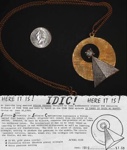
IDIC - Public domain, as far as I know


So, having gone through the technical stuff about Reading Matters 2017, let's start talking about the events. By the way, I finished guest speaker Jane Harrison's Becoming Kirrali Lewis yesterday morning. It's the story of a Koori girl brought up by a loving, caring white working class family, who thinks the other Kooris should just do as she's doing and work hard, etc. to get into uni. And no, she's not stolen generation as we know it, because her mother was middle class white, living in an era when unmarried girls were pressured to give up their children. And the way she treats her poor biological mother when they meet, because  she wasn't what Kirrali had expected only adds to the girl's obnoxious character. But she learns. I found it an easy read and enjoyed it, but not enough to keep, so it's going into my library today.

Friday morning, we got a welcome speech from the con committee and a welcome-to-country speech by a local elder, who told us about his family. 

Then there was a panel of sweet kids who are on this year's Insideadog advisory committee. They will be getting swapped around, so hopefully some of our kids can apply next time, but I no longer have my enthusiastic Nerd Pack or even their enthusiastic successors. I also have the sinking feeling that most or all of these kids attend a private or a middle class stare school. I did have at least one very capable student applying to be an Inky Awards judge, but that was a while ago and she didn't get in. 

However, that's neither here nor there. They were all passionate readers, the kind of people who will read the cereal box on the table if there's nothing else to read at breakfast. I totally get that. 

Looking through the different panels, I think it might be best to describe the ones I enjoyed most, because it's been a about three days and I was still sick enough to have trouble focussing. At one point I was coughing so much I got up out of my seat and went to cough behind a pillar. A kind gentleman filled and handed me a glass of water. 

The first actual session was the presentation - what we call a GoH speech in fandom - by Jennifer Niven. It was about her and how her books had been influenced by her own life. She said that when people sometimes challenged her with a "what do you know about that?" she would wonder how much they knew about her. Anyway, I was interested enough to download All The Bright Places, which I have in my library if it hasn't already been stolen. I think it has, though by a literacy teacher rather than a student. 

There was a panel on "Invented Worlds, Real Feelings" which included an overseas GoH, Mariko Tamaki, who does graphíc novels with "queer" sensibilities(apparently, one of them was on last year's top ten most challenged books list, though it might be a bit hard to do a virtual readout of a graphic novel), Alison Evans, who has done a fantasy novel and the lovely Alison Goodman, whom I've known since we met in a car on the way to our Aussiecon 3 committee meetings. We used to sit in the back and chat and she told me about this really good book called Harry Potter and The Philosopher's Stone. She did her first ever school visit to my library, because she wanted the practice, and spoke to my book club. She was teaching Creative Writing back then, but only had one book to her name, Singing The Dogstar Blues, but goodness, she had it all plotted out and showed my four eager students her massive chart!

There were several panels that day, but for me the standout was Jay Kristoff's GoH speech on Why We Need Science Fiction. You may know him as the co-author of the Illuminae Chronicles, which he's done with fellow Aussie Amie Kaufman, whom I first met at Flinders St station some years ago, when she stopped me to admire my t-shirt and told me she had her first book coming out the next year. They have both done very well since then, but, while Amie keeps popping up at various events, it was the first time I had heard him speak and I have to say I was impressed. I learned, among other things, that he once raided George R R Martin's hotel room for booze to share with some Game of Thrones cast members after the bar closed. 

It did help that he finished his inspiring speech with a line about a show that had presented people of diversity, of all colours and races going to the stars together and showed a slide of the original Star Trek cast. I wanted to cheer, but there were a few startled laughs. Clearly those audience members didn't get it. I think Gene Roddenberry, with his concept of IDIC(Infinite Diversity in Infinite Combinations) "got it" far better than some folk now promoting book diversity. 

And I remember an episode, "Let That Be Your Last Battlefield", which showed the utter stupidity of racism. Two men from the same planet had been fighting and chasing each other through space for thousands of years. Both were half black, half white - literally! The only difference between them? One had black on his left side, the other on his right. When they finally got back to their homeworld, it was dead - destroyed by war. It wasn't by any means the best episode of the series, but it made its point. 

Star Trek did what other genres can't: it commented on our world, hidden within the science fictional elements. I think that was somewhere in Jay's speech. Well done, Jay! 

Saturday had more interesting panels than Friday. It opened with Mariko Tamaki doing her GoH speech, which was mostly autobiographical, about growing up Japanese in Canada, then doing her first graphic novels. It was an enjoyable speech with plenty of warmth and humour. 

This was followed by "Too long, didn't read," on "Engaging the Internet generation." The main question was whether kids were reading less as a result of spending so much time on line. It was answered with a resounding "No!" by all the panellists. Kids, they pointed out, were reading - and writing - as much as  ever, if not more. It was just a matter of what. This was the point at which Lili Wilkinson suggested allowing fan fiction as part of a creative response in English. Of course, I always did that, back when we were allowed to do creative responses. Hers went a tiny bit further: including characters from other universes in the fan fiction. That hadn't occurred to me, though why not?

 I used to keep fan fiction as an option for the better writers - the poor ones really preferred to do something simpler, such as prepare a PowerPoint which showed pictures from the story and told the story. Once, I even had an integration student do an audio ebook, with his own voice reading what he had written, next to the slides. He needed help, but it worked and he had something to be proud of. Fan fiction, though, told me whether or not a student had understood the story. One student wrote a beautiful sequel to Morris Gleitzman's Once(she hadn't read Then, the actual sequel and I wasn't going to tell her). As far as I was concerned, she had understood it. And this particular student had a habit of writing novelettes! Nine thousand word epics, which I then had to edit. She was a bit upset at being limited to a few hundred words, but she learned how to keep it short and the story was published in the school anthology. 

I digress. Anyway, I nodded in agreement with Lili. Recently, a student cried, "Miss, I can't think of how to end this!" I suggested he have a spaceship land. "That's what I do," I told him. (Well, only sometimes, but still...). Ten minutes later, his story was complete. With spaceship and all. Yesss! Not quite fan fiction, but similar to Lili's suggestion. 

It was after this that Adele Walsh invited us to post links to our on line fan fiction on Twitter. Which I did, don't know if anyone else did.  

Another session I enjoyed was "Finding Zevo", presented by a transgender person called Zevo, who has written an autobiography, the one we had in our goody bags. As far as I'm concerned, Zevo is a "he", a young man with long hair tied back in a pony tail, and a beard. You change genders, that's the gender you are, right? The program book referred to him as "they". But I will refer to him as "he". Besides, the one trans person in my circle of friends insisted he was David, once he was no longer Jan, and he, not she. When I went to his funeral by the river, his very macho sword and heavy armour were laid out and plans made for a sort of Viking funeral(the ashes were laid in a toy Viking ship and launched on the river.)

I wasn't sure what to expect, given that Zevo had been called "they" in the con book, but he was very funny and warm, as he told his story, of having been a nice Jewish girl for Mum, who wanted a girl. She even had a bat mitzvah. He assured us he was not born into the wrong body, it was the right body, just not what his parents wanted. For a time, Zevo was a lesbian, girlfriend and all. Then, finally, time to take the hormones and do the other necessary stuff and behold! A young man. He's just turned twenty-one and has already been doing a lot of community work - good on him! I will be reading his book as soon as I get my goody bag back from Mum's place. 

A panel I liked very much was "The Real Of The Unreal", in which three spec fic writers talked about the research they did for their fantastical worlds. Alison Goodman, as we know, has been working on Regency fantasies(I bought the first in ebook on Saturday)and has done huge amounts of research, including learning some Regency era dances. Jay Kristoff said that he and Amie Kauffman work with what they know, research and then have their work read by experts in the area. That, of course, is a  great way to do it. Rachael Kraw, whose sort fic novel has DNA in it as an important element, admitted cheekily that she bullshits quite a lot and hopes she will get away with it. So far, I think, she has. I'm reading that one next. They were comfortable together, as spec fic people tend to be. More of this next time, please! 

Lance Balchin, a photographer who has built bits and pieces to use in a book called Mechanica(followed by Aquatica) did his GoH speech and that was great fun, as he showed us how he did it. Believe me, I had to be firm with myself and not allow myself a copy of one of those beautiful picture "encyclopaedias" of the future! I knew I would take them home, drool for a while and never read them again. 

This was followed by a sneak peek at the new Insideadog website,  which hasn't actually been created yet, but they explained that it would be more focussed on the chance for kids to do creative things instead if just checking out each other's book reviews. Pity it won't be out for a while! 

The closing ceremony had the gorgeous cartoons I mentioned in my last post. I hope they will be up soon. I was sorry that on the Friday I had to miss Will Kostakis's GoH speech. I gather it made people cry! I had to leave on time for the family dinner, and the event had gone over time. Will said on Saturday that they might be doing a podcast - fingers crossed! 

Anyway, there's my con report for this Reading Matters. I have a lot of reading to do! 

Sunday, June 04, 2017

Back From The Con...With Books! Reading Matters 2017 - Part One

I've spent most of the last week at home with a sore throat, a bad cough and a stuffy head, but I have been looking forward to Reading Matters for months - and paid $$$, as I was never sure that my school would pay. I was going. My doctor said on Tuesday that every conference has at least one irritating person who is spreading their germs and I shouldn't be that person. I understood, but I was going. I took great care to sit on the end of the row and turn my head to cough into my tissues. I didn't touch anyone and I was careful not to touch the food on the tables except with a fork. That's all I could do.

So, on to the conference itself. We arrived on Friday morning, picked up our badges and a goody bag with actual goodies in it! The last couple of times the goody bags were mostly filled with advertising materials, which I dumped. We even got a USB stick which was filled with advertising and I don't think you could delete the files. Useless! We got a USB stick this time too, but I believe that among whatever advertising stuff is in it(haven't checked it yet)is our certificate for VIT to say we did the 16 hours of PD time. 

But this time there were five books - five! One was the newest Vikki Wakefield novel, which I had better read, as it's likely to turn up on next year's CBCA shortlist. There was a Volume 2 fantasy novel, a verse novel and - oh, yes, one by one of the GoHs, I do hope they get royałties on it. I mean, that's about five hundred copies. Mind you, Will Kostakis's book The First Third, was handed out in uncorrected proof form, at another RM and he's done fine since then, and the novel has had some shortlistihgs. 

There was a book of sample chapters, but I left that behind. I prefer to read the whole thing. And five full length books had been provided, more than enough to keep me happy. 

Now, before I talk about the con itself I will just make a few suggestions for next time, for the con committee.

1. Consider videoing the panels and projecting them on to the screen which, this time, was used only for showing the book covers of the panellists except for a couple of GoH speeches when the speakers showed slides that went with their talks. The auditorium was long and the dais was in the middle. If you were sitting at the side or the back, you didn't have much chance of seeing the speakers. I chose to sit on the side, for reasons mentioned above and so that I could slip out if I had to. I couldn't see much beyond the occasional nose or head of hair. So I just listened. 

2. Take an example from SF conventions and give a wind-up signal. The first day was going way over time, though they did manage to get the over-time down by the end of the day. The second day there was timing, which didn't stop the final presenter before the closing ceremony from going fifteen minutes over her allocated time - did they allow it or did she just ignore the windup signal? And the closing ceremony included a wonderful presentation by the convention artist, who had been taking "notes" in the form of colourful cartoons for two days. I would have hated to miss that, and some people might have had to, with transport issues or waiting family. 

3. This is probably just personal, but think about it anyway. Reading Matters is basically a writers' festival, though admittedly the attendees are mainly librarians. If I want advice on how to run my library I can go to a SLAV conference. That's what they're for. SLAV used to have a book-based conference at the end of each year, but no more. So I really look forward to Reading Matters, which is only once every two years. I would really like it if next time they could scrap those presentations and slip in a couple more book panels - OR - preferably - see below...

4. Leave room in each panel or presentation for about ten minutes of Q and A. That was missing from this year's event, I'm not sure why. If strict timing is observed next time, then they will have room. Obviously, this time, that first day was already running late. But when you've come a long way and spent a lot of money to hear favourite authors, you do want the chance to ask a question or two! 

Here are a few things that worked well for me. The catering was good, the catering staff pleasant. The tea was help-yourself while there were two coffee carts making lattes, cappuccinos, etc. That's a good way to do it. There were cold water urns in the auditorium, as well as the foyer, and proper glasses rather than paper cups. Nice! 

The autograph sessions were well organised, over two rooms. Mind you, I only got one book signed, and that was because I had donated my copy to the school library, from which it was borrowed and not returned. I owed myself a signed copy! 

The book stall was there for most of the con, which meant that after the first session, when you couldn't get near the books let alone the booksellers, there was plenty of time to have a browse. 

I will continue with the actual panels in my next post, hopefully tomorrow. There were some good speakers, and IMO the best panels were those on speculative fiction. Of course, I'm biased, but others said the same. There are reasons for that, which I'll discuss in my next post.

By the way, one of the quirkier bits of the con was Adele Walsh, the head honcho, asking the audience who had written fan fiction. When many hands shot up, she invited us to tweet links to our stories. I thought all of mine were in print, not on line, but suddenly recalled that two of my old Trek stories were up on a web site called 1001 Trek Tales. So I did put up a link, but if anyone else did I have no idea. And I don't really want to wade through all those #YAmatters tweets to find out! Let me know if you're interested and I'll put up my link on this site. There are only two, because the lady published what she already had in her old zine collection. I did give my permission, of course.  But you're welcome to read them. 

Anyway, good night till my next post!


Tuesday, May 30, 2017

The Mystery Blogger Award!


Recently, I received an invitation from David Jesson, of A Back Of The Envelope Calculation, to participate in the Mystery Blogger Award. This was set up by Okoto Enigma(Enigma/Mystery, get it?) to recognise fabulous blogs and bloggers.  Thanks, David! We've only met recently, during the A to Z Challenge, so it's nice of you to have checked out my posts.

Here's the blurb: 

“Mystery Blogger Award” is an award for amazing bloggers with ingenious posts. Their blog not only captivates; it inspires and motivates. They are one of the best out there, and they deserve every recognition they get. This award is also for bloggers who find fun and inspiration in blogging; and they do it with so much love and passion"


My nominees were chosen mainly from my Blogger dashboard, with a few I had to subscribe to because they will insist on posting on Wordpress! I have a lot more favourites than these, but these are chosen from among the ones who post at least semi-regularly, whose blogs I've read a few times this year and whom I think aren't too dignified to participate! Some other favourite blogs, such as The History Girls, are multi-player blogs. There are others I love which just don't post very often. 

So, here are my nominees: 

1. Lexa Cain blog - for a weekly cheerful chat about her "small blessings", usually about writing and sometimes about domestic issues, but always fun. 

2. Multicolored Diary - for delightfully silly descriptions of over-the-top folktales

3. Tales Of Faerie - Kristen - for fascinating reviews of fairy tale books 

4. Fairytale Fandom - Adam - for entertaining reviews of fairy tale books and visual media

5. Sharon's Shells, Tales And Sails - Sharon- for delight in whatever is her subject matter whenever she is posting

6. Pamelibrarian - Pamela - for passion about the young adult books she reviews. She loves them or she hates them, you always know it and why. 

7. Satima's Blogspot - Satima Flavell - for monthly chats about science fiction and things fannish, and even belly dancing! 

8. Lecture Toute Une Aventure - Isabelle, a Belgian blogger who mostly writes her reviews of paranormal romance in English and shares her enthusiasm for them. (When she does review in French, well, I can read it, if slowly)

9. Simon Petrie, Writer, Time Traveller, Inveterate Liar - hey, that's the title of the blog! The title character does thoughtful reviews of SF and crime fiction, mostly Scandinavian crime books I might never otherwise discover. 

10. Redwood's Medical Edge - Jordyn, an emergency room nurse who writes novels and provides a great and fascinating resource on this blog for anyone who wants to hurt their hero. 

You are not committed to respond to this, but if you do decide to have a go, the rules are below.


Award Rules

1. Put the award logo on your blog.
2. List the rules.
3. Thank whoever nominated you and link to their blog.
4. Mention the creator of the award (Okoto Enigma) and provide a link as well.
5. Tell your readers 3 things about yourself.
6. Nominate roughly 10 – 20 people for this award.
7. Notify your nominees by commenting on their blogs.
8. Ask your nominees five questions.
9. Share a link to your best/favorite post that you’ve written.


Three things about me: 

My birth certificate has the wrong date on it. True! I was researching for a book and thought it might be fun to look up a newspaper front page for my date of birth, September 3. But I know I was born on a Friday - Mum had to go to hospital in a bakery van delivering challah for the Sabbath because public transport was closed for the weekend, and Dad, returning from the army, had to hitch a ride to hospital for the same reason. But the year I was born September 3 was a Thursday.

I used to be a member of the SCA, and was hit on the head quite a lot while trying, unsuccessfully, to learn how to fight. I did learn enough to help in my fantasy writing. You can still find my device on line under the heading "Gwenddydd Rhosyn", my Society name.

I wrote my first stories in my sister's old school exercise books, in the space above her tiny handwriting and in any blank bits left over. 


David's Questions:

1. You are HG Wells’ Timetraveller, attempting to restart civilisation in the far future: what one book would you take with you to help?  (ebook readers not allowed!).

I think I'd probably take a book that is comfort reading for me rather than a handbook of Civilisation For Dummies because, let's face it, the Eloi are frustratingly dimwitted and the Morlocks might just eat me before I succeed. A few tools, yes, things that won't break down too easily or need electricity. Actually, I might consider sneaking in an extra book, A Connecticut Yankee In King Arthur's Court, which does make some Civilisation For Dummies suggestions. 

2. Book first or film first?

Book first, usually, but it won't stop me from seeing a film based on a book I haven't got around to reading yet, eg Bladerunner, which is a classic in its own right. 

3. Following on from the previous question, has an adaptation ever ruined the original for you to such a point that you couldn’t read/watch the original anymore?

Not quite, but if I hadn't already read and loved The Dark Is Rising by Susan Cooper, several times, the film version would certainly have put me off ever reading it! What a horrible film! Americanisation of an English hero and a beautiful English story set in a magical Buckinghamshire,  and university Professor and archaeologist Merriman Lyon,  who is really the Merlin of legend, being reduced to someone's not too bright butler, and the dignified Old Ones asking the teenage Will Stanton(or Will Stenton, as he pronounces it in the film)for advice. It's what the Harry Potter movies might have been like if J.K Rowling hadn't stood firm. I really can't understand why, with so many wonderful stories of their own, U.S. film producers think it's necessary to appropriate  other people's, or think their U.S. audiences are stupid enough not to be able to appreciate other people's stories.

4. Beer or wine?

Both and neither. I share a glass of beer with my mother when we go out for dinner and sometimes have a glass of white wine when I dine out on my own or with friends. At home, it's strictly liqueur, usually Cointreau, and not often. A bottle lasts me a year. 

5. What was the last book that you read that made you say “[insert favoured cuss], I wish *I’d* written that”?

Kate Forsyth's Bitter Greens, her version of Rapunzel, centred around the author of the fairytale in seventeenth century France, in which the witch holding Rapunzel had been an artist's model for Titian and you do get to see it from her viewpoint as well. Damn, that's good! 

My best/favourite post? Heck, there are over 1300 posts on The Great Raven! How do I choose? Well, I'm rather fond of this one, though it's not my most popular. It's entitled "You know you've been reading too much YA paranormal romance when..." 

And finally, here are some ...

Questions for my Mystery Bloggers

1. Three desert island books?

2. You have been offered your choice of place, money no object, fictional place is fine, to write your book. Where is it?

3. Which three fictional characters would you invite to your New Year's Eve celebration? Why?

4. Favourite book-to-film  adaptation/s?

 5. Reincarnation exists! What will you be reborn as? Or, who would you like to have been in a previous life?(Doesn't have to be someone famous. For example, you might want to have been a cat in ancient Egypt, they had a great life and people could get into huge trouble for killing them)

Friday, May 26, 2017

On Some Visual(King)Arthurs


Arthur. Public domain.

Here's a link to an entertaining Tor.com article I read yesterday. It was ranking ten Arthurian films from worst to best. I can't say I agreed with all the ratings, but I found that I had actually seen most of those on the list. Of those I hadn't, there was one of which I had seen the original version - I never knew there had been a remake of Prince Valiant! That was one I considered silly but fun, despite all those American accents. The only Brit I recall was the villain, played by James Mason. It had some good music and a singing sword that hummed the film's main theme as it was wielded by the hero..

Anyway, I thought it might be fun, since I've long ago posted on my favourite Arthurian books, to talk about some of the films and TV shows I've seen over the years. I won't bother rating them, just give my opinion. Some are on the Tor list. In no special order...

Monty Python And The Holy Grail: Loved it! On the remote chance you've missed this, King Arthur(Graham Chapman)goes searching, accompanied by his faithful squire Patsy,  for knights to join him in a quest for the Holy Grail. They don't actually have horses, so Patsy carries coconut shells to clop together to make the sound of hooves as they gallop along. This, in its turn, leads to a long argument with men on a castle wall as to how a coconut got to Britain in the first place(carried by a swallow). Along the way, as they collect knights, they encounter various obstacles such as the Knights Who Say Ni, who demand ... a shrubbery, a murderous rabbit and a bridge which will toss you over if you fail to answer three questions. (It ends up tossing off the bridge keeper when he fails to answer a question put to him). And there's no Merlin, but there is Tim the Enchanter, who warns them against the rabbit. There are communist peasants, carts collecting plague-ridden bodies, even if they're not quite dead, a witch trial in which the accused is weighed against a duck... I have shown the plague scene and the witch scene to my Year 8 history class, who thoroughly enjoyed it. The Pythons knew what they were sending up. It's intelligent writing. It's funny whoever you are, but much funnier if you know the background. I first saw this when writing a thesis about Arthurian literature and couldn't stop laughing. 

Excalibur: a stunningly beautiful film made in Ireland back in the 1980s. It stars Nicol Williamson as Merlin, and what a wonderful Merlin he was too. You never found out his background but it didn't matter. It was a mixture of the late Middle Ages and the Dark Ages. Magic filled the air, though Merlin told anyone who would listen that the age of magic was coming to an end. Arthur and Guinevere were played by Nigel Terry, who had played Prince John in The Lion In Winter, opposite Peter O'Toole and Katherine Hepburn, and Cherie Lunghi, who played quite a few roles later, including Beatrice in the BBC Much Ado About Nothing. Lancelot was played by Nicholas Clay, who later played Glaucus, the hero, in a mini-series of The Last Days Of Pompeii, opposite Franco Nero, who had played Lancelot in the film version of Camelot. He played a villainous priest!   In fact, Excalibur featured quite a few future stars, including Patrick Stewart, Helen Mirren and Liam Neeson. The music was mostly Wagner, and whatever I think of Wagner, it fitted beautifully here. I'm afraid the Orff O Fortuna tune played while a healed Arthur and his knights galloped across a blossoming land, while wonderful, had been used in a coffee commercial shortly before, and people in the cinema I saw it in burst out laughing. Not the film's fault! 

Camelot: In my opinion, neither Richard Harris nor Vanessa Redgrave can/could sing. It didn't matter much in his case, because Arthur is a sort of Rex Harrison role, singing-wise, who can talk-sing most of his songs, and Richard Burton, the Broadway Arthur, couldn't sing either. It did matter in her case, because Guinevere is a singing role. Why couldn't they have had Marni Nixon or some such person to do the singing? Still, it was visually stunning, especially the wedding scene, with a wedding gown stitched with thousands of glowing pumpkin seeds. The designer was our very own Aussie John Truscott. I've read The Once And Future King, on which it was based, and whileRichard  Harris was no singer, he got the spirit of T.H White's Arthur across amazingly. I should add, though, that many years later I saw him on stage with beautiful young Aussie singer Marina Prior as Guinevere. Quite apart from the fact that he was way too old for the role by then, he seemed bored after so many performances and, sadly, was walking through it. A great disappointment. After all, Chaim Topol had played Tevye many times when I saw him on stage and he was as amazing as ever. 

Oh, and Italian actor Franco Nero was a lovely Lancelot, but eventually returned to Italy, because he was fed up with playing villains in the U.S. Which didn't stop him from taking the role of an evil priest in the Pompeii mini-series. 

The NBC Merlin mini-series, starring Sam Neill as Merlin and Isabella Rossellini as a Nimue who was not evil at all. It was choc-a-block with big-name stars, such as Miranda Richardson as a villain - I'm so used to seeing her in comedy, I had to adjust. I thought it a bit silly, but it had quite a few elements of Geoffrey of Monmouth's version. And watching it, I wished that someone had made a full-scale version of Mary Stewart's Merlin novels, because IMO, Sam Neill would have been perfect for the role of Stewart's adult Merlin. And those books, too, were inspired by Geoffrey Of Monmouth. 

There was, in fact, a British children's version of The Crystal Cave, Merlin Of The Crystal Cave, with a young actor called Michael Winter, who had appeared as a long-lost prince in The Knights Of God, which had vaguely Arthurian elements in a futuristic dystopian setting. It began at the end of the second book, The Hollow Hills, in which Arthur is made king, when Merlin says he wouldn't wear the cliched starry robe even for Arthur. As Merlin rides off with his servant, he tells the man his own life story and the rest of the film is a flashback. I enjoyed it, though it had some changes from the novel. As far as I know, it's the only time any of the Stewart Arthuriad has been dramatised. If you've heard otherwise, please say so in the comments below. 

King Arthur, a 2004 film in which Arthur is a Roman cavalry officer, as he may well have been, and his knights are all Sarmatians. I recall the Sarmatian theory being aired in a non fiction book which I didn't take too seriously, but it seemed to work for that film. He and his little troupe of knights have finished their time in the Roman auxiliaries and are looking forward to retirement, when they're required to do one more mission. Of course, it's likely to kill off one or more of our heroes, no spoiler as to which of them. Meanwhile, they face danger from the "Woads", led by a tribal chieftain called Merlin. Guinevere, played by Keira Knightley, is Merlin's daughter and a warrior lass who can shoot arrows amazingly. It may be the only Arthurian film in which I've liked Lancelot, a brave fighter who believes firmly that after his death he will return as a glorious white horse, an animal which his tribe holds sacred, and begs not to be buried if he is killed. He might be attracted to Guinevere, but there's no romance here and Arthur and Guinevere only marry in the last scene anyway. Woads and Romans must join to deal with the mutual enemy, the Saxons. There's this delicious scene where the knights are riding off after finishing their mission, and turn to see Arthur, who will fight the whole damned Saxon army alone if he has to. Of course, you know what cones next!  I liked it. It was anachronistic in many ways, and the Romans were out of Britain by the time the story is set, but I still couldn't help liking it. By the way, if you look quickly, you'll see a Round Table. The Tor review says it isn't there, but it is, at the army's HQ. Of course, with a tiny group like Arthur's, it isn't for them, but it's still the Round Table. 

Sword Of The Valiant, a film of Gawain And The Green Knight, the only one I know of. That alone scores points for it in my opinion. Mind you, it's not too faithful to the poem, in which the jovial Sir Bertilak was really the Green Knight, and the whole thing is a test of young Gawain's honouring of his promise, not to mention set up by Morgan Le Fay to scare Guinevere, but Sean Connery was just right for a Green Knight who is, as we're told while he is dying, an embodiment of the land and nature. In fact, I've read theories that state he is a vegetation god. The scene where Gawain is peeing with his armour on is utterly cheeky! Not the best Arthurian film ever made, but worth seeing at least once, and I vaguely recall that Rosemary Sutcliff was involved. 

Arthur Of The Britons: A children's TV series with Oliver Tobias. This Arthur rules a few villages, not Britain, though he is highly respected as a leader, and the Saxons are already long settled in Britain. His foster brother, Cei, is a Saxon brought up by Britons, and gung ho for his adopted people, but has a re-think about the enemy when he sees how they live and the fairness of their justice system. In fact, Arthur almost makes peace with them in the course of the series. King Mark of Cornwall, played by Brian Blessed, would probably have made mincemeat of Tristan if he had existed in this series , but he doesn't. The costumes look well and truly lived-in, the sets are fairly typical British low-budget, but it was an entertaining show. I should add that the show's theme tune was composed by Elmer Bernstein, who wrote the score for The Ten Commandments. 

Look, there are plenty more, but this will do for now. If you have a favourite I haven't mentioned, tell me about it in the comments. 

Now for one or two I wish had been filmed, but weren't. 

An adult version of the Mary Stewart novels. See above.

Rosemary Sutcliff's The Sword At Sunset. This Arthur is a Romano-British cavalry officer, who works to save Britain from Saxon invaders. He has his sword thrown into the lake so that the enemy, who would recognise it, won't know he's dead. It's the best "real Arthur" version I have read. It has been dramatised, but only for stage. I think you can catch an amateur version on YouTube. 

The novel Arthur, King, by Dennis Lee Anderson, which was set in wartime Britain. King Arthur follows Mordred into the future to get back Excalibur and Merlin's journal, which goes till 1945, because, like T.H White's Merlin, he's living backwards. This Arthur became a father in his teens, seduced and abandoned by Mordred's mother, so is in his prime, not middle aged. He has to pose as a British pilot - well, he learns how to take off, but never gets the hang of landing! He is befriended by an American volunteer(the Yanks aren't yet in the war). He falls in love with a beautiful doctor called Jenny. Think of the film Time After Time. Yes. Like that. The author of the novel was a screenwriter, so it read like a film anyway. 

Do you have any favourites you wish gad been filmed? 

Saturday, May 20, 2017

Space Opera Week - My Space Opera Favourites!

Last week I was talking about regular opera - you know, the kind in which boy meets girl, falls in love and they both end up dead at the end(or, as in Madama Butterfly, she ends up dead and it's a kind of revenge on her faithless husband, who went and married someone else behind her back and whom she has specified must come himself to pick up their little boy - and hopefully trip over her pathetic dead body. That'll learn him!). And while they're dying, they sing.

This morning I got my weekly email from Tor.com and blow me if it isn't Space Opera Week! 

There are various kinds, of course. Soap opera is called that because they used to advertise soap and other such stuff during the ads. Come to think of it, soap opera is probably the closest to original opera in its storylines except nobody sings. (Though I, personally, am beginning to think the Song Of Ice And Fire series is pretty much mediaeval soap opera!). Horse opera is another name for Westerns. And so on.

Space opera is the kind of story in which there are spaceships that can actually get from one corner of the galaxy to another using faster than light drives. You have to have those or there's no space opera. The authors do try to come up with explanations...sometimes, anyway. Wormholes, for example. Frank Herbert has mystical stuff, people who take this thing called Spice to navigate through space, and no, you can't use it in cooking!  Lois McMaster Bujold has wormholes, but the pilots have to get implants to do the wormhole jumps, which can be a problem if they stop making the kind of ship for which you have an implant - suddenly you're out of work! This happens to a character calmed Arde Mayhew, whom her hero Miles Vorkosigan rescues from redundancy. 

Space opera has a very long history, as you'll know if you've ever seen the covers of the 1930s pulp magazines. In fact, Fredric Brown was sending those up in his novel What Mad Universe, in which a science fiction editor finds himself in the universe of one of those pulp covers, complete with girls in see-through clothes.  


It must be a popular genre even now, as people are still writing it and viewing it. Below, I'll list some  that I've read and loved over the years, in no special order, and then a few films and TV shows. I have not read anywhere near all of them, including many major classics - so many books, so little time! But you are welcome to mention any of your faves I might have left out in the comments section below. 

Elizabeth Moon's Serrano Legacy series. Heris Serrano is an admiral of the space fleet. There are plenty of good strong female characters in this series and some minor characters in one book get a lead role in another. I could never get into Honor Harrington, I'm afraid, though a friend who was a huge fan sent me the first book in that series. I did like Heris Serrano. I unearthed this series when I ran out of Miles Vorkosigan books because Lois McMaster Bujold was writing fantasy! I mean, really, fantasy! When you've been writing the best damned space opera series around, it's a shock to fans like me to be confronted with a series of fantasy novels instead. I tried, really I did. I just couldn't read past the first one. It was adequate, but not my cup of tea. Fortunately, she went back to the Vorkosiverse. And Elizabeth Moon did another space opera series, Vatta's War, to keep me going till my dearest Miles Vorkosigan returned.


Gordon R Dickson's Childe Cycle, aka the Dorsai series When I was new to fandom, this was the space opera everybody was following. They were meant to be four historical novels, four present day and four space operas, but in the end, the space opera dominated and there were certainly more than four of them, plus short stories. I think I started with Soldier, Ask Not. I loved the Dorsai mercenaries, especially Ian and Kensie, the Dorsai brothers. Ian was the dark and brooding one, Kensie was all sunshine and sweetness, but died early on and Ian never got over it, and didn't the female readers like me long to comfort him!  The planet was poor, so all they had to make a living from were their young people's bodies, in combat. The premise was that the human race has more or less split into specialties. There are Mystics, psychologists, soldiers, spread across a number of colonies.  

Poul Anderson's Dominic Flandry and Nicholas Van Rijn novels. Dominic Flandry is a dashing secret agent who has many adventures in space and is a bit of a dandy. Nicholas Van Rijn is a space trader, a lot smarter than he pretends to be, and his stories are hilarious. They are both set in the same universe, which has a timeline going over centuries. 

Poul Anderson and Gordon R Dickson also wrote a series together, about the Hokas, a race of live teddy bears who are intelligent and imitative. When they like a story - usually Earth-inspired - they play it out with total seriousness. In one short story a group of them are taken to the opera and decide to play out the story of Don Giovanni, with their hapless human helper as the Don! They never really believe it deep down, they just enjoy living it. 


Lois McMaster Bujold's Vorkosigan novels. Need I say more? I admit I'm about three books behind, because I keep going back and rereading the old ones and besides, I am going slow on Cryoburn because I know that Aral Vorkosigan dies in that. It's such a wonderful universe. The characters are delightful and the universe is fascinating. Wormholes, battles, politics - some of the battles happen because of the politics and the politics are centred around control of the wormholes, without which you can't travel faster than light. Which has contributed to the culture of Miles' planet, Barrayar, which was stuck behind a blocked wormhole for a very long time and then, when one was opened and they were invaded, they first kicked out the invaders, then came out fighting. It's an old-fashioned feudal society and though they have a spacefleet, riding boots are still part of the military dress uniform and women have fewer rights than men.

Anne McCaffrey's The Ship Who Sang. The heroine Helva is a girl born crippled in a time when children who can't live a normal life have the option of being trained and, when ready, sealed into a spaceship and running it as a computer. The ship gets to choose her pilot, known as the "brawn" (the ship is the "brain"). Helva becomes a ship and has many adventures with her "brawn", with whom she sings duets. No further spoilers, just read it! 

There are so many more, but I'll go on to visual space opera for now. 

My all time favourite space-themed TV series was Star Trek - the original, not the spinoffs! The spinoffs were generally good, sometimes very good indeed, but I never saw the entire series of any of them, nor wanted to collect them(except Enterprise, which I got on discount and still haven't watched through). I've been enjoying the new films, whose actors, I believe, are really settling into their roles and Karl Urban especially sounds like DeForrest Kelley as Dr McCoy; when you shut your eyes you can almost see the original McCoy!  It's a world in which peace has broken out except maybe with the Klingons, with whom there was an enforced peace after the episode "Errand of Mercy" and they just got on with exploring. There were not too many encounters with the Romulans in the original series. Even the third season, the weakest, had some fine episodes. I bought the entire boxed set of seasons 1 to 3. 

Babylon Five was wonderful too. It was set several centuries in the future, during the "Third Age Of Man" as the credits declared solemnly each episode. It was on a space station with the ambassadors of many races living there, along with a community of workers and a commander to make sure it all ran smoothly. There were five seasons, planned out from beginning to end by the author, John Michael Straczynski, who wrote most of the episodes, though there were some written by the likes of Dorothy Fontana, David Gerrold and even the amazing Neil Gaiman! The story editor was Harlan Ellison, who did a few cameo roles himself, including a doctor, a comedian and a cheeky computer with a Jewish New York accent. It had - deliberately - elements of Tolkien in it, if you can imagine, for example, the Nazghul as scary black spaceships, each with a human symbiont melded into it. There was a lot of mystical stuff in it and it was the first TV SF series I saw in which our present-day religions played a role, as well as religions of other worlds. 

If you think it sounds vaguely familiar, this series was pitched to a certain company before the series you have in mind, and turned down. 

I have a great fondness for The Last Starfighter, a sweet YA film about a teenager who is whisked off into space to become a Starfighter and help save the universe against the baddies. It was Robert Preston's last movie, I think.

Galaxy Quest is going on my favourites list; it starts on Earth, but ends up with all the elements of space opera as  a group of has-been actors from a TV series not unlike Star Trek are whisked away to play the roles from their TV show on a replica of their ship, only one which works. There's this sweet race of aliens who saw the show, thought it was real and based their lives on it...

I'd be lying if I didn't admit to a love for the Star Wars universe. I'm old enough to remember the excitement of the original film, which didn't, in those days, have a sub title and was, in the beginning, called The Star Wars. My brother has a vinyl double album with that title. I remember going to see this amazing new film after school one day, at the quiet five pm session, when you didn't have to book ahead or stand in a queue, and being totally blown away by it, from the very first moment when that huge spaceship roared across the screen till the last when the beautiful princess presents medals to our heroes. Who would have known how far it would go? And that glorious musical score and the Hero's Journey elements that have played so great a role in films since then... 

Plus, those of us who are passionate Star Trek fans owe a lot to Star Wars. It was the success of that film which persuaded Paramount tat there was money to be made from science fiction and they brought it back. 

So, what are your favourite space operas?


Tuesday, May 16, 2017

The Castle In The Sea(Quest of the Sunfish#2) by Mardi McConnochie. Sydney: Allen and Unwin, 2017


In a post-climate change world, four children, siblings Will and Annalie and their friends Essie and Pod, are sailing on a small boat, the Sunfish, accompanied by their parrot Graham, who can think as well as speak, due to a special computer chip. Annalie and Will are searching for their father Spinner, a scientist who is on the run from the organisation that pretty much runs the world, the Admiralty. He was part of a team that was doing work on a device that could wipe out what is left of the world, in the wrong hands. In fact, the original version did more or less wipe out the world, causing an event called the Flood about forty years before the first novel begins. Various countries are still struggling back from the brink.

Spinner and his comrades divided up the data and went into separate - secret - exile. In the first book of this series, Spinner had to leave his children with only a few coded clues - and now they, too, are on the run from a former team member who represents the Admiralty. Without all the data, the Admiralty can't use the scientists' work.

The castle in the sea of the title is only a small part of the story, in which Essie and Will, flung overboard during a storm, are washed up on an island with an abandoned castle on it. There is no explanation for the castle or who lived there; there is just enough useful equipment left behind to help them as they learn to survive as castaways, while they build a raft. Both children learn and develop as characters while on the island.

It also gives an excuse to divide up the characters for separate adventures as Will and Essie build their raft and go searching for the others and Pod and Annalie take their half-wrecked boat to be fixed by pirates.

The characters have certainly grown since the first book, Escape To The Moon Islands. Annalie is still the smartest of them, but Essie, her schoolfriend who came along for the ride, is beginning to show a strength she didn't know she had before. When she has to learn new things -as when she and Will are together on the island - she does.

Pod,  a former slave whom the others found stranded on a rock after being thrown away by his pirate masters, has also developed. When he issues a warning, an "I have a bad feeling about this!" statement, he's usually right. Not that the others always listen.

The novel's world is fascinating. It has developed out of the climate change events, into a new lot of societies. There are pirates and entire communities living at sea. One country has built a giant dyke and canals, and is recovering well. There is plenty of technology - everyone seems to have a kind of cross between a tablet and a smartphone, called a shell.

And the problem isn't just the climate change - the warming in one country, Brundisi, led to drought, so the government tried the "Collodius" device and that started the worldwide flood. I liked that idea.

On the whole, though, if your older children just want a good, action-packed adventure with strong, interesting characters, this will do them nicely.

Suitable for readers from about eleven or twelve up.

Find it in all good bookshops, or check out the Allen and Unwin web site.

Saturday, May 13, 2017

Just Been To See... Carmen!

Celestine Galli-Marie as Carmen. Public domain.


This afternoon I went to the opera at the Melbourne Arts Centre. I subscribe, though last year I didn't go, as most of the season was the Ring Cycle and I loathe Wagner, fully agreeing with whoever said that Wagner's music has some beautiful moments and some dreadful half hours. What little wasn't Wagner I'd seen before.

Well, I've seen Carmen before, many times. In fact, it was my very first opera, as a child, given as a birthday treat. The music was beautiful, but the singers were amateurs - and amateurish, though the Carmen singer went on to play Fruma-Sarah in Fiddler On The Roof. (But that was okay, because the ghost of Fruma-Sarah was supposed to screech!) It almost put me off opera altogether, though when we were going on a school excursion to The Barber Of Seville, my music teacher assured me the singers were professionals and very good - which they were. Phew! My love of opera was rescued! 

And I do love it, enough to be sucked into going to every season, even when, so often, they perform the same damned operas over and over again. I will never willingly see Madama Butterfly again. I don't mind La Boheme, whose music still enchants me, though I was almost put off when it was set in the sixties and poor Mimi died lying in a bean bag... Il Trovatore - beautiful music, but they will go having sixty year old tenors playing a sixteen year old troubadour! And the story is so very silly, even the Marx Brothers version in A Night At The Opera is only a little bit sillier. 

But Carmen - I think I'm not quite tired of it yet. It's such a shame that Bizet had to see it as a flop and never survived long enough to to see it as a hit. The music is glorious and the story is nowhere near as silly as those of some other operas I've seen. There are no long lost brothers, no noblemen backstabbing each other and threatening the heroine(who is a lady in waiting to the queen and in love with the sixty year old tenor). There are no kings or gods or even middle class Parisians and courtesans. There's just a gypsy factory worker and her soldier boy. And, yes, a gang of smugglers, but what they're smuggling isn't important. In fact, if there's anything silly about this opera it's the smugglers' camp, which just about anyone seems able to drop into - and leave unscathed - whether it's the celebrity bullfighter or the hero's sweet little girl-next-door. I mean, come on, now! 

But this production was directed by Shakespearean actor-director John Bell, who updated the setting to more-or-less modern Havana, and focused on the relationships. And I noticed things I hadn't noticed before, and appreciated better things I had. 

For those of you who are unfamiliar with the storyline, it's basically femme fatale girl meets soldier boy, flirts with him, they fall in love and he ends up killing her when she quite understandably gets fed up with his jealousy and drops him for the celebrity bullfighter. Of course, he might see it differently. He has thrown away everything for a relationship which isn't even permanent. 

But here's the thing. Don Jose, the hero, isn't entirely the clean-cut upright boy he appears. Early in the opera he admits he only became a soldier in the first place while he was on the run after a fight in his village that ended badly for his victim. We don't know why he had the fight, but it's clue number one, which suggests he has a violent streak that just might come out later. Each of the two times the churchgoing sweet young thing Micaela brings him a message from his Mum, it's that the old lady has forgiven him. For what? The fight? But that seems to have blown over. She is still forgiving him in Act Three, when Micaela arrives at the smugglers' HQ to ask him to go home to see his dying mother. Something else, then? What else might he have done for which he needs forgiveness? And then he has to go with Carmen and the smugglers because he got into yet another fight, with his CO, in a fit of possessiveness. 

And Carmen. She seems to be a serial monogamist(monandrist?). In Act One she says she's just kicked out her last lover and is in the market for a new one. She falls in love with Jose because he's not interested in her at the time. Big mistake - fatal, in fact. She should have noticed Jose's possessiveness during that fight in Act Two! If she had accepted Escamillo the toreador in Act Two, in the pub scene, she might have been alive at the end, but opera is not like that. See Maskerade, Terry Pratchett's novel on the subject of opera. Escamillo knows perfectly well she will eventually dump him, but he's a celebrity, no doubt with plenty of groupies to cheer him up. 


Carmen makes a number of fatal errors, mostly in underestimating her lover's capacity for violence. I don't think either of them knows what love is. He thinks it's about owning your beloved. She thinks - well, similar stuff. When it's him doing the jealous act, she's all, "I have to be free!" When he makes gestures of departure she says things that will eventually get her killed, to get him to stay. She just can't shut up. 

Still, I have never liked Don Jose. He strikes me as the sort of boyfriend who would hang around in the corner at a party, getting more and more drunk and glaring at the girlfriend who's having a good time without him, unless he embarrasses her. Then, on the way back, he'd have a burst of drunken rage in the car. He's downright scary! 

Anyway, this was a fine production. The children doing the "little soldiers" in the first act were adorable. They came beck in the final act, some of them rap dancing during the parade of bullfighters. Last time I saw the opera there was a live horse on stage, whose rider brought it on during the curtain call and got it to take a bow. No horses this time, except an amusing pair of men doing the hobby horse thing. Well, it was done in modern dress(more or less) and trucks were more likely. 

The singers were amazing, all of them, and there was a lot of applause during the curtain call. 

So, that's me and the opera, and I think I'll go to bed and watch the Marx Brothers with Alan Jones and Kitty Carlisle, with "the party of the first part" and "...make that two hard boiled eggs!" 

Who else enjoys opera out there? Any favourites? And if you hate it, what in particular? 

Friday, May 05, 2017

Early Morning Reading In Bed! Terry Pratchett...


The Fairy Feller's Master Stroke by Richard Dadd. Public Domain


It's Saturday morning and I'm rereading the Tiffany Aching books - on my phone! Comfort reading is what I need in bed.

Terry Pratchett's last novel, The Shepherd's Crown, is a Tiffany Aching story, and I refuse to read it till I've reread the series. It's the very last, you see, so I'm going slow. I used to devour them as they came out, knowing there would be more. I'd borrow the hardcover from the library while waiting for the paperback, though I do have a few in hardcover, because sometimes they were discounted and sometimes I just had to have it - now! These days I buy them in ebook, because my paperback copies are wearing out.

So this morning I have been curled up with The Wee Free Men, the first novel in this particular Discworld sub-series, although we first met the title characters in Carpe Jugulum, in which they help  King Verence of Lancre, who has been hypnotised by the vampires. In return they are given a home.

But this is the first novel in which you get to know them properly, as individual characters, and the story isn't set in Lancre, a tiny kingdom in the Ramtop Mountains, but in the Chalk country, which is basically the south of England, where the White Horse of Uffington is carved into the chalk. There's a some chalk carving here too, and a White Horse. And sheep. Lots of sheep, and Tiffany Aching, the granddaughter of Granny Aching, the shepherd all shepherds want to emulate. Granny Aching was almost certainly a witch, of the Discworld variety, who are respected, in Lancre at least, but she is dead, and nine-year-old smart-alec Tiffany, who makes the best cheese in the district and has read the dictionary cover to cover, wants to be a witch, to make sure nobody ever again mistreats old ladies whom they think are witches.

When Tiffany's little brother is kidnapped by the Queen of Faerie, she needs help. And there are these tiny red-headed men who wear kilts and would rather fight than eat, who were kicked out of Faerie for being drunk and disorderly, who know the way back in... And Tiffany has her iron frying pan...

I just love Terry Pratchett's gentle humour and his wisdom. I do remember the first time I read this thinking that I had never come across a nine-year-old who was quite as advanced in speech and thought as Tiffany, but in the end, you just accept Terry Pratchett's characters for who and what they are, sit back and enjoy the ride.  

And what a ride it is! I can almost feel sorry for the Queen - defeated not only by a nine year old with a frying pan but by Magrat Garlick! Magrat! Wimpy Magrat who has sung too many folk songs...

But that's another novel, Lords And Ladies. 

And right now, I'm delighting in Tiffany's first encounters with the Nac Mac Feegles, a tiny race of men who live in a sort of hive colony with a Queen, the kelda, who is the mother of most of them, since Feegle females are few and far between and all of them become keldas, so have to leave home with some brothers as a guard. The Feegles are about six inches high, covered in blue tattoos and think they're dead and this is the heavenly afterlife, because it's so full of great stuff - things to steal, booze to drink and things to fight. They carry swords, but mostly fight by grabbing the victim's ears and head butting them. When they die, they believe, they are reborn elsewhere and have to be good to return here. 

I know how it will all pan out, but it's a bit like going back to the first Harry Potter book, where Harry is young and innocent and the wizarding world is new and exciting. Tiffany grows up in the course of the novels. By the end of I Shall Wear Midnight, which I thought was the last novel, she is a young woman who is the village's witch, with a witch's responsibilities, and has fallen in love with an intelligent and brave young man. If you've read the fifth book, by the way, please don't tell me about it in the comments! I want to discover it and before that I'm rereading the others. 

I love that the centrepiece of this one is a real painting that Terry Pratchett had seen - was it, perhaps, the inspiration? See above. I got it from Wikipedia, where it has its own entry. 

In some ways, this is my favourite of the Tiffany Aching books, though I love all four of them. 

Have you read them? What us your favourite? 

Wednesday, May 03, 2017

Second Sale For The Year - rejoice!

Last year I realised suddenly that for the first time in ages I hadn't sold anything - not one book or story the whole year. My writing income last year was entirely from royałties - and I have had some very nice royalties from my education titles  - and lending rights, in which I receive some money from each of my books in libraries. Sooner or later those fizzle out as your books are stolen, weeded or simply not returned from the library and they go out of print. But I get around $4000 a year from lending rights at the moment. 

I decided it was time to go back to non-fiction. Short non-fiction, as it's very hard to sell non-fiction trade books these days and the education publishers have their own stables of writers and aren't interested. One education publisher I won't name, which is still making $$$$ a year from a couple of my titles - I know this, because so am I, in royalties - basically told me to get lost. My former primary school publisher left and her replacement has just not been interested, even when I pointed out that the company was doing nicely from my books and they could also do well with new ones. 

I have a friend working for them and have asked him to let me know when this guy leaves. Meanwhile, what could I do to be published again?

Well, there was a wonderful market to which I had sold many articles over the years, the NSW School Magazine, which last year celebrated its centenary year. It has a lot of big name writers who have graduated from there, and some who are still selling to it. But when I got into the fiction I stopped submitting for quite a while, though they did sometimes ask permission to reprint something - which is fine with me as, once I've had something published,  I focus on my next piece. I haven't resubmitted anything published, ever. And once they actually commissioned an article, on forensics. 

So, what to submit? Well, last year astronaut John Glenn died at the grand old age of 95. And that was sad, especially for someone like me, who has always been a lover of things space-related. But there was unlikely to be anyone rise offering to write for them about this man, who was in at the beginning of the space program and then came back as an old man, cheekily offering to go to space to check out what happens to older people in space. And good on him! It's a wonderful story and this was the time to tell it. 

So I emailed the editor to suggest it and he said he'd be happy to take a look at it. I've found that with non-fiction, if the publisher likes the idea, you're halfway there. Things can go wrong, of course, and have gone wrong for me - like the time when the publisher loved the idea, the acquisitions committee loved it, but Ashton Scholastic didn't.  If you can't get their backing, forget about it. Book Club pays for a lot of children's books. But on the whole, if the publisher likes it, all you need is to write it well. 

And I had to take my chances. I did my research, on line mostly, as there is surprisingly little print stuff about John Glenn. I ordered his memoir from Dymock's and watched, fascinated, on the Aussiepost web site, as it made its way from somewhere in NSW to Melbourne. It actually stopped in West Sunshine, near where I work, but I was on holiday. It finally arrived on my doormat and I settled downto  read. I bought The Astronaut Wives Club in ebook, and that was great too! It said things Glenn left out of his memoir, oh, yes! Not that I used them in a piece for children. Besides, this was to be an exciting story about a boy who dreamed of flight and grew up to fly not only planes, but a spaceship. 

I finally finished my third draft in late January and sent it off soon after I got back to work. Despite the technology of today, quite a few publishers prefer you to submit your work by snail mail. They can avoid the nuisance of printing out the whole slush pile before distributing it.  School Magazine is one of them. Also, their guidelines tell you to expect a wait of about four months. They get a lot of slush. And you aren't supposed to send them more than one or two at a time. Okay, I thought, I'll do something else while I wait, and if the answer is yes, I will see if I can sell the something else. 

And the answer was yes, today! I'm celebrating with a pizza supper I didn't prepare myself, and after I get home I'm going to do the business side of it - find the file( they want that, now that they have accepted the piece)and prepare an invoice, I'm getting $600 for my 2000 word piece! Not much for a journalist, but for me, very nice indeed. 

This is my second sale for the year, though, as the first was a reprint of my story about Chang and Eng, the Siamese Twins.

Here it is, my contributor's copy - I'm on page 10, followed by a conjoined twins piece by the amazing Geoffrey McSkimming. 


It was Geoffrey who hold me about the School Magazine in the first place, so  I owe him big time.

Raise a glass to the School Magazine! And Geoffrey McSkimming! 


Tuesday, May 02, 2017

Confessions Of A History Nut!

Okay, I admit it - I love my history books. I don't care much what kind. I go browsing in discount book shops, where you'll find the biggest variety of history books, and get them cheap. I have stacks of history-of books, everything from tourism to chocolate. 

My history of the Roman Games tells me that Christians getting thrown to the lions, etc, was probably happening at lunchtime, when the rich people had gone home for a snack and everyone else was hanging on to their seats so they could be there in the afternoon for the good stuff, the gladiators. I keep imagining a family arguing over the last olives and hard boiled eggs while below someone was screaming as they were killed. 

The history of tourism had a chapter on the White Ship disaster, which wiped out a lot of the young nobles of England, including the heir to the throne, because someone had supplied the crew with booze, and they steered the ship on to the rocks. History would have been so different if a bunch of sailors hadn't got drunk one night in the twelfth century...

It all comes in handy for writing research. In fact, a teacher at school gave me his old pile of dusty Penguin histories and one of them was Ur Of The Chaldees, Leonard Woolley's account of his excavation, which I used for a children's book on archaeology.

For quite some time I was buying biographies of Tolkien and C.S. Lewis. Why did I need so many? I don't know, but I just couldn't resist yet another cover photo of either of them.  

I'll read anything by Simon Schama, and he does quite a lot of different eras and countries. 

And then there have been all those highly entertaining popular histories of England and Scotland by Alison Weir. I know there are people who disagree with her, but she is so enjoyable! I just won't read her book about the Princes in the Tower, because she thinks Richard dunnit! And I don't read her recent fiction because I suspect I would be disappointed. I just like her non fiction, okay? 

Recently I got hold of a copy of Gareth Russell's new book, Young and Damned And Fair, his bio of Catherine Howard. I follow his blog, Confessions Of A Ci Devant. He doesn't post often, but it's worth reading when he does.

He is almost forensic - and convincing - in the way he examines the evidence. In fact, I'd love to see him try his hand at fiction, specifically crime fiction. The book took him several years to write, unlike popular historians who seem to pop out a boom a year. 

Who would have thought you could write so much about a young girl who went from Hanry VIII's trophy wife to meat on the block in under two years? Yet he can and does. There is so much background, and you need it all to work out what went wrong. You need to know about her family, for starters, beginning with her loser of a father, who did some stupid things early in his life, such as defeating the king in a tournament when the others were letting the egomaniac win. So they got jobs at court and he... didn't - ever again. And that had an effect on family income. You need to know about her dreadful uncle, the Duke of Norfolk, and her grandmother, who really should never have been put in charge of a houseful of teenage girls. 

Russell doesn't subscribe to the recent theory that Catherine was sexually abused as a young girl. She did make some stupid mistakes, but she didn't deserve what happened to her.

And dear me, wasn't Henry horrible! He had played tennis the day Anne Boleyn got the chop and on the day Catherine met her Maker(with considerable dignity, according to a man who watched it), he was off somewhere planning a banquet. A man of ego indeed. 

We don't even know exactly which of the pictures supposed to be of her was really her. There is a whole chapter at the end, diagnosing the lot, explaining why this one or that couldn't have been her and which just might be. 

After finishing it, I was hankering for more history, so I got this! 


It's about Henry VIII, Francis I of France, Emperor Charles V and Sultan Suleyman, who were all born within a few years of each other. I only bought it yesterday, when shopping for the school library, but am enjoying it so far. It's much lighter in style than Russell, more like the chatty Simon Schama style. 

 I'm already learning things. I'm sure you knew that before New York there was New Amsterdam, but did you know that before New Amsterdam there was New Angouleme on Manhattan Island? I didn't! 

And Louis XII said of Francis, in French, "That big lad is going to ruin everything." He didn't, by the way, though he was not good with money. He was a patron of the arts and writing and he started the system of collecting copies of anything published locally, as we still do today with our national libraries. 

I am looking forward to reading more of this! 

Time to curl up in bed with my new book. 

Do you enjoy history? What kind?