Search This Blog

Tuesday, November 09, 2021

Some Favourite Shakespeare Films

 I have just read an article in the Age newspaper about the author’s favourite Shakespeare film adaptations and why he loved them. He says that during the lockdown he decided to see at least one adaptation of each of Shakespeare’s 37 plays. He didn’t quite make it, but saw an impressive number of them. 


I thought I might mention here some of those I’ve particularly enjoyed, myself. 


When I was still at school the BBC released quite a few, though I’m not sure if they got through the lot as planned. You can buy them in DVD boxed sets, so anything you can’t find a production of elsewhere is probably available in the BBC series.


 I remember not caring for their Romeo And Juliet, but it did feature some impressive names, including Michael Hordern, who stole the show as Lord Capulet, and a 22 year old Alan Rickman, whose voice was unmistakable even then, as Tybalt; it was one of three versions our Year 10 students saw a few years ago, so I did see it again. The other two were Franco Zeffirelli’s beautiful Italian Renaissance film, the leads played for the first time on screen by teenagers, and the Baz Luhrmann version done in modern dress. There is no question in my mind that, beautiful as it was, the Zeffirelli version was a bit slower than most kids today like. When I went to see the Luhrmann film I thought, yes! The kids will love this! The ball scene, which showed the doomed lovers darting amid fish tanks, was not unlike that scene in the Zeffirelli version. The fights were ugly and believable. I like that Mercutio came to the costume party in drag and then got up to sing, because that was just the sort of thing Mercutio would do. 


But Romeo And Juliet is not one of my favourite Shakespeare plays. I prefer plays like Shakespeare’s screwball comedy Much Ado About Nothing, which I have seen both on stage and on screen. 


The article I mentioned above talked about the Kenneth Branagh version, in which he starred as Benedick, with his then wife, Emma Thompson as Beatrice. It was wonderful, yes, done in 19th century costume, and performed brilliantly. I hear there is a film directed by Joss Whedon - my great niece Dezzy says it’s very good - but I haven’t seen it.


I’ve seen it on stage several times, with one version in Regency costume, making me wonder if they got the idea from Pride And Prejudice. A few years ago, I saw it again on stage, with Benedick and Beatrice played by Hugo Weaving(aka Elrond and Agent Smith) and Pamela Rabe. That was done in 1950s clothes, and I still remember that scene where Beatrice is out in the garden, trying to open a deck chair, and nearly getting shut in by it when she overhears that Benedick loves her…


But my favourite version was a filmed stage show in which the leads were played by Catherine Tate and David Tennant, aka Donna and the Doctor, in 1950s costume There was such chemistry between them! They have to be my favourite Beatrice and Benedick. I have a download of it. If you are interested I think it may still be up on YouTube. You might also be able to buy it from the theatre’s web site.


If you can’t find anything else, it’s on DVD as one of the BBC plays. There were some well known actors in that too.


Hamlet has been filmed over and over, of course. The 1948 Olivier movie, in which he stars with Jean Simmons as Ophelia, actually got a mention in Catcher In The Rye, in which we read Holden Caulfield’s opinion(he liked some bits, not others). It has some big names in it too, with Stanley Holloway(Mr Doolittle in My Fair Lady) as the Gravedigger, Patrick Troughton, a future Doctor, as the Player King, with Peter Cushing, star of all those horror movies and another future Doctor, as Osric, whose main job is to flourish a sword to start the duel between Hamlet and Laertes(played by Terence Morgan, whom you might only know if you have seen the children’s series Sir Francis Drake). You can watch it for free on YouTube. 


But it’s not my favourite version. That would be the Branagh film. It’s four hours long, though they also showed a cut back version. I’ve seen the full production at the Astor cinema near my place. We all took picnic suppers with us to see it. 


Claudius is played by Derek Jacobi. In my younger years I saw him on stage as Hamlet, when there was a tour by the Old Vic. But he was born to play Claudius! In that film, Charlton Heston was the Player King. He was not, bless him, much of a Shakespeare actor, as I saw in his film of Antony And Cleopatra, but was able to handle this smaller role.  


I’ve seen A Midsummer Night’s Dream a number of times, with different interpretations, including, of course, the 1934 film, with Mickey Rooney as Puck, though that one seems to be hard to find. I’m currently watching a filmed stage production on National Theatre At Home. The role of Titania is played by Gwendoline Christie, whom you may have seen as Brienne of Tarth in Game Of Thrones, or, covered in stormtrooper armour, as Captain Phasma in Star Wars. But there is a difference: in this production, Oberon and Titania have swapped lines, and Puck is working for her, not him. So it’s Oberon who falls for Bottom, and Titania who is pulling all the strings. Definitely intriguing! 


But my favourite is the film version with Kevin Kline as Bottom. It’s set in early 20th century Sicily. Bottom is shown as a bit of a dandy, in a white suit ruined by paint splashed on it. For him, the night with Titania(Michelle Pfeiffer)and the fairies is utter magic, far from his ordinary life with a difficult wife. While with the fairies he is given a gold circlet, which he wears as a ring when he goes home, suggesting he shrank to tiny fairy size while in the forest. 


The film is visually beautiful, and delightfully performed, magical in more ways than one. 


I’ve recently watched the Hollow Crown version of Richard III. Benedict Cumberbatch is brilliant in the role. But some years ago there was a very good film with Ian McKellen in the lead, performed in 1930s costume. It worked well. The film started with a celebration party at the palace, with a big band playing and a singer doing a song with lyrics by Christopher Marlowe. Clarence is the family photographer. Queen Elizabeth Woodville’s brother is shown as an American, rather vulgar as far as the royals are concerned. And I have to say that it was jaw dropping to see Richard driving a tank! That is a version I’d love to get hold of, but can’t seem to find.


Speaking of The Hollow Crown, which follows Shakespeare’s history plays, from Richard II to Richard III, there are highlights for me, such as Patrick Stewart as John of Gaunt, doing the “this England” speech in Richard II. I also have to say, Tom Hiddleston is a wonderful Prince Hal/Henry V. He has that look of mischief, a small smile that tells you he is going to do something cheeky, from the first time you see him walking through the street to the inn run by Mistress Quickly(Julie Walters). Jeremy Irons is Henry IV and Simon Russell Beale is Falstaff, both of them veteran actors. 


I have compared the Crispian’s Day speech from Henry V, on YouTube, done very differently in each. The Olivier version was made as wartime propaganda, so of course, it’s done as an inspirational speech to his army. The film is well worth a look, as a play within a play. It starts in Shakespeare’s London, on a stage, with groundlings and all, and opens up from there. When Henry and Katherine approach their thrones, they turn around, and we are back in the theatre and Katherine is being played by a boy actor. The battle of Agincourt is done breathtakingly. The film has a score by William Walton. 


Film poster. Fair use


You can see it on YouTube if interested. 


The Branagh version is also brilliant. It earned Kenneth Branagh the title of the next Olivier. It’s a lot grubbier than the Olivier film, more realistic. Emma Thompson is Princess Katherine. Again, the Crispian’s Day speech is done to the troops. 


In the Hollow Crown version, Henry(Tom Hiddleston) speaks it just to a small group of his officers. More realistic, if less inspiring, but in the context, it works. 


The series is on Amazon Prime right now, and, here in Australia, also on the ABC’s iView app.


iView is also, right now, showing Coriolanus with Ralph Fiennes, in modern dress, and goodness, you can absolutely understand why the plebeians hate the hero! He is truly menacing in the opening scenes. I haven’t finished it yet.


The National Theatre production shows him as naive and a bit more sympathetic, a man whose behaviour started with his mother, played brilliantly by Deborah Findlay. 


It’s not performed a lot because the hero is not very likeable. I do think it deserves more attention than it gets.


A runner-up for me is the film of Twelfth Night, with Toby Stephens, son of Maggie Smith and Robert Stephens. The highlight was Nigel Hawthorne as Malvolio. You may have seen him in Yes, Minister, but he also did The Madness Of King George. He managed to make you feel sympathy for him when the jokers in Countess Olivia’s household lock him up and try to persuade him he is mad. 


So, these are some of my favourite Shakespeare films - have I missed any of yours?


So, these are some of my favourite Shakespeare films - have I missed any of yours?


.


Sunday, October 31, 2021

Compulsory Halloween Post 2021

 Here is this year’s compulsory Halloween post. It will be kept short because I’ve done one a couple of years ago and another that was a happy birthday post for my dearest great-niece Dezzy, who has always said that she isn’t scared of anything because hey, she was born on Halloween!


I have been on Twitter, where too many people have been complaining that it’s all so American, so why are we having it here? 


Thing is, it’s not especially American, having been, in my reading, not a big thing till some time in the 19th century - can any American readers please confirm or deny this? 


The other thing is, it came to America from Europe. A lot of traditions were quite old. I believe the bobbing for apples thing, for example, goes back centuries, when it was connected with courting couples, and apple trees came to Britain with the Romans. 


The tradition of children in scary costumes also goes back a long way, as parents were hiding their children from real monsters, by confusing them. 


It would be connected with the end of the old year, when the veil between the worlds was thin. Of course, we are in spring here, so the seasons are different, but what the heck, why not? It’s not the only festival which is celebrated on its European date. 


Here are a few books I have read, on a theme appropriate for this date.


Melissa Marr’s YA urban fantasy Wicked Lovely series features punk fairies with tattoos as part of their culture. Although the author says the tattoo thing was included because she likes tattoos, it works - and she did do her research on Celtic folklore and myth. The winter queen Beira, for example, is right out of the folk tales. Having used some of the same books when researching my novel Wolfborn, I picked up some familiar elements in Wicked Lovely


Juliet Marillier, a Kiwi author who lives in Western Australia, has written some wonderful fairytale-themed fiction. There is Heart’s Blood, a novel inspired by Beauty And The Beast, set in mediaeval Ireland. The Beast is a lord whose facial issues are due to a childhood illness, and the Beauty is a professional scribe whom he has hired to do a job over the summer. Researching, she finds some scary family stuff in his background. 


The same author wrote the beautiful Blackthorn And Grimm trilogy, also set in Ireland, with a heroine who has been through a lot, and is helped to escape from prison by an elf lord, on condition she doesn’t take revenge for a number of years and that she always helps when asked. There are some scary scenes in these novels, but they are not horror fiction as such. 


I’ve just finished a novella by P. Djeli Clark, Ring Shout, which is up for a Hugo Award this year, and is a scary tale set in 1922, featuring an African American heroine for whom there is a difference between Ku Kluxers(non human creatures) and Klan. She has a sword that comes when summoned, connected with the horrors of slavery, and three mysterious female mentors who gave her the sword. There are beings who live on hatred, and the film The Birth Of A Nation is involved, stirring up hatred. Very gruesome stuff, but sympathetic characters. I’m not really into horror fiction, but this one impressed me. 


I still have some Hugo reading to do, and will share with you. 


Perhaps tonight I might finally watch The Green Knight, which I suspect doesn’t have the cheery flavour of the original poem. 


Good night! 


Friday, October 29, 2021

Nati Del Paso: A Guest Post


 Today’s guest post is from Nati Del Paso, an American writer whose first book, a collection of themed short stories, has recently been published, available at all the usual online sites. As  she is donating pre-order proceeds to charity, I thought it might be a good thing to invite her to write a guest post. Here is her blurb, first: 


Nati del Paso is a writer, counselor, and student of Indigenous Psychology and Shamanism. She was raised in Mexico by a Mexican mother and an American father and works as a lead counselor in the Office of Minority Affairs and Diversity at the University of Washington. 


Del Paso weaves psychology, mysticism, and magic realism into suspenseful tales surrounding the immigrant experience, women, environmental and social justice issues. She recently finished her first novel People of the Jaguar. She lives in Snoqualmie, Washington.


And here is Nati telling us about her book and why she thought it important to write - take it away, Nati! 


As a newly published writer, I was honoured when Sue asked me for a guest post on my collection of short stories Women of Fire and Snow. Reading through her book titles, her children’s book, and guest posts, it is clear she is an advocate for women. 


While researching for my book, I became aware of the pervasiveness of gender violence. I learned that the most dangerous place for women is their home. When I first started writing my stories in 2017, the UN reported on an appalling statistic: on average nine women and girls were murdered a day in Mexico. Now, it is ten. 


But femicide is a worldwide problem. The UN estimates that almost one in three women will experience violence or sexual assault in their lifetime. Although boys and men also experience violence, there is a difference; the violence experienced by men, either as victims or perpetrators, is usually on the streets and during the commission of a crime. In contrast, most women experience violence in the home and at the hands of an intimate partner; 40% of women murdered know their killer.


Gender violence, although worse for lower-income women and in underdeveloped countries,  spans all socio-economic classes and is exceptionally brutal and intimate. It is more frequent among transgender women and women of color. 


In my stories, strong women of different ages confront evil and must rely on each other to overcome gender violence. Dark magic realism weaves through the tales tempering the brutal reality and offering a new vision, or raising questions in search of solutions. 


Every culture and society has the shadow of gender violence lurking within but when we bring it into the light through storytelling and other forms of art, we integrate it and heal. My writing is propelled by asking why are women’s lives not valued? How do women internalize and manifest their own devaluation?


Women of Fire and Snow is a collection of contemporary stories of women straddling the Mexican-American divide while finding their place and voice. Cultural identity, gender violence, forced migration, sacrifice, love, and resiliency frame suspenseful tales where realism is leavened by the supernatural and mystical.


In these stories


  • an undocumented teenager must fight a monster in a haunted town. 


  • When ICE detains her father, a college student submits to evil in a desperate attempt to help her family. 

  • While rescuing her nephew at the border, a teen wrestles with her privilege and the devastating power of La Santa Muerte. 


  • A demon follows a curandera(folk healer) to Snoqualmie, where her great-granddaughter is in danger.

  • A young Chicana from Seattle travels to Mexico, plunging into a secret society to combat rampant femicide. 


From the deserts and volcanoes of Mexico to the forests, mountains, and haunted rivers of the Pacific Northwest, these fast-paced stories blend social commentary with classic and psychological horror.


Women of Fire and Snow is my first publication and is available in bookstores and Amazon, iBooks, B&N, Ingram, Baker & Taylor, and other online retailers. 


All the pre-sale proceeds of my book will be donated to the Center for Women’s Human Rights (CEDEHM) in Chihuahua, Mexico.  The CEDEHM is a non-profit feminist organization providing resources, support, legal aid, and advocacy to women and girls since 2005. 


To read full reviews and attend a virtual book launch/fundraiser sign up on my emailing list at https://natidelpaso.com.


Wednesday, October 27, 2021

When You Know You Have Made A Difference

 Sometimes you make a difference without even knowing it. As a teacher, I know it. It’s not always academically, but when a former student makes it clear they are delighted to see you, you know you’re a success. I’ve had that happen many times, even recently, when I visited my old school, which has been rebuilt, and three young men, now in Year 11, came hurrying up to say hello, beaming away. 


And sometimes you find out in a different way. I’m on Twitter. Amazing who you meet there! This guy was never actually my student, though I was working at another campus of the same school. He only knew me as a writer. 


Let me explain.


In those days, the school had a Principal who respected the library enough to give us an annual budget for a writers’ festival. It wasn’t a lot, but enough to pay some writers to come and speak to the kids. The budget stretched that much further because there were two professional writers working at the school, YA author Chris Wheat and myself, who were happy to do a freebie. We were both at the Senior campus at the time, so we visited the junior campuses to talk. The North campus teacher librarian, Vicki, even organised a book launch for me when my book about astronauts came out. 


I don’t remember what the occasion was when I visited the North campus for this particular talk, but there was one student who listened quietly and thought about what I was saying. This was when I told the kids that if you write, you are a writer. I do believe that. So many think if they haven’t sold anything they are merely “aspiring”. No. You may aspire to publication, but if you write, you’re a writer. 


It has been many years since then, but he finally made his dream come true and wrote a novel. And on Twitter he told me about it and offered to send me a copy. This is it. The note that came with it was so very touching, I had a hard time not to cry. 


He has every reason to be proud. Too many people just say, “I’d write a book if I had the time,” and bore all their friends with it, but never actually do it.


He did it. And it’s so nice to know that my visit to a school library all those years ago inspired him to have a go! 


If you are interested, the book will be available next week on Amazon, in both paperback and Kindle.


Wednesday, October 13, 2021

A Richard III Binge

 I have been bingeing recently on Richard III stuff. 


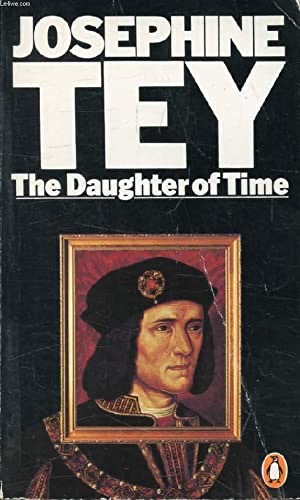
It started with Josephine Tey’s novel The Daughter Of Time, one of my comfort reading books. I first heard of it when I was in Year 11, studying the Shakespeare play in English. We had a very good teacher who mentioned it in class and, intrigued, I hunted it up and read it…and reread it, over and over, and joined the Richard III Society. I have it in ebook these days, so can read it whenever I feel like it, though I dropped out of the Richard III Society when it just got too fiddly to rejoin.


In case you’re unfamiliar with the book, it’s the last of Josephine Tey’s novels about Inspector Grant. This time, he solves a very cold case from his hospital bed, the case of Richard III - did he do it or didn’t he? The verdict is “not guilty”. 


I’ve read quite a few Richard III novels over the years, but this is the one I always come back to. It’s quite short, not much more than a novella, and I always  find myself surprised at how quickly I get through it. 


Anyway, I read it and then went to YouTube for Richard’s funeral in Leicester. There was a procession to watch and then some of the actual ceremony. Richard still has family, though not direct descendants; his little boy by his Queen died young, his illegitimate daughter Katherine lived long enough to marry, but died too - I can’t recall how, I think it was an accident. His illegitimate son, John of Gloucester was executed by Henry VII. There may have been another son, Dickon, who lived to a ripe old age as a stonemason, but he didn’t have children either. 


But there are some descendants of Richard’s sisters, one of them an Englishwoman, another a Canadian carpenter who made the coffin. They were, of course, at the funeral.


A few days ago, my great niece Rachel asked me to edit her school essay about the Shakespeare play and Looking For Richard, a documentary by Al Pacino, with a mixture of discussion, interview and bits of the play. 


I had to buy a download of the Pacino film, but the Shakespeare was available in the BBC Hollow Crown series, which is on Amazon Prime and the ABC’s iView, so I watched that. The lead role is played by Benedict Cumberbatch, whom you will certainly know as Sherlock Holmes in the modern series Sherlock. He has done a lot more than that, of course, including Khan in the new Star Trek movie series and the voice of Satan in Good Omens and Dr Strange(with an American accent) in the Marvel movies. 


By the way, he, too, is a distant relative of Richard III, a cousin many times removed, via Richard’s Mum, Cecily Neville(played in this film by the amazing Judi Dench). He read a poem at the funeral.


Anyway, he was an impressive Richard, one of the few I have seen as truly scary. Usually, Richard gets the audience on side at first, making us laugh with him, before suddenly showing he is not the likeable rogue you thought. I have seen quite a few Richards, including Anthony Sher, Laurence Olivier and Ian McKellen, who was in a film version set in the 1930s - I can’t seem to get a copy of that, dammit, a great pity, as it works. Olivier’s Richard becomes truly scary when his little nephew makes a joke about his back, and you can see real fear on the kid’s face when he realises that this is not his jolly Uncle Richard. Cumberbatch simply looks grim and unamused as if he is thinking, fine, I can wait


His scene with Lady Anne ends with his face truly amazed at having got away with it. “Was ever woman in this humour wooed? Was ever woman in this humour won?” He simply can’t believe it. The same, later, with his sister in law, when he asks her to marry her daughter, his niece. He doesn’t even deny killing her boys. And she walks off saying “Write to me.” And again he is amazed at the hypocrisy of these people who are supposed to be the good guys.


And Cumberbatch did both scenes beautifully! 


I do recommend this version.


If you can find it, there is a Dave Allen skit in which he, as Richard, is wooing Anne, and hands her his dagger. She stabs him with it and he sinks to the ground groaning, “You weren’t …supposed…to do that…”


So, I watched this film and then the Al Pacino one, before reading the essay. Al Pacino must have had quite a decent budget for what was a documentary/performance combination, because apart from those impressive costumes, they managed to get in a battle scene. All of the scenes performed are discussed by the cast and some interviewees who know the subject, and even random people in the streets. The film is really intended for those who aren’t that familiar with Shakespeare, and it does seem to work well in that respect.


So, what Richard fiction should I get back to next? Sharon Kay Penman? Rosemary Hawley Jarman? Jeremy Potter’s A Trail Of Blood


Anything new you can recommend? Non fiction is also okay, if new, as I have read a fair few of those too.


See you on the other side of the binge! 


Thursday, September 30, 2021

Book Blogger Hop: Do You Prefer Traditional Or Self Published?

 Book Blogger Hop is a series of weekly blog post prompts on a web site called Coffee Addicted Writer. Some people use it faithfully, weekly. I only use it occasionally, usually when I’m low on ideas. I was going to write a post about Richard III, but he is having a birthday this week and I have written quite a few already, so I will leave it for Saturday.


This week’s question/prompt asks,  “Are you more willing to read traditionally published books than self-published (indie) books? Or do you not have a preference?”


I probably should be avoiding this topic like the plague, because there is a lot of argument about it; you can lose friends or get blocked on social media over it if you say the wrong thing at the wrong time. I was once blocked from a blog by a woman who was always snarling against “traditional” publishing and publishers, for commenting that I hadn’t had any of the problems she mentioned with my publishers. I should add that this woman had yet to self publish her first book at the time and, judging by comments she made on other people’s blogs, she still hadn’t done it, well and truly after she bounced me from her blog.


To answer the question as best I can, it depends. Quite a few very good self published books are out there. Some have even won awards. I just don’t go hunting for them. There is so much being published these days that it’s hard to filter the wheat from the chaff. 


I get requests for reviews of self published books all the time, despite my blurb saying I don’t review them. The ones sent by marketing companies give me samples or links to the authors’ websites and I have to say, I have yet to be even tempted to request the books concerned! 


But there are authors who have taken to self publishing after a career in “traditional” publishing. Felicity Pulman, author of the YA  Janna book mysteries, self published the last two because the publisher, for reasons unknown to me, dropped her contract. I bought those for my library because there were kids reading the series. She ended up selling the whole series to an American publisher. 


Another friend, Simon Haynes, had a brief flirtation with the regular publishing industry before returning to self publishing. I never asked him why, but I suspect he found he could publish more by himself. He knew how to do layout and get artists, and he knew how to publicise his work. And he is so prolific that I can’t keep up with his science fiction comedies, and publishers certainly can’t. They have an annual list and you could be waiting two or more years for your book to come out, assuming it has been accepted.


Sometimes your small press closes down before you can see your book in print. You may be lucky enough to find another publisher, but it takes time.


There are a lot of reasons why people make this decision. I know someone, SF author Patty Jansen, who has done very well with it, but Patty has also sold enough short fiction to US markets to be able to join the Science Fiction Writers of America. 


Basically, I will read and review books by authors whose work I have read and liked before, in “traditional” form.


I won’t hesitate to read Barbara Hambly’s Smashwords short stories and novellas. It means I can read more stories about 19th century African American sleuth Benjamin January and his friends, or the wonderful wizard Antryg Windrose after he fled his own universe for ours, or James Asher and his wife Lydia and their vampire friend Simon Ysidro. The stories are too short for a regular publisher, but are perfect in self published ebook. 


I don’t think self publishing a first book is a good idea, but you never know. Matthew Reilly did it, and was discovered. Eragon was first self published when the author was about fifteen, and that was discovered and the rest is history. But these are not the majority, any more than everyone whose work is published by someone else will become a New York Times bestseller. 


I have read some good self published work, but also some truly dreadful books by authors who would have been better to spend their money on writing lessons than marketing companies. 


So… it depends. 


What do you think? 


Tuesday, September 21, 2021

Puff Piece by John Safran. Penguin Random House Australia, 2021


This is comedian John Safran’s third book. The first one, Murder In Mississippi, had John investigating the murder of a white supremacist whom he had annoyed while filming his TV series Race Relations. 


The second, Depends What You Mean By Extremist, was about racist groups in Australia. He turned up at rallies and took notes.


Both books, despite the serious themes, were very funny, written in Safran’s deadpan style of humour. Really, he didn’t have to do much. The racists in both books opened their mouths and made themselves look ridiculous.


This book does have humour in it, though not the laugh-out-loud kind, but despite the author telling  interviewers he hoped people would enjoy it, it feels, to me, at least, that the author is truly angry. He doesn’t mention a personal reason for this, no relatives who have died of cancer, but - angry.


This anger is directed at Big Tobacco, specifically Philip Morris. See, Philip Morris has a new product called a Heat Stick. A Heat Stick is supposed to be less bad for you than regular smoking but is, in fact, indistinguishable from a cigarette. 


It is competing with vaping - and John interviewed quite a few people selling vaping products in the course of the book. He also attended a vaping conference where he picked up samples. I don’t think he actually smokes, but he became hooked on nicotine toothpicks and tried out a lot of items he picked up there, over the course of the book. 


He bought some shares in Philip Morris so he could attend a shareholders’ meeting to ask questions(they wouldn’t let him into their premises when they found out he was doing a book), but when he attended the Zoom meeting, he didn’t get a chance to ask his question. 


He discovered in his investigations that a lot of health organisations had been given money by Philip Morris - in fact, he found out, to his horror, that his superannuation investments included a company that had Philip Morris lurking in their background. 


It seems to be almost impossible to avoid the tentacles of Big Tobacco. I’ll have to check out my super fund, though we were assured at a seminar that they only invest in ethical companies. 


One thing I have to say for John Safran is that he is very good and thorough at doing his research, both in his other books and this one. It’s a real eye-opener. I don’t think he could have done this as a TV comedy show. 


Definitely worth a read, as long as you don’t expect it to be hilarious. There isn’t a bibliography or list of suggested web sites at the end, but there is enough information there for you to do your own looking up.


I bought my copy at Apple Books, but you should be able to get it at your local good bookstore or on line, though.

Monday, September 20, 2021

Retro Review: The Amazing Adventures Of Kavalier And Clay by Michael Chabon. London: Harper Collins, 2001


 I bought this book in paperback some time ago, started reading, mislaid it and bought the ebook. The print copy has turned up again, but I finished it in ebook. It’s quite a read! 


Two young Jewish men, cousins, work on comic books in 1930s/40s New York. One of them, Josef Kavalier, is from Prague. He is a trained stage magician and escape artist(a huge fan of Houdini) who has escaped the Nazis with the help of his fellow magicians, in a coffin holding the Golem, the 16th century clay defender of the Jews, which was still hidden away in Prague. Joe is also a terrific artist who has a great imagination. Sammy Clay, his cousin, helps frame the stories and writes the scripts. Together they create their first comics superhero, the Escapist. The novel goes through the early history of the American comic book industry, till 1954. 


I thought at first it might have been inspired by the two Jewish boys who created Superman, but they are mentioned and Joe and Sammy are asked to create something like Superman. The difference is that they get a warning against the error of handing over all their rights, so do much better financially than Siegel and Shuster! 


However, Joe and Sammy have many personal issues, even as the stories of their superheroes are read and loved by children around the country. Joe is worrying for his family in Europe, and desperately wanting an excuse to kill Germans, while Sammy has even deeper personal issues which could get him into deep trouble in 1940s America…


Interestingly, they are told not to have stories with Nazi villains, at least until America enters the war, something that did happen in the real world of comics. In fact, the characters and story are inspired by real Jewish comic book creators of the time. 


There are some delightful humorous side characters in this book, such as their bosses at Empire Comics, part of which started life as a seller of novelty gadgets. They can’t figure out how it all happened, but the comics are selling very well, so why not? 


If you are interested in a part of American Jewish history, this is not only instructional, but thoroughly entertaining. If you are a fan of speculative fiction, you will also enjoy it, though I do have to say there is only one fantasy element, the Golem; the rest is straight historical fiction. 


Michael Chabon is a third generation comics fan - his grandfather worked as a typographer at a plant producing comic books, which he brought home to his son, Michael’s father, who also gave comic books to his son, Michael. What a family tradition! 


It won a Pulitzer Prize in 2001, which might interest you if you are a literary fiction fan. I’m not, but am glad that such a wonderful book that I found enjoyable, got an award and was short listed for several others.


You can get it in ebook or print from Amazon, or ebook in Apple Books. Book Depository also has it, in print and audiobook. 


Friday, September 03, 2021

On Bingeing On Streaming Services!

 What are some ways of coping with lockdown? Well, one way is to catch up with shows and films you missed when they came out. And we in Victoria are on our sixth lockdown! So, I’m doing streaming. 


I am now up to my fourth streaming service. I never intended this, but it happened. I started with Prime to see the wonderful adaptation of Good Omens by Terry Pratchett and Neil Gaiman. Then I discovered there was another Neil Gaiman adaptation, American Gods, a book I loved. I intend to see The Man In The High Castle as soon as I reread the Phillip K. Dick novel. There are many other things, including some Star Trek stuff, such as Picard, written by Michael Chabon. 


And there’s Shakespeare! Well, it’s The Hollow Crown, which shows some of the history plays, even if they are cut down a bit. I’ve seen Henry IV Part 1, Henry V and am now watching  Richard II, with Ben Whishaw in the title role, and Patrick Stewart as John of Gaunt, doing that gorgeous speech that ends “this England.”


Plenty more, but let’s go on. My next subscription was Disney+, which has all the Star Wars material as well as old Disney movies(I finally found the Richard Todd Robin Hood, but only watched about fifteen minutes when I concluded it was truly awful. But I also discovered they had 20,000 Leagues Under The Sea, with Kirk Douglas as Ned Land the harpooner, and yes, he could actually sing! 


I’ve watched Chariots Of Fire, with Ben Cross, and Ladyhawke, both beautiful films, though very different. 


What I have really been doing, though, is bingeing on the Marvel movies and TV series, which have impressive cast lists and directors such as Kenneth Branagh and Joss Whedon. But I’ve mentioned those before, so on to the next steaming service.


That’s Apple. I’m planning, when time, to watch For All Mankind, an alternative universe in which the Soviets got to the moon first. I do love that sort of alternative universe! I read a novel by Stephen Baxter, Voyage, in which Kennedy survives and the space program goes to Mars instead of the space shuttle. A woman is the first astronaut on Mars. That would make a great TV series! Mainly, though, I subscribed because that is where I can watch the adaptation of Asimov’s Foundation. I really need to reread that before watching! 


Most recently, I have subscribed to National Theatre At Home, which shows filmed versions of plays by a Britain’s National Theatre. They did it free on YouTube during the first big lockdowns, but now it’s streaming and you can watch stuff they have performed to live audiences. Not cheap, but I have so missed my theatre subscriptions over the last year and a half! 


And there are some big names in British acting. I have just seen Coriolanus with Tom Hiddleston and the multi talented Mark Gatiss. I performed that play when I was at university, playing the role of Third Citizen and a Roman standard bearer in the battle scene(I got killed after waving the flag a bit, as well as nearly choking  on my breastplate in rehearsal when I “died”), and it was fascinating to see what the NT did with it. Coriolanus, that brilliant general who is not much good at anything else, is killed in the last scene, of course, but as I recall, it ends with the person who did it saying (in Shakespearean language) “Oh, dear ! I really shouldn’t have done that, he was such a hero, let’s give him a fabulous funeral.” He is carried off with a fanfare(in our production it was “Fanfare For The Common Man”). In this production he is knocked to the ground, then strung up and has his throat cut… yuck! And no apologies or heroic funeral.


I see the Ralph Fiennes film is currently on ABC iView, and will watch that. 


I’m currently watching Antigone by Sophocles. It’s set in a government office. The Chorus are a bunch of public servants. And we have two Doctors in the lead roles, the ninth and the thirteenth! Christopher Ecclestone played King Creon and Jodie Whittaker was his niece, Antigone, daughter of Oedipus, who gets into huge trouble for burying her brother, the one who fought against Thebes. They are both brilliant, playing with their own Lancashire and Yorkshire accents, and why not? 


Next planned show will be Frankenstein with Benedict Cumberbatch as the creature. 


Not quite as good as going to the theatre, but at least I get to see it!