Search This Blog

Thursday, December 14, 2017

Of Books And Christmas

Everyone is doing Christmas blog posts and this is a book blog, after all. So, a few books with Christmas in them won't go amiss.


To tell the truth, it started in my head on Twitter, with a proposal to discuss Susan Cooper's The Dark Is Rising, from December 21, when the story starts, with the hashtag #TheDarkIsRising. Some folk read it every year at this time, because of the mood it evokes in a northern hemisphere country where this time of year is cold and dark. In my case, of course, it's bright, sunny and hot, which doesn't mean I can't get into the mood. I can read it lying on the beach and be swept into rural Buckinghamshire in winter, with the snow falling and Herne riding with the Wild Hunt...

But more of this presently. Let's think of other books first. A Christmas Carol, of course, Charles Dickens's novella about a grumpy old man whose soul is saved by the visits of three spirits and the ghost of his former business partner, Marley who is dragging along a chain he forged himself through his lifetime and wants to save his old friend from that. When you think about it, there must have been something Scrooge was doing right that someone cared about him enough to come back from the afterlife to help him. I have read that in some ways Dickens created our vision of the Victorian era Christmas and you can see it, really.

I recently re-viewed the Dr Who episode about Charles Dickens - the third of New Who, with Christopher Eccleston in the role. It's Christmas in Victorian era Cardiff and Dickens is doing his one-man show reciting A Christmas Carol. The dead are rising, running around Cardiff, their bodies occupied by beings from another universe.

Seeing the Dickens performance bit reminded me that an old school friend of mine is doing just that - I saw him perform in the Spiegeltent in Melbourne one year at Christmas - the poor man was wearing heavy Victorian costume in the heat of Aussie summer. But he did a very good Charles Dickend.

A Christmas Carol has spawned an entire industry in films and themed stories, but I'm just going to mention one novel, Christopher Priestley's The Last Of The Spirits, in which the story of Scrooge is seen from the viewpoint of two homeless children who encounter the ghost of Marley on his way to save Scrooge, while they are trying to sleep in a cemetery. They later turn up as propaganda when the Ghost of Christmas Present tells Scrooge that they are Ignorance and Want. The kids are not impressed at being used in this way, but it all works out. There is a suggestion that the boy's anger with the world may send him in the same direction as Scrooge if he doesn't watch out. Interesting, though really, Scrooge has no excuse that Dickens tells us about. He did spend a bit of his childhood with a father issue, but that ended okay, and he had a loving sister, a terrific master during his apprenticeship and a beautiful girlfriend who only dumped him because he was  already turning unpleasant.

If you haven't read Little Women, you have missed one of the great Christmas scenes in 19th century literature. Four sisters living in America during the Civil War celebrate as best they can in their genteel poverty. They spend what little money they have on their mother and give up their breakfast to a family suffering real poverty. The older girls do have to work for a living, but in those days genteel poverty meant you were a middle class family which could only afford one servant - in this case, Hannah the housekeeper, who is not a slave as this is a family living in the North.

Who can forget the Christmas night play, performed in a small room by the girls? It's written by Jo, the would-be writer, who plays the villain in this melodrama. In some ways, I think Little Women does for 19th century American Christmas what A Christmas Carol does for British. it even begins with the complaint that Christmas won't be Christmas without presents.

I wrote about Harry Potter in last year's Christmas book post, so I won't go into any detail here. Go look it up under "Compulsory pre-Christmas Post." Let's just say that something dramatic happens every Christmas in the Potter books. In The Deathly Hallows, Harry and Hermione are in Godric's Hollow when they realise it's Christmas and we get our first mention of a church, with the Christmas service which they don't attend. I do often wonder about wizards and religion. They do celebrate holidays, but only in the secular sense. Funerals and weddings seem to be performed by a celebrant, at least when we see them in the books. Perhaps there's something on Pottermore. 

So, back to The Dark Is Rising. In case you've missed it, this is a children's book by a British writer now living in the US and writing beautiful books like Shadow Hawk, set in early colonial America, seen from the viewpoints of both a Native American lad and an English boy who sympathises with the Native Americans. 

Susan Cooper writes beautiful stuff, and The Dark Is Rising is a classic. It's no wonder so many people want to do an on-line reread. Long before Harry Potter, a boy discovers on his eleventh birthday that he is - well, not a wizard, exactly. Will Stanton is the seventh son of a seventh son and he is the last of the Old Ones, a group of magical people who fight for the Light against the Dark. They are led by Merlin, who is still around and even has a job in this time - he is a university professor and archaeologist and calls himself Merriman Lyon. I guess the university must give him a very flexible timetable because he always seems to be around in this series of books. 

Yes, it's a series of five, but this book, the title of the series, is, in my opinion, the best, and the one people want to reread, over and over. It has not only story, but atmosphere. There's snow and darkness and a flood when the snow melts. There is a sinister Rider, menacing Will and his family, and an old tramp who was once something else, till he was tempted to the Dark(or is that the Dark Side?). Christmas here is celebrated in the home of an Old One, the sort of lady of the manor - well, she lives in the big house, anyway, and shelters the whole village when it looks like being flooded out. 

There are references to traditions such as the hunting of the wren, woven into the storyline. Christmas is woven through it, a European Christmas not unlike the mediaeval kind when the whole idea was to keep warm and kindie light so that the sun would come back. 

If you haven't read Terry Pratchett's Hogfather, by the way, you need to, and especially the scene where Death and his servant Albert are discussing the true meaning of Hogswatch, the Discworld Christmas. Albert doesn't think it's about a fat man giving gifts or family celebrating. It's about bringing back the sun and a lot of nasty things happen to make that go. Mind you, Death's granddaughter Susan thinks it's about "jolly...and other things ending in olly."

And here I will leave you to enjoy your holiday, whatever the true meaning is. May the new year bring you lots of books! 

Tuesday, December 12, 2017

Last time at West Campus

As I write this, I have had to return to my old campus, which is about to be pulled down. I really didn't want to come back and see the remains of my poor library. Yes, there will be a lovely new library at the new school and it won't have asbestos in it, but it won't be my library.

But someone had to come and direct the removalists which stuff had to be taken to our other campus and when I arrived, their truck had broken down and who knows how long it will be before it arrives? And I'm supposed to be supervising students in a movie showing this afternoon. At best, I might just make it on time to set up at lunchtime. Apparently the room concerned has a projector and a screen, but no computer, and I have no laptop. Well, I do, but I have not brought it in to work in years. It's just too heavy to lug and my iPad did fine for rolls and marking and even class prep. Someone will lend me a laptop to use, if necessary. And you had to supply the movie. I brought in three - Star Wars ANH, Back To The Future and Raiders Of The Lost Ark. My friend Jasna has also offered me Snow White And The Huntsman. Whether I make it on time is another matter.

I did do one good thing - a silly student who hadn't been paying attention had turned up at the old campus. He didn't have a myki card and I think I left my silly-student spares at home, so I took him into the school and organised something for him.  \ Jasna was there, packing stuff into her van and agreed to take him.

But some good things have happened in the last few days. Look at this.


A student whom I only knew a little, but who came with us to the Melbourne Writers' Festival made me this paper crane and gave me that little card/note which read as follows:


"Thank you for being such a wonderful librarian, although I haven't been taught by you I can tell your a wonderful teacher. Thank you for allowing me to come along to meet Moris Glasmsn as well as staying with the book club at times. Wishing you great happiness and joy with this crane by your side."

I've left in the spelling errors, because it was her message, but I'm sure you can work it out.

In the end, whatever hassles I've had, I'm glad to have had a job working with people. I've worked in an office, though it was an office that dealt with people's needs(Social Security, now Centrelink) and I don't regret it, because that was where I met a dear friend I still see, and it gave me the chance to compare. And I remember how when people rang to tell us to stop their late parents' pensions, I always expressed sympathy, and one man wrote to say thank you. And then there was the time when I managed to get the bank to cough up a pensioner's money. I was so happy to be able to ring her back and tell her to go get her money.

 But I am glad I didn't continue in that job - this one has been much more rewarding.

A week and a half left...

Friday, December 08, 2017

My Career In A School Library: Some Thoughts

I'm about to say goodbye to my days as a teacher-librarian. A student actually asked me, "But WHY?" 

Why indeed? Sooner or later you have to be firm with yourself and go. I love our students, both those I teach and those I only know through their visits to the library, and will miss them. I've taught many siblings and welcomed others to my lunchtime book club. One of my Year 7 students this year was the niece of a girl I taught in Year 8 only a few years ago(a very young auntie, she has just finished Year 12). 

It has been sad to tell them that next year, at their new campus, there will be a library, but probably not a book club, unless a lovely teacher who helped me with the Premier's Reading Challenge this year can get yard duty in the library. It may happen - with extra teachers, as well as students, surely they can manipulate yard duty to make sure someone can open the library at lunchtime? But no certainty. All I can assure them is that Miss will be running the Reading Challenge. The library tech knows her rights: she is not being paid to supervise students(heck, she's not being paid as a technician, even!) and could be in big trouble if anything happens in the library while she is there without a teacher. So no lunchtime opening unless a teacher gets a library yard duty. 

But this is no longer my problem. I have done it for many years and now it's my time. I have plans. Writing during the day, for a start, with a chance to submit to a lot of those markets I have posted to me once a fortnight with the Buzzwords newsletter. I've sold a couple of articles this year and am working on a third, which I can't finish till early next year, now. I've written some stories for anthologies, but missed deadlines, because I had to prepare classes and mark work. Well, at least I now have something to submit somewhere. I will do some volunteer work. I can afford this, due to a lifetime pension in a very good, well-paid superannuation scheme. I may even go back to study, and the year after next I might be able to go to Dublin for the 2019 Worldcon! 

During the last couple of weeks I have seen my library dismantled, packed the last of the books for storage or the other campus, which will, in its own time, be likewise dismantled. There is going to be a library at the new school, though I have no idea who will run it! I've seen the architect pictures and it looks pretty. Good luck to the new librarian, whoever it is! 

I really do wish them the best. I'm kind of proud of how I've met my challenges. I've been sole TL at my school and had to teach as well. I've had kids come to me in the classroom because there was no one in the library and their teacher wanted a class set and the class set room was locked. I've sighed and handed the keys to a reliable kid in my own class. 

My budget has never been the best and a few years ago it was slashed. I set up this blog in the first place so I could get free books for my students because $3500 a year, for everything, was not going to be anywhere near enough. Don't worry, I'm not closing down this blog, though I might consider accepting some - just a few - ebooks now. Depends if I think my younger family members might enjoy them.  

But there were brand new books for the students of my disadvantaged school to read, and as I'd read them I could share information. When I did go book shopping I'd find books I knew individual kids would like, and my general response to a request for advice was, "Have I got a book for you!" 

With that tiny budget I certainly couldn't afford writer visits, but there were other options. There were not-too-expensive events in the city, such as the Melbourne Writers' Festival and the Reading Matters conference student days. This year we went to hear Morris Gleitzman, the author of a wonderful series of novels about a Jewish boy, Felix, and his adventures on the run from Nazis during the war, his life with the partisans and after the war, finally ending up in Australia. There was a novel about his delightful granddaughter, who adores him. One boy who came with us hadn't read his books, but afterwards threw himself into the series. 

Not all the kids could afford even the few dollars for the tickets or the train fares. I paid from my own pocket in advance, so I had the option of letting a few kids come for free, and supplying their travel cards. That wouldn't have been an option if it had cone from my budget. I was blowed if anyone was going to miss out for lack of money! 

And a couple of days ago, while throwing out stuff, I discovered a bag of permission slips and money from this year's festival! Oh, dear. I must be rich if I don't notice $120! 

During the National Year of Reading, I was able to take some kids to the local library for a free session with John Marsden, who gave away his older books and signed. Usually you have to pay
$$$ to hear him speak! 

It has helped, being a writer and known to other writers and big name librarians. One year we had a phone call from the State Library, offering to bring the Teen Booktalkers to us. They hadn't had enough bookings and didn't want to cancel. In the end, we got a free session from three fine  writers, one of them Vikki Wakefield, who had only done one book and has gone in to bigger things. The head honcho of the Centre for Youth Literature found someone else to pay, possibly the local council. We also got a box of leftover books. 

We've had a visit from Sheryl Clark, courtesy of YABBA and Alice Pung, courtesy of the Stella schools program. We've also had visits from authors who were friends, courtesy of themselves, while they were in Melbourne. Thanks, guys! I accepted because they offered, though, I never asked. I made sure that at least they got lunch and a thank you gift and, where possible, promotion in the local papers. 

Alison Goodman visited my school before any other; she'd sold one novel at the time and wanted to get a bit of experience in school visits; she spoke to my four Year 12 book clubbers and showed them her huge planning chart. 

I made Will Kostakis help me with my literacy class when he arrived an hour early. Bless him, he was wonderful! He even missed out on morning tea while his fans barged into the library at recess before we could go to the staffroom. One young man glared at him because he thought his girlfriend was flirting(she wasn't, she just loved the book!). That was before Will came out. 

We've had a couple of book launches. Both times I asked writer friends to come and launch. I have even managed to get my publishers in to give away bookmarks, posters and other such goodies. My book club members decorated the library and made speeches to our guests while presenting them with thank you gifts, and read the books ahead of time so they could ask questions and appreciate the visitors. 

I never had much time, on my own, to do anything big for Book Week, but hey, anyone can run a trivia quiz! 

One year I had a very successful Banned Books Week virtual readout by the kids - it only worked once, but it worked. It didn't cost money, just a bit of time. 

One thing I regret is not doing the Premier's Reading Challenge till this year. It was a lot easier than I'd expected. Still, I've appointed a successor and she will do a fine job. Hopefully more kids will complete it next year. 

So, readers, I think I've made the best of my time as a teacher-librarian with staffing and money challenges. I want to thank those who have helped me. Without them, about half of the abovementioned activities couldn't have happened. 

Now it's my time. Hopefully I will make the best of that too. 

Friday, December 01, 2017

An Interview With Deborah Abela

Today's guest is Deborah Abela, a hugely popular and prolific children's writer. She has written novels, short stories and picture books and the one time we met, at a signing table, she must have gotten cramps from all the books she was signing for her young fans. 


Deborah started her writing career writing for children's TV. She has won about a million awards, including some for which children voted. She lives in Sydney, but has travelled the world and had some adventures that would not be out of place in a novel! If you want to read about them, check out her web site or her Facebook page(links supplied below)


Deborah has kindly agreed to answer some questions, beginning with her contribution to Laugh Your Head Off Again And Again, the collection of funny children's stories recently published by Macmillan.


In "A perfectly Normal Thursday", we have such quirky elements as a young orphan girl turning up at the home of a bereaved couple with a box and staying, elaborate cakes, the Queen of England turning up in the local woods with one of her corgis and then wandering in with her book club for afternoon tea. Would you please tell us about it - how did you get the idea?

A lot of my stories start with the idea of, ‘I wonder what would happen if….’ I was between novel writing and I wanted to play with an idea of a parcel arriving one day on the doorstep of two people who had shut themselves away from the world and are faced with the dilemma of opening the door or keeping it firmly shut. They decide to open it and what they find, changes their lives.

There is something oddly Roald Dahl about the style of the story - is he one of your influences?

What’s not to love about Roald Dahl!? Dahl is quoted as having said: ‘I find that the only way to make my characters really interesting to children is to exaggerate all their good or bad qualities, and so if a person is nasty or bad or cruel, you make them very nasty, very bad, very cruel.’ I think my story is softer and gentler and not as over-the-top as Dahl, but it is a lovely comparison. Thank you!

The heroine, Skylar, is very fond of the novel Charlotte's Web - and that turns out to be the book being read by the royal book club - what is it about this book that made it turn up twice in your story? Is it, perhaps, a childhood favourite?

I LOVE Charlotte’s Web and remember being entranced by the book and film when I was a kid….I love how it moved me to laughter but also tears. This is a classic story and I love to give nods to the classics in my work. In my novel Grimsdon, the kids are reading The Wizard of Oz to each other and the excerpts included reflect what is happening in my story. In New City it is Oliver Twist. In my picture book Wolfie An Unlikely Hero there are lots of tributes to fairytales.

Do you have a favourite kind of fiction to write?

Mmmm…that’s tricky in that the books I like to write are character driven….but I don’t mind a bit of adventure and comedy ..oh and feisty female heroes. I also have written my first historical fiction about post war migration to Australia after the devastation of Malta during WW2 in Teresa A New Australian, but that has its share of feisty girls and action.

 You have done many series books, most notably the Max Remy Superspy ones - do you find series easier or harder to write than stand-alone books? Why?


This depends on the story. Some books are stand alones, after which the story is finished, but sometimes I get inundated with emails from kids asking me to write the sequel….this has happened with Grimsdon and the sequel New City and The Stupendously Spectacular Spelling Bee and the sequel The Most Marvellous Spelling Bee Mystery.


What are you working on now?

I am about to dive into the third draft of The Most Marvellous Spelling Bee Mystery.

Tell us about your writing process - plotter or pantser?

Plotter. I tried once to be a pantser and I ended up going down the wrong path so many times I threw out about 20 000 words. I find plotting keeps me on track and ensures I have key crucial moments in the story to work towards and look forward to.

When is your next book coming out - and what is it?

The Most Marvellous Spelling Bee Mystery will be released in April 2018.

Thanks for visiting The Great Raven today, Deborah! 

Deborah's books are available at all good bookshops and on line.  


Wednesday, November 22, 2017

An Interview With Meredith Costain

Today on the Great Raven, my guest is Meredith Costain, contributor to the humorous children's anthology Laugh Your Head Off Again And Again(Sydney, Macmillan 2017), and author of many, many books for children.


Meredith lives in Melbourne with her partner and two beautiful dogs. (See below) If you want to learn more about Meredith and her books, you can find her at www.meredithcostain.com.


We have known each other for many years, but I have learned some fascinating things in this interview I didn't know. Read and enjoy!


 Your story in this anthology, "Nutbush", was about dogs. I know you have some of your own - is this what inspired your story or was it something else?

I’m definitely a dog lover (we have two young kelpie/heeler rescue dogs at the moment) and will sneak a dog or two into a story or chapter book whenever I can, whether it be as a main ‘character’ or just somewhere in the background. For this anthology the brief was simply to provide a ‘funny story’ for a primary-school aged audience – so dogs it was! We’ve been training our youngest dog recently (she can be a bit of a terror in the dog park, herding joggers and skateboarders), and also teaching our other dog to bark on cue at the end of the lines of ‘How Much is that Doggie in the Window?’, so dog-training became the inspiration for the story.


What are the benefits and challenges of writing humour for a young audience?

There is plenty of evidence around to show that kids love funny stories. Humorous books dominate the best-seller lists and lots of parents swear that the break-through books that turned their reluctant readers on to reading are the ‘funny ones’. It’s also what (most of) the kids say when I ask them what they like to read when I’m doing school visits.

Much of this humour (particularly for the 6-10 age-group) tends to rely on bodily functions: poo, pee and fart jokes rule. I prefer to use more situational humour, word play or exaggeration in the series I’m currently writing. However I did throw in a brief reference to wee in my story for Laugh Your Head Off Again and Again: hopefully it hit the spot! (so to speak …)

Your story is set in a small country town. Why did you choose this for a setting?

Placing characters in a country setting means there is more scope for action and adventure, away from house-bound ‘screens’. Kids can build billy carts and tree-houses or find treasures in the local rubbish dump and tadpoles in the creek. There is also more of a sense of community in a small town, given that everybody knows everybody else (and often their business as well!), so it’s easier to introduce characters of different ages.


You have written a wide variety of books, from education titles to picture books to chapter books - do you enjoy the challenge? 

I just like writing! So yes, I have fun trying out different formats and writing for different age-groups. I enjoy doing the research for non-fiction as well (although it can be hard to know when to stop looking things up and get on with the actual task at hand!)

Versatility is also a good way to ensure a reasonable living as a writer. Writing in different styles and formats for several different publishers over the years has meant that I could keep a steady stream of projects on the go. These days though I mainly concentrate on series fiction for junior to middle primary-aged readers.

 Do you have a favourite type of book/story to write? If so, what is it?

I enjoy writing tween (and slightly younger) fiction for girls. All that angsty stuff and big questions (to them) like: ‘Do people like me? And if not, what do I have to do to get them to?’ and ‘Am I different from everyone else?’ and ‘Will I make any friends if I go somewhere new?’ that I went through myself. I guess by writing about it now (and with the benefit of hindsight) I can give myself a happier ending (on the page at least) by showing a bit more resilience. And I also get the chance to say the things to the ‘mean girls’ I would have liked to have done before.

I also enjoy writing picture books where I get to play with words. I often write these in rhyme (considered a ‘no no’ by many!) so when everything comes together in terms of both scanning and perfect rhyme, it feels pretty good! Actually, I enjoy any kind of writing where I get to play with words.


What do you like best about writing for children?

The licence to be playful – with both words and ideas.

There’s also lots more opportunity to meet up with your readers, through organised visits to schools and libraries to do writing workshops. Kids can be a great source of inspiration!
But they are also a very honest audience – if they don’t like something or they find it boring, they’ll let you know pretty quickly. So there’s extra incentive to make your writing not just good but exceptional (and non-boring!).

Do you have a favourite book of those you have written? If so, why? 

There are a few, including Freeing Billy, an Aussie Nibble about two kids who help to find a new home for a neglected Rottweiler puppy living in their street (based almost entirely on true events), and Doodledum Dancing, a collection of rhyming verse for the very young, illustrated by Pamela Allen. I read a lot of rhyming poetry when I was young by poets such as A A Milne, Hilaire Belloc and C J Dennis, so was delighted when Penguin took on my own attempts at verse, particularly as poetry has traditionally been difficult to sell.

But I’d probably nominate Musical Harriet, my first picture book, illustrated by Craig Smith. Also inspired by true events, it’s about a girl who is desperate to play the trombone in her school band. Sadly, her arms are too short to push the slide down far enough to produce all the notes, so she needs to find a quirky way to overcome the problem. (And yes, there are dogs involved.) The book was adapted for television by the ABC, and there was talk of the Adelaide Symphony Orchestra writing a script for a touring performance as well, but sadly they missed out on funding for the project, so it didn’t go ahead.

You do a lot of commissioned work - have you thought of something you'd like to write outside of this?

Much of my education work has been commissioned, and also a few ‘special projects’ for trade publishers, such as a Ladybird guide to the Sydney Olympics (which actually reached the New York Times bestseller list) or novelisations of TV shows such as Dance Academy and Heartbreak High.

But pretty much all (apart from my latest series) of my trade published books (from picture books and chapter books to series fiction) have been my own ideas that I’ve submitted to the editors of publishing houses in the standard way.


What are you working on now?

I’m currently working on the edit for Book #13 of the Ella Diaries, which is about soccer, and writing the fourth book for its spin-off series, Olivia’s Secret Scribbles, for a slightly younger readership (5-7 year olds).

Olivia is Ella’s (feisty) little sister, and the new series will give Olivia her own voice and adventures.

It can be a bit confusing to be working on two ‘related’ series at the same time, particularly in terms of voice, language and style. But it’s been getting easier as I’ve ‘discovered’ more about my second character. Ella is very ‘arty’ in that she loves ballet, and acting, and fashion design, and writing poems and songs in times of great angst. So I decided to make Olivia more ‘STEMmy’ – an inventor who enjoys designing and carrying out experiments (sometimes with disastrous results!).


 When is your next book coming out - and what is it?


There are two. Total TV Drama, which is Book #11 in the Ella Diaries series, will be out in January. Ella and some of her classmates (including her arch-nemesis Peach) will be appearing on a TV Quiz show.


And My New Best Friend, the first book in Olivia’s Secret Scribbles, will be released in February. This one will have a mystery element, as well as a few ‘off-the’wall’ inventions!


Saturday, November 18, 2017

Babylon 5 - Some Book References

Today's post is about that impressive SF TV series, Babylon 5. While I reserve the right to write about anything I like, this is, after all, a book blog, so I'm going to go through some of the literary references in the show. The author, J.Michael Straszynski, is very well read, so it's not surprising he threw literature into the mix. He also describes it as a sort of novel, with each episode as a chapter. 

If you're interested, there's a good Wikipedia article here. It mentions a lot of influences I hadn't known, including Babylonian creation myths, but I will only talk about books I've read. 

And here they are: Tolkien - Lord Of The Rings and The Silmarillion, Alfred Bester's The Demolished Man, the Arthurian legends, via Thomas Malory, Walter Miller's A Canticle For Leibowitz.

For those of you who have missed the show, here is the outline. The time is "the Third Age Of Man" - sounding familiar to Lord Of The Rings fans? For everyone else, it's about the same time as  the Enterprise "no bloody A, B, C or D" is on its five year mission. But unlike the peaceful Federation with its missions of discovering strange new worlds, there are dark things happening on Earth, politically, which will eventually lead to war. 

The space station Babylon 5 is the latest of five Babylon stations, two of which were destroyed and one of which went missing. This one, however, is ticking like clockwork, full of embassies and also ordinary people who have moved there for jobs. Each race has its own area, with an atmosphere and gravity suited to that race. If you go to an area where you can't breathe, you take a mask. 

There are colourful characters of each major race, usually ambassadors. A few years ago, there was a war between Earth and Minbar, due totally to a cultural misunderstanding.(Whoops! You mean those open gun ports were a sign of respect?) But after Jeffrey Sinclair, the current commander of B5, was captured, the Minbari released him and surrendered without explanation, even though they were about to win. We do find out why a couple of seasons on. And no, I won't share. Watch.
There is one overarching story arc during the entire series, and when it ends we realise it was planned all along. Even though characters change, the thread is there. 

I loved the characters, who grew and developed. Some of them died. In the original Trek TV series, as opposed to the films, nobody died. And that was fine with me. Star Trek TOS is one I love even better than B5, for different reasons, but B5 was much darker. The author of the hilarious "Trouble With Tribbles", David Gerrold, wrote a terribly dark story called "Believers". He wouldn't have tried it for Trek, which was much more optimistic. There were other Trek writers, including the amazing Dorothy Fontana. There was Neil Gaiman. But most of the episodes were by JMS so were consistent. Well, it was his universe, after all.

So, for the influences. We'll start with The Demolished Man by Alfred Bester. In that one there was the inspiration for the Psi Corps of B5. In case you hadn't noticed, JMS named the Psi Corps head Alfred Bester, and he was played villainously by "Ensign Chekhov" that cheerful young Russian, Walter Koenig. The difference was that in The Demolished Man, the Esper's Guild were the good guys. Nobody was forced to join, though if you were a telepath you'd be stupid not to. In fact, there was high demand for training. In one scene the low-grade telepath receptionist is calling in her mind for the applicants to go through the door - and only one of them hears. There are problems, but nothing like the ones in B5, where the mother of main character Susan Ivanova was forced on to suppressant drugs when she refused to join the Psi Corps and committed suicide. Well, there is one embittered telepath who got kicked out and that does cause trouble...

A Canticle For Leibowitz is a novel set among monks at a time when the last people are going to the stars. There was  a war centuries ago and someone found papers by some guy called Leibowitz and turned them into the basis for a religion. There are beautiful illuminated manuscript versions of the papers. A spaceship is being built for the last humans to leave.

The B5 episode "Deconstruction Of Falling Stars" features those monks, well after the Third Age Of Man, looking back, and goes forward into the future. It was the last episode of Season 4, and was written while they were still waiting to hear if there was going to be a Season 5. The actual last episode was made, just in case. But this might have been a suitable ending to the series. 

The Arthurian legends feature in a number of episodes. An early episode features a Grail seeker - played, oddly, by that usual villain David Warner. Before the end of the episode he has adopted an apprentice, who takes his role at the end. 

Then there is third season episode "A Late Delivery From Avalon" in which Michael York plays a man in chain mail and carrying a sword who arrives on the station claiming to be King Arthur, and starts doing good deeds, such as rescuing a poor woman who has been robbed by villainous street gangs(small as it is, B5 does have poor and rich sections and  crime happens, hence the need for a security chief). In this he is helped by Narn Ambassador G'Kar, whom he knights. 

Sorry, he isn't King Arthur, but something dreadful happened that he has wiped from his mind: he fired the first shot in the Battle Of The Line, which started the Earth Minbari war. It was intended to be like that scene in Malory where a knight draws a sword during peace talks to kill a snake and unintentionally starts the battle. Because it is so like that scene the man starts connecting everything in his life with the Arthurian legends. Our heroes work out that for him, every one of them plays a role in the legend. The only way for him to heal is to hand his sword to the Lady Of The Lake - but who is she? She is Minbari Ambassador Delenn - who, incidentally, fired the NEXT shot, after a mentor was killed. So, very appropriate! 

If you haven't read Tolkien, or at least seen the three movies, or heard the story discussed even, hang your head in shame. I'm not going into detail. Look it up. Better still, read the book, one of the twentieth century's great classics. 

But here are some bits of Tolkien loaded into B5. For starters, "Mordor where the shadows lie" is called Zahadum, as in "Khazad-Dum", a name for the Mines of Moria, where Gandalf falls to his doom. Well, his sort-of doom, anyway, because he comes back. And remembering that the land of Mordor is where the shadows lie, it's the base of operations of the Shadows, mysterious beings who are trying to take over. It even has its own Eye of Sauron.

The Shadow ships are definitely inspired by Tolkien's Nazghul, the Black Riders, and every bit as scary. They appear in clusters, spider-like in the night of space. Later, we learn that they have captured humans merged with them, unable to fight and useless even if you do capture their ship. It happens even to a woman loved by the bad guy, Bester, and you feel sorry for him in that episode. In Tolkien, the Riders were Ring Wraiths, former kings who had chosen this life by accepting the power of the Nine Rings.

Like Gandalf, John Sheridan, second Commander of the station, is warned not to go to Zahadum, but he goes anyway and, like Gandalf, falls - leaps, actually - to his doom in the abyss while destroying the Shadow base. He dies, but is restored to life by a terribly powerful being called - Lorien! Yes, like that Lorien, first the gardens of peace run for the benefit of Maiar and Valar, then Lothlorien, where the Lady Galadriel lives in her Elvish artist colony. Lorien tells him that the best he can offer him is twenty years of life. John goes home and gets on with it. 

There are two groups of powerful beings who resemble Tolkien's Valar(gods)and Maiar(angels, including fallen ones. Gandalf is a Maia, but so is Sauron, who started as the sidekick of a more powerful being, Morgoth). The Shadows are one, the other is the Vorlons, who actually have an embassy on the station. You never get to see them outside their armour except when there is a huge emergency and then they appear to any religious or cultural group as their equivalent of angels. 
Turns out these two groups were supposed to be looking after us, but had their own ideas of how to go about it and neither group did a very good job of it and did stuff up things among mortals. There's no homely Gandalf to be wise, but also the kind of guy you'd be happy to go to the pub with. Anyway, both groups are eventually told off like schoolchildren and ordered to piss off. And they do, beyond the galaxy rim, very much like the departure of the Elves to the Undying Lands. 

Speaking of Elves, the Minbari are perfect candidates for the role. They even have a Grey Council(White Council anyone?). There's no question they're mortal, but they have Elvish wisdom and technical/craft abilities.  And Ambassador Delenn, who eventually marries John Sheridan, is definitely an Elf maiden! Someone has compared the couple to Beren and Luthien, and I have to admit, Delenn is more like the tough Luthien, who goes to the realm of Morgoth to rescue her mortal lover, than Arwen, who sits embroidering through the whole War of the Ring, and still lives at home after 2000 years, unable to marry Aragorn till he has done certain feats because Dad says so - yeesh, who'd be an immortal on Middle-Earth? Oh, she's brave, no question about it, but not proactive like her ancestress, Luthien. Don't get her confused with film-Arwen, whose role was hugely expanded. 

The Minbari also run the Rangers, a group very like Tolkien's Rangers of the North, but you don't have to be Minbari - or Numenorean - to join. A human Ranger, Marcus Cole, lives and works on B5 and serves Delenn, who is his leader.
John Sheridan, in the last episode, foreknows his death and goes back to Babylon 5, which is about to be decommissioned, then on to face his fate.

And guess what? He encounters Lorien and, like Frodo, he finds himself offered a place in the Undying Lands, or B5's version thereof. Poor Delenn is left behind to mourn him for the rest of her life, and I think here there is a fleeting hint of Arwen, although her people are still around and she's not wandering through now-empty Elven woods. 

There are other influences, such as Frank Herbert's Dune, which I have read, but you can only do so much comparison. Go read the Wikipedia article! 

So, what do you think? 

Sunday, November 05, 2017

A Much-Belated Link To R.J Anderson's Continuum GoH Speech!

I can't believe I forgot.

A couple of years ago, I attended Continuum 11, where the GoH was R.J(Rebecca)Anderson. Such a nice lady, and I got to do a panel with her, so when I wrote a con report and mentioned I'd missed the GoH speech, due to family commitments, she wrote a comment with a link to her web site, where she had done a transcript of the speech. It was a wonderful speech too, on the theme of why she loves children's and YA books. I so agree with her that kids won't take nonsense from their books and aren't impressed by how many awards they have won. All that matters is story. As far as I'm concerned, if it doesn't have an amazing story and characters you can care about, I don't care if it has "beautiful writing."

It's a lovely speech/article and I won't go into detail, because you should absolutely go and read it, right here! I unearthed my post with her comment this morning while browsing through, as you go, and checked it was still there. So go, read, enjoy, and let me know what you think!

To Rewrite or Not To Rewrite... That is The Question

This morning I read an article in the newspaper asking whether we had the right to rewrite Shakespeare. The journalist was understandably unhappy about a current production of The Merchant Of Venice in which lines are added to the last scene. Not the production itself, which she says was very good(and I will be going to see it in Melbourne if it hasn't come and gone already)but sticking in new lines.

Look, people have been doing this for centuries. There was that guy who rewrote King Lear to give it a happy ending. I mean, really! If a play was labelled "tragedy" in Shakespeare's time, you knew to expect a pile of bodies at the end, including that of the hero. Don't like it? Don't go. But he didn't like it and he rewrote it. If it had happened in the days of copyright, the author, if alive, would have been quite entitled to sue. But poor Will was dead even then.

These days, though, we usually interpret instead of rewriting. I've seen Merchant in so many interpretations. Laurence Olivier's was the most powerful. He was a dignified Victorian businessman, who arranged that loan from his office. As the play went on and he was tormented beyond bearing, his business suit became disarranged, his jacket went... When he did his famous speech "hath not a Jew eyes?" you truly felt for him and because this was for TV they could do close-ups and you saw the idea suddenly form on his face - hey, I can actually do this! - and he snarled, "Let him look to his bond!" and stormed off. And his daughter, who had given away her mother's ring for a monkey, found herself ignored by Portia, played by Olivier's wife, Joan Plowright. An entire interpretation, all done without adding a single line, all done with costume, background and, most of all, acting. You can find it on YouTube, I think, or buy it on DVD, though only as part of a boxed set. Watch it, anyway. Jeremy Brett is in it too. I'd never heard of him when I saw this on TV.

The Bell Company has done it a number of times. I remember the very first, which started in a bathhouse. Unfortunately, I can't recall much else about it, but it was a long time ago.

I have seen only one version which actually treated this as a comedy - and yes, it's listed among the comedies, probably because it doesn't end with a pile of bodies and doesn't have a fantastical tale about a lost princess or some such. But I would never have thought I'd ever see it as a very funny play - well, okay, it wasn't funny for Shylock, but it also ended sadly for Antonio in this one. But the rest of it was hilarious.

This was the Cameri Theatre production I saw in Tel Aviv. In Hebrew. That's right, Hebrew. I was living there at the time, working to improve my Hebrew and I figured I could do that by going to see a play I knew well in English. And this one was very good, translated by Israel's top poet. It still  sounded like Shakespeare. I think I've mentioned this in another post, but what the heck. It's a different context.

I guess technically it was a Royal Shakespeare Company thing, because the director was brought over from the RSC, but still.

It was done in modern dress, a common thing, but it let them play with the scenes. In the opening scene, we see Salerio and Solanio with Antonio. It's an outdoor cafe and he was having his lunch until they come along and eat it - then get up and leave him to be presented with the bill. Funny, yes, but it also said something: somehow, Antonio ends up paying the bill for everyone including his best friend, Bassanio. Especially his best friend - you know, "hey, there's this rich, gorgeous chick I want to woo, but I haven't got enough money to make a splash, can I have something till I marry her and I can repay you with HER money?" Not till payday, of course. People like Bassanio don't work, ever, or think they should, unlike the play's two antagonists, both hardworking men.

The cafe comes up again,when Antonio and Shylock are discussing the loan; when the two Christians are gone, the waiter comes out and snatches up the menu and closes the cafe! No words, just interpretation.

The casket scene was hysterically funny. The Prince of Aragon was dressed as a matador and did some Spanish yodelling and dancing while Portia rolled her eyes. The Prince of Morocco was played as Othello(in fact, I saw the same actor in the role the next week!). And yes, I guess a bit of extra stuff was added, I'd forgotten, but when Morocco realises he has missed out and acts the tragic hero about it, you see his four wives peeking out from the edge of the set and he rushes off cursing at them in Arabic. Additional lines, okay, but funny enough to forgive.

Gobbo had an Italian accent, and you haven't lived till you've heard a man speak Hebrew with an Italian accent!

Jessica is shown as a sort of schoolgirl who throws away her hair ribbon and becomes a hippy in tie-dyed clothes. In that awful scene where S&S are laughing over, "Oh, my ducats, oh my daughter" you see Shylock walking past in the background holding it. Which leads to the second addition. When Jessica and Lorenzo are told of their good fortune, they say together, "Wow!"

And then there was the last scene. All the lovers depart and Antonio, the man who paid the bill for it  all, is left alone on stage. He gazes at the letter which gives him all that money, then... lets it fall. And puts his head in his hands to weep. Again - sheer interpretation. No extra dialogue needed.

Is it okay to interpret - better than to add dialogue? Well, I think it is fair enough. We can't go back and ask, and as a professional actor, he would have been interpreting other people's plays and as a playwright he might have just said, "Look, do you mind? I've got a play to perform and a deadline for the next one." Of course, there is that waspish line in Hamlet about clowns who "say more than is set down for them." Which tells you that people were ad libbing his work even when he was around and heaven knows there were all those pirated copies based on what actors thought they remembered... But he really wouldn't have time to worry about how others saw his stories.

And Merchant is not being misinterpreted if you can sympathise with Shylock without rewriting the lines. If you haven't read it, do. I remember my Fourth Year Shakespeare tutor commenting on the significance of Jessica giving up her mother's ring for a monkey. To us, it just tells us that the girl is frivolous, but in the author's time, it meant changing your chastity(the mother's ring) for lechery, of which a monkey was a symbol.

I think Shakespeare just wasn't capable of writing a totally two dimensional baddie, not even Richard III. If you don't believe me, compare this play with Marlowe's Jew Of Malta.  Now, there was a two-d baddie! This is one reason his plays still have something to say to us. Shylock may not be the best of Dads, but he was almost certainly a terrific husband to a woman he adored. And who knows but that Olivier was right and he finally decided to insist on his bond when he thought Antonio had been involved in the truly awful treatment he received from the man's friends - before he had actually done anything to Antonio?

It's just not necessary to add anything but stage business to Shakespeare. Okay, there have been a lot of different manuscripts, which needed editing, but that's not the same as deliberately adding lines. Olivier showed you can do it. Many others have.

So - leave my lovely Bard alone!

Thursday, November 02, 2017

Coming Soon... An Interview With Meredith Costain!


With the arrival of new anthology of funny stories for children Laugh Your Head Off Again And Again, I have been asked to interview two of the authors. I'm still preparing questions for Deborah Abela, but I've sent off my first set of questions to Meredith Costain. If you'd been running a school library for as long as I have, you will have heard of Meredith, who is a hugely prolific author of children's books from picture books and education titles to chapter books. One of her non fiction books, Hauntings Happen And Ghosts Get Grumpy, was launched at my school at the same time as my own Your Cat Could Be A Spy. Our students ate out of her hand and when she said she felt a cold spot in what turned out to be the gardening books, one student refused to go into that section of the shelves, even though I told them that no, we hadn't had any deaths in the library or the school, not that I knew of.


Anyway, as well as her short story, "Nutbush" (the name of a cute dog) I've asked her other questions about her career and writing life. I'll be posting it as soon as I receive the answers.

I can't wait to hear from her! 

Wednesday, October 25, 2017

Of Sirius Black And That Firebolt


I'm rereading Harry Potter And The Prisoner Of Azkaban. It is my favourite of the entire series, but I do have to wonder about some things.

Right now, I'm wondering about Harry's mysterious Christmas gift; that's what I'm up to. Hermione has just said something that will end in a quarrel between her and the boys. She believes - correctly, as it turns out - that it was sent by Sirius Black. Of course, we all know by now that Sirius had no evil intentions when he sent it. 

The question nobody in the novel asks is - how? And not just the Firebolt, but the Christmas gifts in general. The students left at school wake up to a pile of gifts. Probably they arrive by owl mail - there don't seem to be any wizard  posties - and maybe the house elves deliver them to the rooms. We haven't yet been told about house elves, though, yet neither of the Muggle-bred members of the trio asks about it. I assume Ron takes it for granted. 

And then there are the pitiful "gifts" from the Dursleys - how do they get to Hogwarts? Does Hedwig turn up and hoot loudly until she's given something? I can just see Uncle Vernon chasing off "that bloody bird!" But if it was Hedwig, assuming she wore Vernon down, she would have delivered the mail personally. 

But let's continue on to Sirius and the Firebolt. Of course he can't go to London, walk through the Leaky Cauldron and Diagon Alley in his filthy - and recognisable - robes, so he sends Crookshanks to the Owl Office with his order. I assume he has stolen a copy of the Daily Prophet from somewhere to look at the ads and maybe stole some money for postage at the same time. But think about it. He sends an order for the broom, right? Presumably with his name on it because, while I suspect the goblins wouldn't care much whether the vault owner was on the run from Azkaban - Gringott's, I bet, is a bit like a Swiss bank - they would care if someone just turned up and said, "Hi, I'm from Quality Quidditch Supplies, can you let me into vault 711, the owner didn't give us his name." He would have to have given his name and signed it.

So, why didn't QQS report that they had received an order from somewhere near Hogsmeade, apparently from that crazy escaped convict Sirius Black?

Another thing. If McGonagall thought that the broom had arrived from Sirius, there would be more to worry about than whether it was hexed. Like - how did Sirius get into the castle and put it in Harry's dorm when last time he couldn't get past the portrait hole? And if he did, she should be asking, why is Harry still alive? But all she does is get the broom checked out for spells.  To do a spell on the broom, he would have had to get the broom directed to him, not to Hogwarts. If I'd been Minerva, I would at least have questioned whoever delivers Christmas gifts to students, whether it's the house elves or - shudder! - Argus Filch. Where did the broom come from - was it from QQS? In which case there might not be as much reason to worry that Black had got into the castle, though she should be contacting the shop for details. Did a couple of owls just drop a parcel with Harry's name on it to be delivered? Fine, time to check for spells.

As I've said, it's my favourite of the whole series. It's dark, but it's the last book in the series in which nobody dies. It's the most atmospheric of them all.

But I do have some nit picks with it! Which isn't going to stop me from rereading it.

Do you have some favourite glitches in this series?


Friday, October 20, 2017

Technology In The World Of Harry Potter

Okay, I mentioned this in a post before, here. But I think it's time to revisit and expand.

In Harry Potter And The Chamber Of Secrets, Mr Weasley comments how impressed he is with all the ways Muggles have of getting around not having magic. In some ways I'd say it's impressive how wizards get around a lack of major technology. In the same book he begins to ask Harry about "escapators". Well, Dumbledore has one leading to his office while everyone else has to use the stairs at Hogwarts - stairs that are unreliable. Mind you, there are lifts in the Ministry of Magic, where paper planes are used as inter-office memos. But those, and cars, are Muggle technology which wizards can and do use, unlike many other forms of Muggle tech, which I will get to shortly.

They do have their own technology. For example, brooms built for Quidditch are experimented with and designed for the best aerodynamic results, which suggests scientific understanding. You can't just wave your wand and bing! Flying broom! Well, you probably can, but it wouldn't be a lot of use in the air. I don't think they get their cauldrons built in Muggle factories. Wand technology is amazing too, and wand makers really know their stuff, but it's a handcraft thing done by a small number of craftsmen. Mind you, there are only a few thousand wizards in England and probably not too many elsewhere. 

They study astronomy at school, but not, I'm betting, physics. However, they would need telescopes - do they buy Muggle ones or build their own? 

But in many ways, wizards who don't mix with Muggles miss out.

 There is no Wizarding Internet. Imagine how much easier Hermione's research would have been with a Wizarding version of Google. Mind you, the earlier books were written in the 1990s, when the WWW was in its childhood.  But world building is world building and it has been established: no computers in Harry's world, let alone worldwide communication. That must make Madam Pince's life harder than it need be too. I remember card catalogues in libraries and the relief with which I replaced them with automated catalogues. If she was in the Muggle world, Madam Pince would at least have heard of them. They did exist in the 1990s, though they have improved vastly since then.

Wizarding transport sucks, in my opinion. If you need transport for a lot of people, yes, you can use that Muggle form of transport the train, but if there is one apart from the Hogwarts train - a steam train! - it isn't mentioned in the books. I have often wondered what happens to that train in between school trips a few times a year - is it kept in a shed somewhere? And what about the driver - what does he/she do for a living in between? I won't go into the plump witch with the sweets trolley - we find out more about her in Harry Potter And The Cursed Child - but the driver?

There's the Knight Bus if you don't mind being whirled around like a roller coaster ride, and I admit that it would be nice to be able to stick out your arm(and wand)and have a bus appear. I can't get a normal bus to stop for me if the driver is running late! But that is really for long distance trips; you wouldn't catch the Knight Bus to work every day.

Other than that, you can use a broom, assuming you don't have a problem with heights, but it seems a chilly way to travel, though I suppose you could magic up some warm air. Judging from Harry's Quidditch matches, wizards tend not to do that, for whatever reason - maybe you'd have to focus? - or why do they just accept being wet, while the spectators have umbrellas, but nothing more. And you couldn't take babies with you, except perhaps in a backpack, leaving behind your pram. It would be uncomfortable to travel that way while pregnant, I imagine. For some reason, magic carpets are currently banned in England, though a character mentions a grandfather who had an Axminster carpet big enough for ten people. Interesting implication that you can just magic a carpet. Maybe the law about magicking Muggle artefacts comes into it. 

You can do Apparition, but for good reason you have to be seventeen to get a licence. It's dangerous. Taking children with you is acceptable, but even more dangerous when you think about it. "Splinching" sounds funny, but really isn't. You can be split in half. What if you make a mistake and do it to your child? Ugh! Worse than the Star Trek transporter! 

Portkeys are an unpleasant way to travel and they are limited. You'd have to make sure that no Muggle wanders past the pile of junk on that hill, mutters about pollution and does the responsible thing, wouldn't you? And they are timetabled. You have to take them from a set place at a set time. Too much bother to use for anything except big events like the World Cup ... Or luring your enemy into a trap...

Floo powder is used a lot and families can use it, but again, it's limited. You MUST have a fireplace to use it - look what happens when the Weasleys try to get into the Dursleys' living room through the fake fireplace! And it has to be part of the Floo network. In Deathly Hallows, Harry, Ron and Hermione don't dare to use it, because it would reveal them to the Deatheaters. 

No, thanks, give me good old Muggle transport any time. 

And speaking of Floo powder, imagine being a wizarding world teen and how do you chat with your friends elsewhere? You stick your head in the fireplace and use Floo powder! I mean, really? I suppose you could just step in and visit and talk all you want and you wouldn't even have to get into arguments about who is going to drive you there and pick you up. But if you can't leave home, you kneel down on the stone edge of the fireplace and stick your head into the green flames. What sort of communication is that? 

No TV. One radio station, which seems to be overwhelmed with music by Celestina Warbeck, the famous lounge singer, though that may just be Molly Weasley. Maybe you can fiddle with the content to get the Wyrd Sisters band? We weren't told in the books. That you can start your own underground radio station is shown in Deathly Hallows, when the rebels broadcast. 

If there are any wizard film makers we never hear about them. The wizard Quentin Tarantino or Martin Scorsese may exist, but from the books I have concluded that there is no wizard cinema. 

And the subjects at Hogwarts don't include anything technical, not even elementary wand making/broom making(woodwork) for future wizard technicians. So where do they come from? Family firms, perhaps, but surely you'd need training? Apprenticeships? 

Fascinating as the wizarding world is, I'm glad I don't live in it. 


Friday, October 13, 2017

A Belated Friday 13 Post

I have written about Friday 13 before, so won't go into the background. Go check out my earlier post here. Yesterday I cheerfully mentioned it in class. One student said, "Would you stop talking about that!" Later I discovered it was her birthday. No wonder she was upset!

So let's just waffle about books with appropriate themes.

I've just started rereading Good Omens by Terry Pratchett and Neil Gaiman. My ebook edition has an intro about all those old, battered copies they were brought to sign, indicating they had been well loved, and, for some reason, a copy that the owner had put on black velvet in an elaborate box made especially for it. They didn't ask.

A wonderful book I've read over and over - a send-up, of course, of The Omen, in which the Anti-Christ baby goes to the wrong family. But it has fun with plenty of other deadly serious horror fiction.  And, o joy, I've just read that not only is it finally being made into a movie(or TV series), but the role of the cool demon Crowley has been perfectly cast with David Tennant! I've seen a picture of him and Azirophale and he is just right for the role! Wonder if he'll do it with his own Scottish accent? There was a touch of Scottish in his Benedick, but on the whole, he seems to have to go English for most roles.

Rosemary's Baby by Ira Levin(mortal woman bears the Devil'd child)is not as scary as I had thought it might be, but it does bring horror to the home front, instead of somewhere in Transylvania, as had always been the way of things before it. Maybe that, and not the Satan stuff, is what's scary. The author wrote some much scarier novels, as far as I'm concerned. The Boys From Brazil, in which someone is creating clones of Hitler - brr! And The Stepford Wives, in which women's husbands, in a small town, are killing them and replacing them with androids who stick to housework.

But speaking of Transylvania(I was), I found Dracula much easier reading than I'd thought it might be. It was written in letters and diary entries, so short, and the novel itself was not all that long. And it was scary! You'd mutter, "No, you idiot, leave the garlic in place! Don't open the window!" And she does, of course, and that's the end of her. 

Terry Pratchett has great fun sending up the vampire genre in Carpe Jugulum, in which a family of vampires takes over the tiny mountain kingdom of Lancre, due to an invitation to the royal infant's christening. That counts as inviting a vampire in. And these vampires believe in being all modern, like in those vampire novels where the camp wears his hair in a ponytail and suffers angst. They make the mistake of challenging top witch Granny Weatherwax and find themselves craving tea...

There are other vampires in the series, such as Black Ribboner Otto Chriek, who has given up blood drinking and who loves light. But he is an iconographer for the Ankh Morpork Times and falls to dust every time he takes a picture. Eventually, he gets into the habit of wearing a small bottle of blood when he works, which breaks and lets him come back without relying on anyone else's kindness. 

And there's Lady Margolotta from the Discworld Transylvania, Uberwald(means the same thing) who has replaced her addiction for blood with one for cigarettes. 

Dan Simmons' vampires, in Carrion Comfort, are vampires of the mind, who can control and manipulate others. They are truly evil, and one of them is a Nazi. It was very very good, and I went on to read some of his other books, but it put me off horror fiction, as characters I cared about were killed off. (Are you listening, Mr Martin? And by the way, I like Fevre Dream, your vampire novel, much better than the Game of Thrones series)

This author also wrote Children Of The Night, in which the historical Dracula is still around. He has gone off blood drinking and thrown himself into starting a business empire. He thinks the Stoker novel is dumb. And he's fed up with his family and planning to blow them all up, perhaps the only way to get rid of them. See, these vampires are not undead. They have an extra organ that processes blood and re-builds their cells. 

I confess to not giving read a lot of Stephen King, mostly his short fiction, and I do enjoy his non fiction, but his novel Misery was truly terrifying, especially for a writer. It has no fantastical elements as far as I recall, but it's as scary as any horror novel. In it, a historical novelist has been writing a series about a character called Misery. He has had enough and has written one last novel in which he has killed off his heroine. After an accident, he is rescued by a qualified nurse who is a huge fan of the series...and not at all pleased to find out the series is over...

Look, I could go on and on, but I won't. Instead, I'll invite anyone who reads this to suggest some other Friday 13 titles. Hope you had a great day! 

Tuesday, October 10, 2017

International Day Of The Girl

So, I woke up this morning to find out it was the International Day Of The Girl. I haven't heard of this before, but it's a nice excuse to write a post about girls' books, off the top of my head, before I get to work.

Has anyone noticed that most YA and children's books these days seem to be either for girls or about them? Or both? Girls save the world in YA novels, while making up their minds which of two gorgeous boys they will settle down with once the world is saved. Fortunately for their decision making, one of them either dies or lets them down - badly. 

I'll just mention a few books or series I've read as they come back to me, in hopes I can get the post done before I reach Sunshine Station in Melbourne. 

Let's start with a classic. I've missed a lot of them, but I have read Little Women, the story of four teenage sisters during the American Civil War, living with their mother and housekeeper while waiting for their father to get back from the war. They don't have a lot of money, so the two eldest, Meg and Jo, have to work, Meg as a governess and Jo as paid companion to their grumpy old aunt. Beth, who is not a healthy girl, stays home and does housework,  presumably with Hannah the housekeeper, and only Amy goes to school. Not a lot happens as a novel - it's all dreams and hopes and individual stories. I hear it was semi-autobiographical, though Jo, the would-be writer(and didn't we all want to be Jo!)is somewhat younger than Louisa May Alcott, whom she represents. Louisa was already old enough to be working as a nurse during the Civil War. But still, it's nice to know. You should totally read Geraldine Brooks's novel March, which mixes the real Alcott family with the fictional March family. The real "Mr March" was quite a character. Look him up.


Noel Streatfeild wrote children's books in the 1930s. In Ballet Shoes, she writes about three girls who aren't actually sisters, though they've been brought up as such. They've been given the surname Fossil because the man who adopted them is a crazy old Professor who collects fossiÅ‚s. When he disappears and his niece Sylvia is left with three children to look after and not much money, she takes in boarders and the girls go to work in the theatre, something children could do in those days, and discover what they can do. The oldest girl, Pauline, is very good at acting and eventually finds she can do it for a living. A few years ago, there was a TV mini-series in which the role was played by Emma Watson, of Harry Potter fame. The middle sister, Petrova, isn't all that good at it, and longs to be a motor mechanic. The youngest, Posy, is a gifted ballet dancer.  The book had some sequels, but I haven't got around to reading them. I rather liked the idea of a 1930s novel with a girl motor mechanic. 

Anyone remember the YA romance novels of the 1980s? What was that American series called? Oh, yes! Sweet Dreams. The girls loved them but they were junior Mills and Boon. In them, the girl was a sort of Cinderella figure, in love with the captain of the football team. How could she even compete for him with the bitchy head cheerleader? Of course, we know who always got the boy in the end, don't we? I guess girls can dream of being that shy little thing who defeated the Mean Girl. That's still happening to some extent,except now the young woman who defeats the Mean Girl is not doing it over a boy, but over the matter of bullying. 

There were Australian equivalents, Dolly Fiction, which I think we're better than the American ones, and no wonder. The authors, who wrote under pen names, were all either top Aussie YA novelists or would become that. I have written a post about it before. 

A few years ago, Allen and Unwin published something called Girlfriend Fiction, which was even better. Some of the books were written by male authors, and oddly, they weren't all romances. But I've sold those quite easily in my library. And the authors didn't use pen names this time - you knew who you were getting.

And then there are all those novels in which girls fall in love with fallen angels, who are brooding and tragic, not to mention the half/quarter angel thing(I always thought of angels as asexual, but there you go. All that business of "the sons of God and the daughters of man" comes from a mis-translation.). Well, there was Aussie writer Rebecca Lim's Mercy series, in which the fallen angel was female. She had done something truly stupid back during the war in heaven and managed to avoid being thrown down to Hell with the other fallen angels, but the un-fallen angels looked after her. She has been on Earth for centuries, doing a sort of Quantum Leap thing, temporarily taking over bodies and fixing their problems before moving on. But by Book 2, Exile, she has started thinking of herself rather than fixing problems for others. She fell in love with a mortal boy in the first book and is trying to keep up the relationship, whichever body she is in. The series is very entertaining.


Present-day novels have girls in all sorts of situations, including obesity and anorexia, but the fantasies go on. I probably don't have to tell you about The Hunger Games, which is very good in my opinion, better than some of the other girl-saves-the-world fiction that came out at the same time. Before the current crop of fiction on "teen girl saves the world" John Marsden created Ellie, the heroine of Tomorrow When The War Began and its sequels. Ellie and her friends go bush-walking and camping one weekend and when they return to their small country town, Australia has been invaded and their friends and relatives have all been herded into the local showgrounds, which have become a prison camp. The group does guerilla warfare, under Ellie's leadership. I've found that both boys and girls loved these books, though they haven't been read much in recent years - perhaps fresh covers
would help.

There is far more out there than I can cover in a single post.

Got any suggestions?

And happy International Day Of The Girl!

Saturday, October 07, 2017

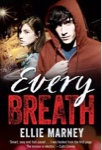
Finally Got Around To Reading...Every Breath by Eliie Marney


You know how it is when you have a book lying around for ages and then you finally get around to reading it and it takes about a day?

I had this on my cyber-shelves almost since it came out. I knew about it, read a few pages and then ... read other stuff.

But yesterday I read the bit left on the cutting room floor, which was published as a short story in the LoveOzYa# anthology, which was about the first meeting of James Mycroft and Rachel Watts and suddenly I knew it was more than time to read the novel Every Breath. 

And now I've downloaded the second book, Every Word. 

On the remote chance you haven't heard of this trilogy, it's set in Melbourne, told from the viewpoint of Rachel Watts, a country girl whose family had to leave their farm near Ouyen and make a new life in the big city. They are living in Coburg, one of Melbourne's more multicultural suburbs and Mycroft and Watts attend North Coburg Secondary College, along with their friends Vietnamese girl Mai Ng and her Sudanese boyfriend Gus Deng. Mycroft lives with his aunt Angela, since he lost both parents in a horrific car crash back in England. Aunt Angela is so rarely at home that for a time Watts wonders if she even exists. Mycroft is an intellectual genius, who does a forensics elective at school, but admits to being a social moron - not entirely true, since he seems to know a lot of people around Melbourne, from the tram drivers along their route to the Greek cafe owner who gives them coffee and baklava on the house.

And then there is Homeless Dave, who camps in Royal Park, outside the zoo, and whom Mycroft and Watts take a meal every week until one night when he turns up very dead...

It's such an entertaining novel that hopefully I will be able to "sell" it at school before the year is over. I know just the young lady for it - in fact, she's the one who requested the LoveOzYa# anthology for the library. It's a bit like the writing of Lili Wilkinson, except that I admit to liking it better than A Pocketful Of Eyes. It's not as funny - these kids have both been through bad times and the murder victim was their friend, whom they don't believe will get justice, because he was just another street person.  A Pocketful Of Eyes was an over-the-top whodunnit with likeable characters, but this one is - well, not over-the-top. Anyway, I will recommend it for girls who like Lili Wilkinson.

It's not exactly Sherlock Holmes, though there are a lot of references to it. Watts(they call each other by their surnames)points out that his name is that of Sherlock's smarter brother, and he even has an online identity called Diogenes, as in Mycroft Holmes's Diogenes Club - he does that on purpose, though. And she is not a Watson or for that matter a Hastings, mainly there to have things explained to him/her. She picks up a few things Mycroft doesn't, asking the right questions at the right time. 

Their friends Mai and Gus aren't just sidekicks. They make good suggestions and at one point Mai uses her Legal Studies knowledge to argue Mycroft out of the slammer. 

There is a lot of adventure in this one and before it's quite over, Mycroft finds himself heading for the role of "consulting detective" online, due to his Diogenes articles and website. 

I've just started reading the sequel - I believe that one takes place in London, should be fun! 

It is available both in and outside of Australia, so if you've missed out on it, why not give it a go? 

Monday, October 02, 2017

Translation And Info: Who'd Have Thought?

Re-posted from my Dreamwidth blog...

I need a passport for ID. Getting a passport is harder than it used to be, much harder. You need a passport for proof of ID, right? But some of the items you need for your passport, you almost might as well use for your ID anyway, unless you want to go overseas. My birth certificate is in Hebrew. The last time I used it was when I went to do my compulsory jury duty. I showed it to the lady on the desk and she just laughed and let me through. Well, it wasn't me who had demanded to do jury duty, was it? I figured if they objected to being unable to read the certificate, that was their problem, not mine.
 
Anyway, you have to get your overseas birth certificate translated for passport ID, and it has to be done by one of their approved translators. So, I found a lady, one of two in Victoria, who fortunately lives within easy tram distance of my place and I am on term break. I contacted her and she said that I could scan and send, or I was welcome to come to her place today. I decided on that. I don't have a scanner any more and although I could take a photo, I wasn't sure it would turn out readable. It's a very old, crumpled document - well, as old as me, anyway. ;-) 
 
Off I trundled on the tram to a small street off Hawthorn Rd, South Caulfield, and found it easily. The lady was quite a character, as it turned out. She was very thorough, but also had a lot of fun Googling things to make sure they were right. For example, the hospital where I was born was called the Municipal Maternity Hospital at the time. It is currently known as the Rabin Centre - we agreed it might be best to simply use the term on the actual certificate, but she had a lot of fun satisfying her curiosity. Likewise with the Hebrew DOB. According to Google, the year I was born the Hebrew date was August 29! And here I was finding it amusing that the certificate says September 3, when it's September 4. "August 29!" she exclaimed. "Forget about that!" But we agreed there had been a stuff-up. 
 
And then there was the doctor who delivered me. It was a Dr Kattab? Katib? Qatab? Katab? (That was how it was spelled in Hebrew, which I don't think does double letters). Anyway, he/she was an Arab, a Muslim. Which makes sense, because it was a Friday night, when the Jewish staff were going home or to synagogue for the Sabbath, while Muslim staff had finished theirs and were able to do a shift. But it hadn't occurred to me. So, now I know, and it will be fun to tell any Muslim kids at school who might ask that I was delivered by a co-religionist of theirs. I think they'll be tickled. 
 
But Taly(translator) and I did a bit of Googling to check spelling and while there were many possibilities, we decided on Khattab, the name of an Aussie Muslim doctor we found on line. It was closest to the original. 
 
I told Taly that my sister, who was about five at the time, had to be left behind when Mum hitched a ride to hospital on a bakery van. She said, "Oh, that happened all the time back then. It happened to me. Nowadays they'd call it child abuse." She grinned. But there were neighbours and Dad came along soon enough and also had to hitchhike, because it was Friday night, no public transport. 
 
Anyway, I felt Taly was well and truly worth the small fee I was paying, and more if she had asked for it. She had a series of templates to use - " Here's one I prepared earlier..." But all the research and careful thought about her translations was quite a bit of work. And afterwards she printed out - we proofread and I found one inconsistent spelling - and then printed out again, two copies, plus a photocopy of my original, which she suggested I take to the PO and get certified. And she emailed me a PDF for my files which, however, had her stamp and signature on it. So it will be safe, even if I mislay the original. 
 
And then, all done, she enthusiastically showed me a website called,"On The House" which gives away free tickets to shows, as long as you don't mind what they are. She had grabbed a free double pass to two shows while my translation was printing out. 
 
Who would have thought such a humdrum, necessary activity would turn out to be so entertaining?