Search This Blog

Friday, May 16, 2014

The New Aurealis Awards Judge!

C'est moi! :-)

Just got my confirmation. I will be one of those on the children's section panel. Now I will see what all the CBCA judges go through, except they have to do all types of children's books, while I'm only going to be reading and judging children's spec fic. The books are likely to be shorter than adult or even YA, so it won't take as long to read all the entries. We did get the gig on the understanding that we are willing to read ebooks. I agreed, with the rider that if something is available in print I'd prefer it, because it can can go on my library shelves afterwards. I probably won't be reviewing anything from the AAs here, because while it's not against the rules you have to be careful not to make authors or publishers think they're out of the running. For the same reason I won't be giving star ratings on Goodreads, though I rarely do that anyway.

But it will be nice to see what's out and see how close we get to the CBCA shortlist or the YABBAs.

Speaking of YABBA I have been told that my school has won a visit from a writer or artist sponsored by CAL and YABBA, under the YABBA Ambassador program. I don't know who it will be yet - that's part of the deal, they choose - but whoever it is will be made very welcome and given lunch and publicity and maybe even a small gift. It's very exciting!

For any Melbourne teachers or librarians reading this I hear they have just opened a second round of offers, up to 25 schools in total will win it. The only condition for entry is that you must be a member of YABBA. At $42 a year, even I can afford it! And there are a lot of incentives to join.

What I'm Currently Reading....


Lots, actually, but here are some recent downloads and a not- so-random read or two!

Murder In The Telephone Exchange by June Wright. Recently re-launched by Sisters In Crime Melbourne but as I couldn't make it to the event in Yarraville I downloaded the ebook and what a fascinating read it is. Melbourne in the late 1940s, when the book was written. It wasn't historical fiction when it was written, but now it brings back a lost world of telephonists working in shifts because people do, after all, make calls all night and someone has to be on the boards, where young single women not living at home Iive  in boarding houses, where everyone smokes and a dead body can be found with face smashed in by a piece of equipment that is gone along with telephone exchanges.


The Dagger Of Dresnia by Satima Flavell, who chose and edited my story in Mythic Resonance. A mother does what she can for her children, even an elvish mother who married a mortal king, including what she suspects might be a Faustian bargain...I'm not far in, but finding it very readable so far.


The Winds Of Marble Arch And Other Stories by Connie Willis, one of my favourite spec fic writers, who not only does sensawunda but has real, believable characters you can care about. It's one of the wonderful SF Gateway series of ebooks, republishing books that are classics but might be out of print. The covers are usually plain yellow, but they're not expensive and you get to read books you may have missed out on in print.  

Wildlife by Fiona Wood. I downloaded it ages ago, but now really must read it since it's on this year's CBCA shortlist. It's a sort of sequel to Six Impossible Things, seen from more than one viewpoint, one of them the sensible girl whom Dan Cereill, hero of the first book introduced to his best friend. A bit darker than the first book, but great reading so far. 


Twelve Stories And A Dream by H.G. Wells, a collection of his short fiction I picked up from  Project Gutenberg, when I felt like rereading "The Truth About Pyecraft", a very silly, entertaining tale about what happens when you aren't precise about what you ask for, in this case the difference between "losing weight" and slimming down.

I've also picked up a paperback of Jim C Hines' novel The Mermaid's Madness from my library because he's coming to Continuum and I'd only read one of his books and thought I might be interviewing him in the YA writers panel(I'm not, I'm doing Ambelin Kwaymullina whose wonderful books I've mentioned on this blog before). It's his wicked take on what might have REALLY happened in the story of the Little Mermaid. In this case, she killed her faithless prince and has since gone insane and killed a lot of other people and it's up to Cinderella, Snow White and Talia the Sleeping Beauty to stop her(and do please read the first book, The Stepsister Scheme, well worth the read)... Jim sold three stories to ASIM earlier in his career, so it will be nice to meet him.    


There's more, plenty more, including some review books, but this will do for a Saturday morning post. 

Thursday, May 15, 2014

Another Peggy Bright Books Freebie


In honour of the Ditmar shortlisting of Peggy Bright Books' new collection, The Back Of The Back Of Beyond by Edwina Harvey, the web site is offering a free sampler - the story "No Pets Allowed". The pet concerned is not a cat or a dog, needless to say! If you want to find out what it is, you can wander over to the web site - here's the link - http://www.peggybrightbooks.com/new/the-back-of-the-back-of-beyond-free-sampler/
  and click into whichever version you want, PDF, ePub or mobi. I have this book in
 paperback,  but downloaded it anyway. See that lovely cover? It's by Eleanor 
Clarke, my own cover artist, and has also been shortlisted in the Ditmars, for best art. 

If you decide you want the ebook, it's $4.99.

Monday, May 12, 2014

ASIM 60 On The Launch Pad!


I've just completed my very first issue of Andromeda Spaceways Inflight Magazine. I am so very excited as the final work is done to get this launched!

It's not that I've never edited anything before. I've done a number of media fanzines, back in the days before the Internet turned fan fiction into an industry and made it possible for anyone, however awful their writing, to be published. In fact, it was that experience which made it possible for me to do this. When I was putting together Tales From New Wales(Blake's 7) and Under The Greenwood Tree(Robin Of Sherwood) and other such zines, I was looking for stories, poetry and art. I wanted a combination of funny and serious. I wanted to be sure that my authors, while they were, admittedly, working within the constraints of a universe created by someone else, knew what they were writing about.  You could probably get away with things in Blake's 7 fan fiction while you had a story entirely set on the spaceship Liberator and about character relationships, but in the world of Robin Of Sherwood, you'd better have done your historical research about England of the twelfth and early thirteenth century if you wanted your story to appear in my fanzine.(Most other editors felt the same, though I remember reading some excruciating ROS fiction written by people who knew nothing whatever about the Middle Ages!)

So when I was reading for ASIM 60, I had similar requirements. I am only a layperson in the area of science, but if something sounded weird to me, I knew who to ask for an opinion. There was one utterly beautiful story which had a slight flaw in its physics. I wasn't sure, but suspected it, so I asked for advice from a scientist on the ASIM team and got it. The author did a small rewrite and his story is now as good as it deserves to be. Another writer gave me a lovely story which needed just a bit of a tweak in the geography and history - they were areas I did know enough about to discuss with the author. 

I needed a mix of humour and serious fiction, fantasy, SF and horror. I needed some poetry. I needed some art. In other words - not too different from editing a fanzine. I read and read and read. In the end, I probably chose more other-planet and  space-themed stories than I should have, but I love this kind of fiction, it's what drew me to SF in the first place, the "sensawunda" you just don't find in any other genre.  But there was wonderful fantasy too, and, interestingly, poetry that ranged from SF to fantasy to Steampunk - I took one of each and asked for them to be placed as near as possible to appropriate stories. One of them, by Darrell Schweitzer, I had illustrated, it gave me such a powerful image. Another was about a black hole, the third a story in its own right, with a female knight who reminded me of Martin's Brienne of Tarth.   

I'm not fond of horror fiction, but you have to have balance; I found one that was not overly gory, but presented a vision of vampires I hadn't come across before.  

When the time came for art decisions to be made, I wondered which should be the cover story and which should get an internal illustration. It was very hard to choose, let me tell you! I'd picked the stories in the first place because they were ones which had a strong visual sense; I could picture what was happening in my head. Should the cover story be the one set on a water world? The one set on an island where victims were thrown into the sea far below the cliffs? The story in which a man finds himself living his life as a movie?

In the end, the cover story was a space-themed one. I'd always wanted to edit a magazine with a space cover. And the artist actually liked the story enough to offer me a choice of three covers, one of them the one I went with, with a view of Mars in its first steps towards terraforming. I chose it even though another of the options was actually closer to what I'd originally had in mind.

Choosing artists wasn't easy either. When others from ASIM are choosing, they have the option of asking my advice, but hey, I'm the art director! And as art director, I know all of them. There are some wonderful space artists among them and some fine internal artists. How to choose?

I went for two artists I had worked with before and was comfortable with. There were others I was also comfortable with, but I had a limited time, as they, too, would have a deadline, so had to make up my mind.

 The cover artist is Eleanor Clarke, whom I've known all her life, admired since she was winning her first awards for photography and painting, and who fully justified my faith in her with a breathtakingly beautiful cover painting. The other was the amazing Lewis Morley, whom I've also known for years, who is utterly reliable as well as first-class, whether he's doing cover art or illustrations(he has his own graphic novel series, Peregrine Besset). Both have been shortlisted for Ditmar Awards - Eleanor is on this year's shortlist, by the way, and Lewis actually won for an ASIM cover, which turned out to have been his first go at a cover. This time I gave him all the internals. We can't pay much, so he might as well have all of what we can pay for internals.  

Again, like choosing for a fanzine, though I had an art budget for this - in a fanzine you can have as many illoes as you can persuade your chosen artist to do. One of my fanzine artists was Robert Jan, who has done a few pieces for ASIM over the years. 

The big difference from a fanzine, apart from having to pay the contributors with more than copies, is having a length "budget" - mine is slightly over, by about four pages because I have six first sales and we needed extra space for their blurbs. There will be some advertising in it , though it will be appropriate advertising, for speculative fiction books, publishers, etc.

Another major difference is that I can't do this on my own. I need a layout artist, who, this time, is Simon Petrie, our man of many hats and skills, including science - he's the one who helped me out with the physics in that story. Simon also has to deal with the printer and receive the copies and post them out. Someone has to organise the contracts and pay the contributors. And then sell the copies as orders come in. It's all hands to the pump for proofreading. 

I've come a long way from the days when I just had to type up my issue, literally cut and paste, then photocopy and bind it all and take the orders myself. Of course, things might be different now, with a computer instead of a typewriter and the Internet to promote and sell. But I would never have had the confidence to do this if not for my experience as a fanzine editor way back when. Mind you, back then there were not quite as many people to write rude reviews as there are now, but back then they could be even nastier than now, because they had all paid for their copies - no such thing as review copies of fanzines - so when they didn't like it, they got really pissed off! But people can be unpleasant all the same, as who should know better than I, with Goodreads ratings for my novel from 1 star to 5, so it's nerve racking.

Still, I am going to be so proud of myself, the ASIM team and the contributors when my issue comes out in only a few weeks! 

Friday, May 09, 2014

This Week's Random Read: The Eye Of Minds(Mortality Doctrine 1 ) by James Dashner


I picked it up off the new books display as I was going out the door. Really, this random reading is fun. You never know what you're going to end up with and another of my random reads, The Hunt by Andrew Fukuda, has been attracting student interest, though so far only the girls. Maybe it's the cute guy on the cover who looks a bit like David Boreanaz from Buffy and Angel.

The premise of this one is somewhat The Matrix meets Alex Rider. The hero, Michael, lives in a future where everybody has an EarCuff that lets you bring up a virtual computer screen and, for fun, you can play games on the VirtNet, a virtual reality simulation with the emphasis on "reality". You can eat, sleep, have adventures and even die, though not permanently unless you dig out your "Core" deliberately and use the virtual world to commit suicide. You wake up in the comfort of your Coffin, which looks after you while you're in the Sleep and stimulates your nerves into pain if you hurt yourself out there. Michael has been picked up by VNS, the VirtNet security staff, who want him to track down an evil gamer who has been hacking rather too deeply and doing dreadful things to other gamers. He must go truly deep into the virtual world, accompanied by his friends Bryson and Sarah, whom he has never met in the Wake(the real world).

The mind boggles at the thought of what might happen in a world where you could go into a virtual reality so detailed that you could practically live there. Think of the implications not only for leisure and education but for much darker things - prison, for example, addiction, porn... The only thing that might prevent usage for some things is that in the novel the Coffin is highly expensive; you wouldn't want to blow the government budget on mass torture, for example. But it wouldn't take long to develop a cheap version. And virtual prison staff would still be cheaper than humans who need paying, feeding and time off. 

And what would you do if the power went out while half the human race was in a fantasy word somewhere?  Someone has to stay in the real world to keep it going, which is why I never quite believe those films and books where everybody is in a permanent VR world or stumbling down the street wearing VR goggles. 

But this is a good, fast-paced book that you might be able to persuade boys to read ( o, joy! a book that isn't girls-only!)though it might be too hard for reluctant readers, who need something thinner, with simpler language. Still, a good book for those boys who are always playing Halo and other such shoot-em-up games - if you can get them off the real computer into a fictional one... 

Saturday, May 03, 2014

May 4 - Some Important Birthdays

Today is May 4. May the Fourth Be With You!

However, I won't do the usual meme stuff in this post, just a couple of birthdays.

One of them is on Google today, Audrey Hepburn, who would have been 85 today. Unfortunately for the world she died when she was only 64. As well as her wonderful films, she did a lot of humanitarian stuff in her later years. She was already sick the last time I saw her interviewed, and you could see it on her face, her slim body gone from waiflike to simply thin. But when the interviewer said something that made her smile, her face lit up and you coud see the beauty from within. You don't need me to write her biography here, but if you want more, just go to Google today and click.  Happy birthday, Audrey!

It was also the birthday of my late friend Helene Shaw, whom I first met at university, where she was working as a librarian and studying some subjects as well. Helene died soon after Audrey Hepburn, actually, in April 1993. She nearly made it to 61, I believe - I never knew her age till after she passed away. I will tell you a bit about her, because you won't find it in Google.

Helene persuaded me to try for the librarianship Graduate Diploma at RMIT; I will always be grateful to her for that.

She was a neighbour, living only a few streets away from me when I was living in Elsternwick. She had lived in the area all her life and was very knowledgeable about its history.

Helene was a great book lover, especially science fiction. She was also a fellow Star Trek fan, who collected all the Trek novels, which she was happy to lend out to friends because it took her a while to get around to reading them. She had a stack of fanzines which, in those days, were all print, in the days  before online fan fiction.

A passionate lover of astronomy, she belonged to two astronomy clubs, one of which asked her to catalogue its library, a huge job(and didn't even thank her by naming the library for her, despite all the hours she put into the task, sometimes whole weekends)

Helene and I went together to SF conventions where I watched her, with great admiration, making friends; I always used to say at the time that if you dropped her by parachute from a plane and followed her down, by the time you got there she would be friends with the local people. She could get people to confide in her; after about half an hour, she'd know things about new friends their other friends  didn't know after years!

I know she would  have loved the Internet and ebooks and over the years, when a new book, TV series or technology came out, I would think, "What a pity! Helene would have adored this!"

If she were alive today, I'd be giving her an iTunes card as a gift, to buy more books.

Happy birthday, Helene!


Friday, May 02, 2014

A Meme For May 3!


Looking for literary things that happened on May 3 I found some Pulitzer Prizes, a famous war poem and a number of other things that weren't literary but looked interesting anyway.
I couldn't find many birthdays that interested me and no festivals or anniversaries that were of interest, so here's what I did find, mostly in HistoryOrb and Wikipedia.

Dates:

 1374 BCE: Solar eclipse seen at Ugarit by Mesopotamian astromoners "On the day of the new moon, in the month of Hiyar, the Sun was put to shame, and went down in the daytime, with Mars in attendance." I don't imagine the Mesopotamians called it Mars, but still... Nice that we can find out things that happened so very long ago!


1915: Classic war poem, "In Flanders Fields" written by Canadian poet John McCrae, the one beginning,"In Flanders fields the poppies blow..." It was a poem written by the author, a doctor, while sitting in an ambulance the day after a close friend had died at the second battle of Ypres. The poem was used as propaganda for some time - sad, but not anti-war(this was early in the piece)and, while poppies have been associated with war for some time, it was this one that inspired all those red poppies for sale around Remembrance Day.

1937:  Margaret Mitchell wins the Pulitzer Prize for Gone With The Wind. Not my favourite novel, as I have mentioned before, but undoubtedly a classic.


1948: The Pulitzer Prize was awarded to Tennessee Williams, for  his play A Streetcar Named Desire, which has been performed and filmed and imitated and become a part of our cultureand to James A Michener for Tales Of The South Pacific, a collection which included a short story that became the musical South Pacific. I have read some of his thicker novels and enjoyed them very much; Geraldine Brooks's People Of The Book reminds me of Michener's The Source, which also had a lot of stories from history, centred around objects found during a framing story. 

1953 Westchester conference of the ALA proclaims "Freedom To Read" - this was about censorship, so I think it very much about books and reading.

1978 - The very first spam email sent! The Internet was very small in those days; it was sent out on something known as ARPANET by some marketing executive. It's thanks to this that you now get all those Nigerian scam emails, prizes for lotteries you never entered, bank emails from banks you don't have any money in asking for your login details and offers of cheap Viagra. Remember May 3.

Birthdays: 

1415: Cecily Neville, mother of Richard III, subject of so much fiction, and her daughter Margaret(1446). The poor woman outlived many of her children and would have been around long enough to hear the first Tudor propaganda about her youngest son. Still, she would have been a great grandmother by then, by her granddaughter Elizabeth of York, even if that awful man Henry Tudor was their father.

1469: Niccolo Machiavelli, author of The Prince, after whom we have the term "Machiavellian" for anything sneaky and sly. I read this book for European History at university and I must say, I was pleasantly surprised at how easy it was to read. Must have been a good translation, but still, it's a slim volume and a lot of it is likely to be somebody's introduction, which you can skip if you want. Read it if you're curious about where the term comes from and what he actually said as opposed to what people think he said.


So, anyone else got some May 3 stories I might have missed?

The Old School by P.M Newton. Camberwell: Penguin, 2011


The year: 1992. The historic ICAC investigation into police corruption is in full swing. The place: Sydney, Australia, Bankstown police station. Nhu, "Ned" Kelly, a young half-Vietnamese police detective, is tracking the murderer of two women, one an Aboriginal activist, one an Asian woman, whose bodies have recently been found in an excavation for a new car park. But there's more to it than this - a lot more. Ned's own parents were murdered when she was a small child, the case still unsolved - and her father was a partner in the construction firm that originally put up the building which was torn down for the car park. He was also a career soldier in Vietnam before returning to Australia with his Vietnamese wife, Ned's mother - and things happened there which are best not dug up...

I am not generally a great fan of police procedurals(apart from Dalziel and Pascoe),  mostly preferring "cosies" and historical crime fiction. In some ways, this is historical crime fiction, with references to things happening in Sydney at the time, with Paul Keating as Prime Minister and the end of the Vietnam War less than twenty years in the past. It couldn't have happened in the present. 

Anyway, as a Sister In Crime, I couldn't resist asking for a review copy of this book by an Australian woman writer who was herself a police detective and knows what she's talking about, when one was offered and I am glad I did. The book is exciting and fast-moving, but doesn't neglect the human element, with Ned and her sister afraid of what they might discover about their father's past. Family plays a substantial part in the novel and not only Ned's family. 

The history is fascinating, whether or not you can remember the 90s - and ICAC is in the news again. Sydney is almost a character in its own right, as a city should be.

I hear that a sequel has come out recently, which might just be worth following up.


Tuesday, April 29, 2014

Happy Beltane Eve!


Beltane bonfire outside Edinburgh. Image from Wikimedia Commons
It was one of the four major festivals in the Celtic calendar - Imbolc, Beltane, Lughnasad and  Samhain. Beltane, a fire festival, celebrates the coming of summer(well, it is summer in the northern hemisphere, anyway; I hear that some neo pagans  on this end of the world celebrate it in November instead of May, which makes sense as a seasonal thing, but must throw all of them out of synch.)

A lot of fantasy writers have made use of this and other festivals - I know I have. I especially used Samhain to create a very dramatic scene near the end of Wolfborn, with a huge storm, an attempt to kill the king, two werewolves, the good guy and the villain, slugging it out and the Wild Hunt making an appearance. I also had a Beltane scene which  started the problems of poor Lord Geraint, who spends most of the rest of the novel in wolf shape due to a major mistake he makes on May Day itself.

Seasons were important in a society in which if your animals died or your crop failed you could be in for a long, hungry winter. Winter was the time when you couldn't do much anyway, and you were looking forward to seeing the sun come back.

Some of the celebrations went on during the time of Christianity, though probably tamer. 

Anyone who has read Harvest Home by Tom Tryon(who wrote Stephen King-type stuff back when Stephen King had barely started) will know about the Sacred King. I'll leave you to check it out.


Thursday, April 24, 2014

Lest We Forget...


By Felice Arena. Published with permission.

Taken this morning by wonderful children's writer Felice Arena(interviewed on this blog late last year by my students).

This is such a lovely, thoughtful picture which says what this day is about without needing words at all. For those of you outside Melbourne, that's the Shrine Of Remembrance in the background. 

If you ever throw in the writing, Felice, you have a whole new career ahead of you.

Wednesday, April 23, 2014

Happy birthday, Shakespeare!


Or possibly baptism day, as we're not sure. We don't have his actual DOB, so we use April 23, his date of baptism. And today is the 450th anniversary.

I have a confession to make: I'm a total Bardoholic. I've been addicted to this guy's writing since I was about eleven. My sister had done Julius Caesar in Year 10 and her copy was still lying around. I was into ancient history at the time, so I opened it, thinking it might be a history book. Imagine my surprise to find out it was a play! And it started with these two guys trying to persuade the mob that they really, really, shouldn't be celebrating Caesar's victory over Pompey, who'd been so nice to them.

This was great stuff! Drama, poetry, characters killing each other, all while speaking in verse! Of course, I just had to read it all and find out how it ended, and then declaim speeches from the most dramatic scenes, aloud in the house. I couldn't wait to study it in Year 10.

My Year 10 English class was a disappointment. The teacher was a terribly nice man, but dull, dull, dull! Most periods we did grammar from the textbook, something I hated because I already knew it. And Julius Caesar? We watched the 1950s movie with Marlon Brando as Marc Antony, John Gielgud as Cassius and James Mason as Brutus, then listened to a recording of the same cast.  That was it. Fortunately, the next year we had a more rewarding experience with our nex teacher and Richard III.

 In Year 12, I studied King Lear in Literature. Our Literature teacher was not the best - among other things, he told us not to bother studying Childe Harold for the end of year exam because Vision Of Judgement was much more typical of Byron, just as well I ignored him! - but the play itself took my breath with its beauty and power. We were going to see it performed by the Melbourne Theatre Company before doing it in class and I thought I'd better at least take a look first. My book fell open at the scene  where Lear is cursing Cordelia. I gasped at the utter magic of the speech. 

This, I knew, was going to be my kind of play.

At university, we did a lot of Shakespeare, even performing two plays, Coriolanus and The Winter's Tale. We were excused one essay if we took part in the faculty production. Somewhere at Monash University, if thy haven't thrown it out, there's a recording, hopefully on DVD by now, of me at the age of twenty- one, playing Mopsa the shepherdess and Second lady in waiting to Queen Hermione. In Coriolanus, I was Third Citizen, Second Messenger and Second Officer(Second Officer was done as Second Cleaning Lady, sweeping up the palm leaves after Coriolanus's triumphal procession).  I also got to carry the banner and die in battle.

I love not only his writing but his humanity. His characters are believable. Even his villains are three dimensional. You are allowed to understand why they are that way. I can even forgive the popular plays written because that's what people were watching, such as Titus Andronicus, a play I studied at uni, but can't watch! 

If you think there's no connection between Shakespeare and speculative fiction, think again. The Tempest, as someone once said, is the origin of every SF story about a scientist, mad or otherwise, and his beautiful daughter. It is certainly the inspiration for that classic, Forbidden Planet. When Robert Bloch wrote a Halloween episode for Star Trek, he slipped in the three witches from The Scottish Play, and any Terry Pratchett fan knows what he did with them in the Discworld series. Poul Anderson's A Midsummer Tempest is set in a world in which everything Shakespeare wrote was true; he's called The Great Historian.

And all those words and phrases that were first heard in Shakespeare!  I do a Shakespeare introduction with my Year 8 class each year and they gasp at some of the words they use every day which came from the Bard.

I could go on and on, but you get the point. I would like to add, I don't subscribe to the conspiracy theories put out by folk who have nothing better to do. As far as I'm concerned, those plays and poems are not by Francis Bacon,  the Earl of Oxford, Christopher Marlowe or anyone else but the boy from Stratford!

Happy birthday, Will!

Monday, April 21, 2014

Happy Birthday, Charlotte Bronte!

Photo of Charlotte 1854.
(Wikimedia Commons)
Charlotte Bronte was born on this day in 1816, 198 years ago. She was one of a largeish family of children, but by the time her two older sisters, Maria and Elizabeth, died of illness probably caused by time in an unpleasant boarding school, there were only four left - Charlotte, Emily, Anne and their brother Branwell. Charlotte didn't waste the experience: her alma mater turned up as Lowood School in Jane Eyre.


The Bronte kids, whose father was a parson, did a lot of writing together, poetry and fiction, all set in their own universes, Gondal and Angria. Unfortunately, they all ended up dying young, but their childhood writings are still in print, as are the published novels.

There was a novel by Antonia Forest, Peter's Room, in which a group of children think it might be a good idea to play around with the Bronte children's universe of Gondal. It was particularly interesting, I thought, in that there's a negative view of the girls' feelings about school, which meant they were interrupted in their world-building activities.

I haven't read a lot of their work, but there's no question that Jane Eyre and Wuthering Heights are special. I had to read Wuthering Heights for English Literature at high school. I remember one of the boys bemoaning the fact that all the girls were Heathcliff fans - and I can see his point. Both novels are Gothic-themed, but Heathcliff and Cathy are not at all sympathetic characters. I think I've said before on this blog that in my opinion they are unpleasant lovers who totally deserve each other. All the same, it's an amazing, powerful novel about what can happen when two selfish people are obsessed with each other. I loved it - but I don't love Heathcliff.

Jane Eyre is another matter. Jane is not a wimp, or the kind of Gothic heroine who faints at the drop of a hat or screams a lot. She isn't physically attractive either. She is a former abused child who decides to make the best of things and create a life for herself. The Reeds don't succeed in cowering her; if anything, she scares them!  She loves Rochester, but won't be his mistress or his bigamous wife. It's rather a shame that it has to end with her going back only when he's helpless, but the author does allow him to get back his sight.

Rochester is a much nicer man than Heathcliff. He was duped, let's face it, by a family wanting to marry off their daughter quickly before he noticed there was something not quite right about her. Despite all that, he looks after Bertha. He says he could have sent her to an institution, but didn't want her to be mistreated, as tended to happen in mental hospitals in those days. Even when she's set the house on fire and he could just let her jump, he tries to save her - that's how he goes blind in the first place.

Adele, the little girl, is almost certainly not his child, just the daughter of a former mistress. All the same, he took on the responsibility of caring for the child when her mother dumped her.

So, when he finally falls in love with a woman worth loving, he does the wrong thing in hopes of having a little happiness. Not good, but you can understand it. You can also understand Jane's departure when she finds out.

In any case, these are characters I could care about. And I do.

Happy birthday, Charlotte!

Saturday, April 19, 2014

I'm Re-reading... The Potter's Field by Ellis Peters


I haven't read this book in some time, though the Brother Cadfael books are among my favourites and I had read and re-read them. Last night I stayed with my mother and on an impulse picked it up from the pile by her bed. (She's reading library books and has read this one anyway).

It's really this week's random read. And I'm pleased to say I have forgotten whodunnit.                   

It has proven to be easy to get back into this world. For those unfamiliar with this series, ie too young or have been hiding under a rock, it's set in earlyish/mid-twelfth century, in the town of Shrewsbury, on the border of England and Wales. Brother Cadfael is a monk in the Abbey of St Peter and St Paul, a herbalist who has strong forensic skills due to his powers of observation. His closest friend is Hugh Beringar the deputy sheriff - later Sheriff - of Shropshire, whose duties include crime investigation in his area. In other words, the amateur sleuth and his buddy the cop. ;-). Cadfael is not some naive man who's been in the abbey from his youth; he had been a soldier and Crusader who had thrown it all away to retire into a quiet life. This means he can work out motivations that help solve mysteries. And the author can bring in people from his past - a former girlfriend he had dumped to go on Crusade,for  example(she thinks he went into a monastery because of her and he doesn't enlighten her), even his son by a woman he met in the east.

I had read some of this author's historical novels, written under her real name, Edith Pargeter,before discovering Brother Cadfael, but she had also written contemporary crime fiction as Ellis Peters before. She combined her crime and historical fiction skills and behold! Mediaeval crime fiction! 

I love the series, which is gentle, though I'd wince at calling the novels cosies. They're not. They're historical fiction set in a violent era when King Stephen and Empress Maud were battling it out for the crown of England, and though the folk of Shrewsbury seem to mostly live in peace, they are still affected by the war going on around them - in fact, the first novel, One Corpse Too Many,  is set immediately after Stephen has besieged Shrewsbury and executed a large number of men he considers traitors. The crime is woven into the history. It goes over a number of years - this one is set in 1143, when Geoffrey De Mandeville was looting and burning in the Fen country.

The BBC TV series with Derek Jacobi was pretty faithful to the books, as far as a telemovie could be faithful to a novel and Derek Jacobi perfect for the   role. The author herself said she would always imagine him as Cadfael from then on.

There were 20 books in the series before Edith Pargeter's death. Reading the final one I knew that it was intended to be the last. She could have written more, nobody died, but it felt like the last. Loose ends were tied up and the story was a personal one, about Cadfael and his son. It was sad to now there would be no more, but as the author died not long after, it was probably just as well. No frustrating unfinished novels or cliffhangers. 

I may just go back and re-read the lot! 


Thursday, April 17, 2014

Two Selkie Stories From Scotland by Kate Forsyth, Ill. by FionaMcDonald, Armidale, NSW, Christmas Press, 2014


This is the second book to be published by Christmas Press, an Australian small press run by a group of writers and artists. The purpose of it is to publish the kind of  illustrated children's books they would have loved to read as children - and now! 

The first book, Two Trickster Tales From Russia, by Sophie Masson, featured Russian folktales with appropriately Russian-style illustrations(though they also reminded me of the art of British fairytale artist Walter Crane). The language was not too difficult for young children to understand, both those who could read independently and those to whom parents might read.

This new book is the same in that respect. I would have loved to read this when I was in Grade 2 or 3. (Admittedly, by the next year I was reading Robert Graves, but that was nerdy me.;-D) 

The two stories are "The Selkie Bride" - a story I have read before - and "In The Kingdom Of The Seals", which I haven't, although the theme of shooting at seals and hitting a Selkie is not unfamiliar. I've come across a much scarier version elsewhere. This one has a positive ending.

If you've been following Australian spec fic in the last year or two, you may have heard of Margo Lanagan's wonderful Selkie-themed Sea Hearts,  known as The Brides Of Rollrock Island outside Australia. It won about a million prizes and got on to the Stella list for women's fiction. 

Selkies are a part of Celtic folklore. The Selkie is a seal that can drop its skin and appear as a human for a while. If you steal the skin and hide it, the poor thing can't get home to the sea. The standard folktale is this: a fisherman or farmer sees a bunch of beautiful young women dancing on the shore. He startles them and they   run off back to the water, grabbing their skins and turning into seals. One poor girl isn't quite fast enough; the young man snatches her sealskin and demands she marries him.  She hasn't much choice. He hides the skin from her. She becomes a good wife and mother, but is always sad. One day, the  husband is out and one of her children finds the skin, either by accident or to make her happy. The woman grabs the skin, kisses the children goodbye - or sometimes doesn't bother - and returns to the sea. There's never a happy ending to these stories; even if the Selkie does go home, she loses her children and they lose her. 

In this book, the man who steals a bride from the sea is a laird, who tries to make his reluctant bride happy with nice clothes and food. Of course, he doesn't, and the story is pretty much the usual one.In the  second tale, "In The Kingdom Of The Seals", a man who makes his living killing seals and selling their pelts finds himself under the sea, facing the results of his actions, with a badly wounded Selkie that can't be healed except by him. But he's not a villain, just a man who has a wife and children to support, and the seals are a lot more forgiving than you'd expect. 

It's very appropriate to have these stories retold by a writer well known for her YA and adult fiction with folktale themes. She doesn't disappoint in this one.

The art is gorgeous and lavish, perfect for the kind of stories it's illustrating.

Another triumph for a wonderful new Australian small press.

The book will be available at all good bookshops in Australia from May 1. If you live outside Australia and would like a copy, you should be able to buy online. Just check out the web site: http://christmaspresspicturebooks.com/buying-our-books/. 

Tuesday, April 15, 2014

Dead Dog In The Still Of The Night by Archimede Fusillo. Melbourne:Ford Street Publishing, 2014


Life is tough for Primo, and about to get even tougher. Crashing his father's prized red Bambino Fiat 500 is just the first in a series of ill-fated events - events which are inexplicably intertwined with a dead dog in the still of the night... 

Year 12 boy Primo is in trouble. He needs money to pay for the repair of the damaged car he shouldn't have been driving, and getting hold of it means doing something truly stupid that he wouldn't normally dream of doing. In its turn, that leads to further problems. Those he cares about could be hurt. 

Then there's his father, who once had a workshop, now gathering dust as he spends his time in a home, wandering in the past and mostly not recognising the family members who visit him. He had let down his family with his womanising and now Primo must overcome his anger and resentment at the old man before there can be any healing.

This is a novel about growing up. Primo's journey to self understanding begins with understanding the people in his life, even being able to feel empathy for the old man who left his home in Italy with a dream that never quite worked out, to understand his mother's actions better - and then to take responsibility for his own actions.

Luckily for him, he has a kind and decent friend, Tone, willing to help even when Primo stuffs up, and a girlfriend, Maddie, who may not feel they're an item any more, but is willing to listen - and to discuss. 

There are some touches of humour scattered through the book; I particularly liked the assumption many people in the novel have that Tone's Dad, a pizzeria owner, is some sort of Mafioso thug, a perception the father is happy to encourage because it's convenient(he served time in jail, but for a white collar crime).

You'll have to decide if the ending is happy or not. It's certainly positive in the hero's growth.

Melbourne flavours this novel, especially Fitzroy, gentrified on one end and poor and crumbling on the other. The author's Italian background comes through clearly, as does his voice, the latter almost literally - having heard Archie Fusillo speak, I could almost hear his voice reading the novel aloud! This might make an interesting audiobook if Ford Street ever has the resources to arrange it, but only if the author reads it himself.

There aren't enough good books for boys being published and it is always a pleasure to find one. 

I'd recommend this for boys from about fourteen up.

Monday, April 14, 2014

Vale Sue Townsend!


I've just heard that Sue Townsend, the author of The Secret Diary Of Adrian Mole Aged 13 3/4, has died at the age of only 68 years. It makes you realise that you need to follow your dreams now, because you can't assume you're going to live to some fabulous old age, then die while skydiving!

I remember when that book was a huge international bestseller, with a TV series and a play to keep it so. It must still be selling, because there have been several sequels, but alas, the class set we have on our shelves has been sitting there gathering dust for a long time.

When the book was published, I was an adult and read it as an adult, so I got the in-jokes, but I remember someone commenting that for boys about the age of the hero, it would be embarrassing. Boys, in fact, about the age of those in my Year 8 class.

And it might. Poor Adrian, that naive boy who is going through all the things boys of his age go through plus worrying about, and being embarrassed by, his parents, being dragged along for the ride by his sort-of-girlfriend Pandora, the daughter of middle class lefties(starting with the protest about sock colours at school)... He is a complete dork, but you can't help feeling for him.

At the same time, it's about life in Britain in the Thatcher years; in fact, the author also wrote a diary of "Margaret Hilda Roberts" showing she didn't have much sympathy for that lady.

I never got around to reading the rest of the series and I probably won't now; I suspect it's more of the same, only with an older hero.

But there's no question it's a classic and I'm sad that the author is gone.

Sunday, April 13, 2014

The Star by Felicity Marshall. Melbourne: Ford Street Publishing, 2010


Marion is a wooden Columbine doll. She and her friends Harley the Harlequin doll and the dog Polka live together by the sea. They're happy, but Marion wants more. She dreams of adventure. One day, a "smiling man" offers her stardom. She learns to sing and dance. She has a makeover, new clothes and a nose job. She has fan mail by the thousands, and someone to answer it.

And one day, she's on the scrap heap - literally. Fortunately, she still has friends...

A nice discussion of the emptiness of fame and fortune. And kids are those most likely to go for the latest, the youngest, the prettiest star. Definitely something to discuss in class as a writing prompt.

The art is beautiful and makes its point in case the reader didn't get it.

This has been lying on my TBR pile for some time, but is still worth buying. I believe it received a well-deserved Notable in the 2011 CBCA awards.


Recent Downloads - from Wodehouse to Russon!

I really need to stop doing this. But I read a blog post that mentions a book that sounds interesting and I just have to look and see if it's available in iBooks.

I have downloaded some PG Wodehouse short story collections. They're public domain and I love  Wodehouse, so funny!

Tank Boys by Stephen Dando-Collins is somewhere in my review pile, but couldn't unearth it, after tidying my books away, so I bought the ebook. It's a WWI tale of a famous tank battle, seen from both Ausse and German viewpoints.

Penni Russon's Undine - although set by the sea, in Tasmania, it's not really about the sea. The title is the heroine's name and her father is Prospero Marine, and there are quotes from The Tempest, but her powers don't seem to be connected with water.

Keith Stevenson's first issue of Dimension 6 - stories by Richard Harland, Charlotte Nash and Jason Nahrung. No wonder I didn't get a story in. The authors were paid, but  it's free for download on the Coeur De Lion Press website, so go grab it while you can.

David Malouf's Johnno(hey, it was his birthday! And it's pretty much historical fiction, so what the heck!)

Consider The Fork by Bee Wilson, a history of cooking implements and how we eat. Good fun!

A book about Eleanor Butler, Edward IV's secret wife before he committed bigamy with Elizabeth Woodville. It's Eleanor: The Secret Queen by John Ashdowne Hill.

A Tom Swift book.

Oh, lots more! I do love my ereader!


Wednesday, April 09, 2014

Riley And The Jumpy Kangaroo: A Journey Around Canberra, By Tania McCartney, ill. by Kieron Pratt.. Melbourne, Ford Street, 2013


This is the latest in Tania McCartney’s series of travelogues centred around various cities, some in Australia, some in Asia. This one is set in the author’s home town. Riley is a young boy with a biplane, which he uses to chase various characters around the city, accompanied by his animal friends. In this case, it starts in Parliament, where Riley hears a Booming sound that turns out to be a kangaroo,  then goes through Black Mountain Tower, the Botanical Gardens and other Canberra landmarks. 

The book is a clever mixture of cartoons and photographs, a nice, entertaining way to introduce children to various places in the country. Not quite Possum Magic, but should appeal to children who enjoyed that classic.

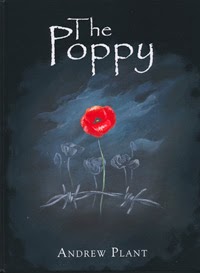
THE POPPY By Andrew Plant. Melbourne, Ford Street Publishing, 2014


With Anzac Day just around the corner, what better time to publish a book with a World War I theme?

But this is not about Gallipoli or even World War I in general. It takes an incident that happened during that war, which may not be well known to Australian children, but that forged a permanent bond between Victoria and the French town of Villers-Bretonneux. Villers-Bretonneux was destroyed by German attacks and just before Anzac Day, Australian troops won an unlikely victory there, while losing a third of their members.

After the war, Victorian schoolchildren donated their pennies towards rebuilding the Villers-Bretonneux school, which is still there, called the Victoria School in honour of the children who helped it be rebuilt. There are carvings of Australian animals, streets with names such as Victoria Street and a motto: Never Forget Australia. And a memorial that reminds viewers that not only soldiers died in the war.

The poppy has become an icon of that war and it appears throughout the book. The art is lush and beautiful, the information simple but effective for young children to read and learn. It’s a nice idea, too, to cover a story of which children were a part.

Recommended for any school library or for a gift for your child that explains Anzac Day in terms they can understand.

CHASING SHADOWS By Corinne Fenton, ill. Hannah Sommerville. Melbourne, Ford Street Publishing, 2014


Beth suffers from depression, something that even children can experience. Hoping to chase away the shadows, Beth’s father brings home Patches, a lively, mischievous puppy.

But depression isn’t that simple. You can’t cure it with a “cheer up!” It takes a near disaster to bring her out of her shadow land...

A lovely, simple, gentle story that will help children to understand this condition.

And once again, Ford Street has discovered a wonderful new artist, Hannah Sommerville, a Victorian artist whose first book this is.  There is something very Julie Vivas about the style of Ms Sommerville’s art. 

Hopefully, she will be just as successful when her time comes.

THE CUCKOO Gary Crew, Ill. Naomi Turvey. Melbourne: Ford Street Publishing, 2014


Firstly, I’d like to say something about Ford Street Publishing, a small press that punches well above its weight and encourages new writers and artists. In 2012, it published the exquisitely beautiful In The Beech Forest, written by veteran Gary Crew and illustrated by teenage artist Den Scheer, whom I believe will be the next Shaun Tan. I give away my review copies because of the lack of space on my shelves, but that was one with which I couldn’t bear to part. (I was hoping it might get a Crichton award for new artists, but it didn’t even score a Notable in that year’s CBCA  Awards, which tells me that judges can get it wrong sometimes, as they did when  the classic Animalia failed to win the CBCA Awards many years ago.)

Now there’s this new picture book with Gary Crew again and another new artist, Naomi Turvey, who was completing her Diploma of Illustration in 2012, the year when In The Beech Forest came out. And it’s also a gorgeous piece of work, from the fairytale-style cover to the tinted watercolour sketches inside.

Despite being set in New South Wales’s Blue Mountains, the story isn’t especially Australian. It could be anywhere. In fact, it’s basically a fairytale with the grim(pardon the pun) flavour of the typical folk tale, well suited to the author of so much scary fiction.

Martin is the runt of the family. His father is a forester and he has two older brothers who mock and jeer at him. His father makes it clear he is not valued. So Martin spends his days in the forest, making friends with the local wildlife and thinking of the cuckoo that is dumped in another bird’s nest, abandoned by its mother as he was.

It never, of course, mentions that the young cuckoo throws out its foster siblings to get all the attention of the parents - but that is very relevant here.

When his brothers are carried off by an eagle to be fed to its young and his father makes it clear that he wishes it had been Martin instead of them, Martin wanders off and, finding the feathers of a baby eaglet, sticks them on and replaces it in the eyrie, opening his mouth for food that includes his former forest friends, thinking they are his real brothers because they have sacrificed their lives for his (not willingly!). 

See? Grim fairytale!

But there is a positive ending I won’t spoil for you. 

This is not a book for young children. It’s more for older kids and for the kind of adults who collect picture books. But there’s plenty to discuss in class, about bullying and family troubles, and whether you could consider Martin as a good guy. Even the art themes merit discussion - there is a lot to notice in these pictures, which are much more than just an illustration of the story they accompany.

 And if the story isn’t really Australian, the art is, with long eucalyptus leaves, rocky landscape and gum tree trunks. This is an artist to watch out for and congratulations to Ford Street for discovering her and for another beautiful book.


Tuesday, April 08, 2014

The - Ta Da! - CBCA Shortlist 2014


And here they are, folks, this year's Children's Book Council of Australia shortlisted books. I haven't done more than glance at the Notables, although they have the irritating habit - for me, anyway - of listing the shortlisted books among the Notables, which makes the list way too long and you have to disentangle them from the books which nearly made it to the shortlist, but not quite. (I scored two of those, one for Potions To Pulsars, one for Wolfborn, and Potions was also on the Clayton's shortlist).

My library only has three of the shortlisted books, so those are the ones I've read, though the Fiona Wood novel has been waiting patiently on my iBooks shelf for some time, I guess I'd better read it now. Lucky lady, she has written two novels and both have been on the shortlist! We have Life In Outer Space, The First Third and in the Younger Readers category, My Life As An Alphabet. All delightful books, though in the Older Readers category, I'm going to hope it goes to The First Third, a lovely, lovely book, gentle, touching, funny and sad all at once.

If you haven't heard of the Clayton's shortlist, here's a link to this year's predictions:

http://readalert.blogs.slv.vic.gov.au/2014/03/13/cbca-2014-book-of-the-year-prediction-events/#.U0ToUcsaySM

If you're an old enough Aussie or Kiwi, you'll remember the ad for a drink called "Clayton's - the drink you have when you're not having a drink!" It was an imitation alcohol. I don't think you can buy it these days. But it added an expression to the language. You speak of a Clayton's this or that when you mean something that's a bit like whatever, but not quite. The Clayton's Shortlist is a prediction of what is going to be on the CBCA shortlist.

Interestingly, it got about three books right(The First Third was an Honourable Mention in the Clayton's and made it to the CBCA Shortlist). Check it out, see what you think.

I will have to buy at least the Older and Younger Readers for my library. Fortunately, I now have a new bookseller, the Sun bookshop in Yarraville. Only problem is, the minute something gets on the shortlist, you can't get it. One bookseller told me that some publishers actually withdraw their books so they can add the shortlist "sticker" to the cover. Often, you can't get the books at all until AFTER the winners are announced? Yeesh! Must contact the Sun now, before I get back to work.

Meanwhile, if you've read any of the books on this list, do give your opinion. I'll scurry around and put my own comments up as I read them.


Older Readers

The Incredible Here and Now (Felicity Castagna, Giramondo)
Life in Outer Space (Melissa Keil, HGE)
The First Third (Will Kostakis, Penguin)
Fairytales for Wilde Girls (Allyse Near, Random House)
Wildlife (Fiona Wood, Pan)
The Sky so Heavy (Claire Zorn, UQP)

Younger Readers

Violet Mackerel’s Possible Friend (Anna Branford, illus by Sarah Davis, Walker Books)
Song for a Scarlet Runner (Julie Hunt, A&U)
A Very Unusual Pursuit (Catherine Jinks, A&U)
My Life as an Alphabet (Barry Jonsberg, A&U)
Light Horse Boy (Dianne Wolfer, illus by Brian Simmonds, Fremantle Press)

Early Childhood

I’m a Dirty Dinosaur (Janeen Brian, illus by Ann James, Viking)
Baby Bedtime (Mem Fox, illus by Emma Quay, Viking)
Banjo and Ruby Red (Libby Gleeson, illus by Freya Blackwood, Little Hare)
Kissed by the Moon (Alison Lester, Viking)
The Swap (Jan Ormerod, illus by Andrew Joyner, Little Hare)
Granny Grommet and Me (Dianne Wolfer, illus by Karen Blair, Walker Books)

Picture Books

The Treasure Box (Margaret Wild, illus by Freya Blackwood, Viking)
King Pig (Nick Bland, Scholastic Press)
Silver Buttons (Bob Graham, Walker Books)
Parachute (Danny Parker, illus by Matt Ottley, Little Hare)
The Windy Farm (Doug MacLeod, illus by Craig Smith, Working Title Press)
Rules of Summer (Shaun Tan, Lothian)

Eve Pownall Award for Information Books

Jeremy (Christopher Faille, illus by Danny Snell, Working Title Press)
Ice, Wind, Rock (Peter Gouldthorpe, Lothian)
Jandamarra (Mark Greenwood, illus by Terry Denton, A&U)
Yoko’s Diary: The Life of a Young Girl in Hiroshima (ed by Paul Ham, ABC Books)
Meet… Captain Cook (Rae Murdie, illus by Chris Nixon, Random House)
Welcome to My Country (Laklak Burarrwanga and family, A&U)

Crichton Award for New Illustrators:

Big Red Kangaroo (Graham Byrne, text by Claire Saxby, Walker Books)
The Bloodhound Boys Book 1: The Great Blood Bank Robbery (Andrew Cranna, Walker Books)
I’ve An Uncle Ivan (Ben Sanders, Thames & Hudson)
The Nerdy Birdy (David Snowdon, text by Danielle Wheeldon, self-published).

Saturday, April 05, 2014

And The Aurealis Award Goes To...

I have a confession to make - I haven't read any of the winners, though I do have some of the books and have read some of the other shortlisted books. Interesting to see a couple of the winners are self published(are you reading this, Lan?).

I have met Amie K, briefly, at Flinders Street Station, where she admired my Aussiecon t shirt as we got off the train and told me she had sold a novel.

Congratulations to all those lucky enough to have reached the short list - not that you didn't deserve it, but you were competing with a LOT  of other fabulous books that also deserved shortlisting. ;-)

So, pinched from the Tor web site(which is well worth joining), this year's Aurealis Awards go to...

Peter McNamara Convenors’ Award for Excellence:
Winner: Jonathan Strahan

BEST ILLUSTRATED BOOK OR GRAPHIC NOVEL

Winner: Burger Force by  Jackie  Ryan  (self published)
Winner: The Deep Vol. 2:  The Vanishing  Island by  Tom  Taylor  and  James  Brouwer (Gestalt  Publishing)
Savage  Bitch by  Steve  Carter  and  Antoinette  Rydyr  (Scar  Studios)
Mr  Unpronounceable  Adventures by  Tim  Molloy  (Milk  Shadow  Books)
Peaceful Tomorrows  Volume Two by Shane W Smith  (Zetabella  Publishing)


BEST CHILDREN’S BOOK

Winner: The four seasons of Lucy McKenzie by  Kirsty  Murray  (Allen  Unwin)
Kingdom of  the Lost,  book  2:  Cloud Road by Isobelle Carmody  (Penguin Group  Australia)
Refuge by Jackie French (Harper  Collins)
Song for a scarlet runnerby  Julie  Hunt  (Allen &Unwin)
Rules of Summer by  Shaun Tan (Hachette  Australia)
Ice  Breaker: The  Hidden 1 by Lian  Tanner  (Allen  & Unwin)


BEST YOUNG ADULT SHORT FICTION

Winner: “By  Bone light” by Juliet  Marillier  (Prickle  Moon,  Ticonderoga  Publications)
“Mah  Song” by Joanne  Anderton  (The Bone  Chime  Song  and  Other  Stories, FableCroft  Publishing)
“Morning  Star” by D.K.  Mok  (One  Small  Step,  an  anthology  of  discoveries,  FableCroft Publishing)
“The  Year  of  Ancient  Ghosts”  by  Kim  Wilkins
The  Year  of  Ancient  Ghosts,  Ticonderoga Publications)


BEST YOUNG ADULT NOVEL

Tie Winner: These Broken  Stars by  Amie  Kaufman  and  Meagan  Spooner  (Allen  &  Unwin)
Tie Winner: Fairytales  for  Wilde  Girls by  Allyse  Near  (Random House Australia)
The Big Dry by Tony Davies  (Harper  Collins)
Hunting by Andrea Host  (self published)
The Sky So Heavy by Claire  Zorn (University  of  Queensland  Press)


BEST  HORROR  SHORT  FICTION

Winner: “The  Year  of  Ancient  Ghosts”  by  Kim  Wilkins  (The  Year  of  Ancient  Ghosts,  Ticonderoga Publications)
“Fencelines” by Joanne Anderton  (The Bone Chime Song  and  Other  Stories,  FableCroft  Publishing)
“The  Sleepover” by  Terry  Dowling  (Exotic  Gothic  5,  PS  Publishing)
“The  Home  for  Broken Dolls”  by  Kirstyn  McDermott  (Caution:  Contains  Small  Parts, Twelfth Planet Press)
“The  Human  Moth” by Kaaron Warren (The  Grimscribe’s  Puppets,  Miskatonic  Press)


BEST HORROR NOVEL

Fairytales for Wilde Girls by Allyse Near (Random  House  Australia)
The Marching Dead by Lee Battersby (Angry  Robot  Books)
The First  Bird by Greig  Beck  (Momentum)
Path of Night by Dirk Flinthart  (FableCroft  Publishing)


BEST FANTASY SHORT FICTION

Winner: “The  Last  Stormdancer” by Jay Kristoff  (Thomas Dunne Books)
“The  Touch  of  the Taniwha” by Tracie  McBride  (Fish, Dagan Books)
“Cold, Cold  War” by Ian McHugh (Beneath Ceaseless  Skies, Scott H. Andrews)
“Short Circuit” by Kirstie Olley (Oomph: a  ittle  super goes a long way,  Crossed  Genres)
“The  Year of Ancient Ghosts” by  Kim Wilkins (The  Year of Ancient Ghosts, Ticonderoga Publications)


BEST FANTASY NOVEL

Winner: A  Crucible  of  Soulsby  Mitchell  Hogan  (self published)
Lexicon by  Max  Barry  (Hachette  Australia)
These  Broken  Stars by  Amie  Kaufman  and  Meagan  Spooner  (Allen  &  Unwin)
Newt's  Emerald by  Garth  Nix  (Jill  Grinberg  Literary  Management)
Ink  Black  Magic by  Tansy  Rayner  Roberts  (FableCroft  Publishing)


BEST SCIENCE FICTION SHORT FICTION

Winner: “Air, Water and the Grove”  by Kaaron Warren  (The Lowest Heaven, Pandemonium  Press)
“The  Last  Tiger”  by  Joanne  Anderton  (Daily  Science  Fiction)
“Mah Song” by  Joanne  Anderton (The  Bone  Chime Song  and  Other  Stories, FableCroft Publishing)
“Seven  Days  in  Paris” by Thoraiya  Dyer (Asymmetry,  Twelfth  Planet  Press)
“Version 4.3.0.1” by Lucy  Stone (Andromeda  Spaceways  Inflight  Magazine  #57)


BEST SCIENCE FICTION NOVEL

Winner: Lexicon by Max Barry  (Hachette)
Trucksong by  Andrew  Macrae  (Twelfth  Planet  Press)
A  Wrong Turn At The Office Of Unmade Lists by  Jane  Rawson  (Transit  Lounge)
True Path by Graham Storrs (Momentum)
Rupetta by Nike Sulway  (Tartarus  Press)


BEST ANTHOLOGY

Winner: The Year’s Best Australian Fantasy and Horror 2012 by  Liz  Grzyb  and  Talie  Helene  (Eds),  (Ticonderoga  Publications)
Winner: One  Small  Step,  An  Anthology  Of  Discoveries by  Tehani  Wessely  (Ed)  (FableCroft  Publishing)
Dreaming  Of  Djinn by  Liz  Grzyb  (Ed)  (Ticonderoga  Publications)
The  Best  Science  Fiction  And  Fantasy  Of  The  Year:  Volume  Seven by  Jonathan  Strahan  (Ed) (Night  Shade  Books)
Focus  2012:  Highlights  Of  Australian  Short  Fiction by  Tehani  Wessely  (Ed)  (FableCroft Publishing)


BEST COLLECTION

Winner: The Bone Chime  Song and Other Stories by Joanne  Anderton (FableCroft  Publishing)
Asymmetry by  Thoraiya  Dyer  (Twelfth  Planet  Press)
Caution: Contains Small Parts by Kirstyn McDermott (Twelfth Planet  Press)
The  Bride Price by Cat Sparks  (Ticonderoga  Publications)
The  Year of Ancient  Ghosts by  Kim  Wilkins  (Ticonderoga  Publications)