Search This Blog

Sunday, April 16, 2023

A To Z Challenge 2023: Myth And Folk Tale In Fiction - N Is For Norse Influence

 Norse/Scandinavian folklore, myth and legend has been plundered for stories for quite some time. And I’m going to cheat a little because of a story I want to mention. 


J.R.R. Tolkien certainly loved his northern stuff. He built his own world, certainly, but it didn’t come from nowhere. His inspirations came from up north. For example, his twelve Dwarves in The Hobbit have names taken from Dwarves in Norse mythology, listed in the Old Norse Voluspa. For that matter, Gandalf’s name was also from that list.The Dwarves themselves are taken from German and Norse myth and legend. They are amazing craftsmen both in myth and Tolkien’s fiction. You might remember  the ones in that story about Loki and Sif’s hair, where they created such goodies as Thor’s hammer Mjolnir. 


Ursula K Le Guin’s story, “The Necklace”, published in the book Rocannon’s World, certainly has hints of the story of Freya’s necklace, the Brisingamen. In it, the heroine goes in search of a necklace that belonged to an ancestress, as she wants it for a dowry she couldn’t afford. She finds her way to the Claymen, the equivalent of Norse Dwarfs. They are craftsmen who had made the necklace, and help her to find her way to where it’s being kept - in a museum on another planet… another folk tale element is in it, but I’ll avoid spoilers here. You can buy it in ebook.


Joanne Harris wrote a series of novels inspired by Norse myth. Two of them, The Gospel Of Loki and The Testament of Loki, are seen from the viewpoint of the trickster god. The first-mentioned is the Norse myths as seen by Loki. In the second, Loki escapes from the Underworld via a computer game and helps a teenage girl whose body he is sharing to gain confidence, a makeover and a girlfriend. 


In this series, Ragnarok is not really the end of the world, at least not for humans. Five hundred years later - in YA novel Runemarks - civilisation is back up and running. The gods are in the underworld, mostly, but not truly dead. Odin is wandering Earth and acting as a mentor to teenage girl Maddy Smith, who was born with a runemark on her hand, which makes her an object of suspicion in her village but gives her powers. Along the way, she meets a red-haired young man who is known as the Captain; he’s Loki, who got hold of a body and is back. She has a quest… 


I bought all these in Apple Books, but you can get them in print on Amazon.


The Hitchhiker’s Guide To The Galaxy has Norse references in its sixth title, And Another Thing… written by Eoin Colfer, author of the Artemis Fowl series(which has fairies in it), based on notes written by Douglas Adams before his death, but never finished. The god Thor plays a fairly substantial role in it. He has a spaceship, by the way. Available at your good book websites, or get your bookshop to order a copy.


In Parke Godwin’s novel The Tower Of Beowulf (which you may have to get second-hand - see Amazon) based on the Old English poem, Grendel’s mother is a daughter of Loki. Her father, feeling sorry for her, has her brought up in a house where the mirrors show her as beautiful. In fact, she can cast an illusion, and uses it to seduce a king, who is Grendel’s father. (When you think about it, that makes Grendel the rightful king of that place).


When Loki is tied up with that snake dripping poison on him, it isn’t his wife Sigyn who comes to help him, it’s his daughter. 


It’s a lovely novel, like all Parke Godwin’s other works and worth chasing up. You can get a print copy - mostly second hand - on Amazon. It doesn’t seem to be available in ebook.


Neil Gaiman’s American Gods has a huge mix of gods from all over, but Odin is one of the main characters, along with the hero Shadow Moon’s jail cell mate, known to him as Low Key Liesmith. There is also a story among the “Coming To America” chapters in which a Norse ship arrives in America well before the eleventh century historical dates. They pray to their gods for a fair wind to get them home. A Native American wanders into their camp and they get him drunk and sacrifice him to Odin in the traditional manner, by hanging. Centuries later, when the historical Vikings arrive, three of their gods are waiting for them.


There are so many books with Norse myth in them, but I’m going to finish here with a novel that has Norsemen in it, but not myth. It is inspired by the Vinland Saga. We know that the Norse probably got to North America in the eleventh century, but not where they settled. They didn’t stay there, but it makes a great story.


The Technicolor Time Machine is by Harry Harrison. It’s a very funny time travel story in which a film studio about to go out of business as soon as they get audited on Monday get access to a time machine and take their actors and crew into the past to make a film about the Vikings settling in America. It gives them free or cheap extras and they can go into the past and film the whole thing in a week present day time. When they can’t find any Norse settlements to film in, they do it themselves with the help of a local Norse leader. You can probably guess how it works out.


Available in ebook, both in Apple Books and Kindle. Also, if you visit YouTube, there is a BBC radio play of it written by Chris Boucher, who wrote a lot of scripts for the SF series Blake’s 7 and later Star Cops.


Do you have any favourite Norse-themed fiction?


Friday, April 14, 2023

A To Z Challenge 2023: Myth And Folk Tale In Fiction - M Is For Minoans

 Have you ever noticed how much Crete is involved in fantasy fiction with a Greek mythology theme? 


And who could blame the authors? There is so much in that civilisation to write about. There are so many beautiful wall paintings and cheery pots with octopus images! 


Refreshing your memory, Minos, King of Crete, prayed to the god Poseidon for a perfect bull to sacrifice to him. A bit weird to be asking a god to supply his own sacrifice, but there you are. Poseidon obliged with the most amazing, beautiful white animal you could ever imagine. In the end, not a good idea. Minos kept the bill to improve his own herds and sacrificed a lesser bull. This being Greek mythology, where crazy things can and do happen, Poseidon was annoyed enough to arrange for Minos’s Queen, Pasiphae, to be filled with lust for the bull. She got the genius craftsman Daedalus to build her a cow she could get into and… yuk! As a result, she bore the Minotaur, a scary being with a human body and bull’s head. Daedalus was also commissioned to build the Labyrinth to hide away and contain the embarrassing child, who was carnivorous and fed with young men and women sent as tribute. Athens had to do it as punishment because a son of Minos had been killed while there. 


Now, I am going to start with a novel series you will know well enough, but maybe never noticed had any Greek myth in it: The Hunger Games by Suzanne Collins. It may seem to be just another series set in a dystopian future, but think about it: young tributes, boys and girls alike, are sent from various districts to fight in an arena game they are highly unlikely to survive. They are chosen by lot. There was a mention of a punishment that started it. This is eventually overthrown, as in the myth. When I read the books for the first time, the Greek myth elements jumped up and bit me. 


There is a scene in Circe when the heroine is visiting her sister Pasiphae while she is in labour. Pasiphae says “I fucked the sacred bull, all right?” There is quite a lot about the Minotaur in this novel, with grisly details about its delivery.


Mary Renault’s The King Must Die and The Bull From The Sea are about Theseus, the destroyer of the Minotaur. However, it’s written as basically historical fiction, with just a bit of fantasy in that Theseus can tell when an earthquake is on its way. In this version, Minotaur is the title of the heir to the throne, like Prince of Wales. Pasiphae slept with a bull dancer, not a bull. As it’s a matriarchal society and Pasiphae is the Goddess on Earth, there isn’t much Minos can do about it. The tributes are chosen from among the small, light and agile teens - and yes, Theseus fits into this category. He is much shorter than a hero is expected to be, much to his disappointment. The bull dancers are acrobats. The creation of Daedalus is a wooden bull that the young acrobats use for practice. The Labyrinth is the name of the royal palace.


Wendy Orr, a children’s writer who lives in Australia but has a Canadian background, has written three books set before and after the time of the Thera explosion. 


The first in the trilogy, Dragonfly Song, involves tributes sent to Crete to become bull dancers.  The heroine volunteers to go when another girl has an accident that kills her. The tributes get respect, something she has been lacking. This novel has fantasy elements in it. There isn’t any Minotaur, but the bull dancing is a sacred activity, not just a show. For this reason, you don’t know which bull you will get for any show, unlike in The King Must Die, in which every team had its own bull and trains with him.


Wendy Orr knows about bulls; apart from research she and her husband bred cattle for many years. 


In the third novel, Cuckoo’s Flight, the Trojan War is mentioned; the heroine’s father is Trojan and came to a Cretan island to escape.


Poul Anderson’s time travel novel The Dancer From Atlantis is also a story about bull dancing. The title character is very young, because it’s better to get younger children to perform, as they are more flexible and athletic. It’s true, by the way - our ESL students, mostly refugees from Sudan, did a circus course; it’s amazing what they could do without any previous training. Their performance was breathtakingly beautiful. 


The novel is about the Thera explosion, but Theseus is in it as a villain. The premise is that the tributes are not sent to be killed at all, they go to Crete as hostages, live at court and have become very much Cretans  by the time they go home. And that is the intention. Theseus is a baddie to begin with, but is shocked into eventually becoming a good king.


Available in ebook.


Do you have any favourites in this area? 


A To Z Blogging Challenge 2023: Folk Tale And Myth In Fiction - L Is For Charles De Lint And Margo Lanagan

 Charles De Lint is a prolific Canadian fantasy writer, who focuses on myth and legend and - well, fairies - in his work. 


The novel closest to the theme of this A to Z is Jack, The Giant Killer, published in 1987 and still available on Amazon and Apple books. It is an urban fantasy version of the fairy tale, in which the Jack of the title is a girl called Jacky. The Wild Hunt ride on motorbikes and there are the Seelie and Unseelie courts, all in Ottawa. And, of course, there are giants. 


But there is a lot more to his work. He has done far more books than I can list here - and I’m still reading them. So let’s just talk about a few. 


His fiction mixes Celtic with Native American myth. In one of his novels, Moonheart, the Celtic spirits have come to North America and taken over from the indigenous spirits, who have withdrawn into the Otherworld. The heroine, who runs a bookshop, meets Welsh bard Taliesin, a hero of Celtic mythology, who made his way to North America centuries ago and is still around. She is a heavy smoker, so when she meets a Native American being and offers her a cigarette, it is considered sharing sacred smoke! 


I loved this book, which, among other things, introduced me to some wonderful folk bands such as Silly Wizard. 


He is best known for his Newford series, books and short stories,  set in a small town somewhere in North America. It is filled with magic of more than one kind. The local park is a forest of Faerie. Native American spirits wander in and out. Best of all, the town is full of writers, artists and musicians and you can take your pick of concerts by Celtic bands any time of the week. I have to say, if Newford was a real place I’d move there tomorrow. 


Charles De Lint is a musician himself. He met his wife when she came to him for mandolin lessons. I once attended a convention at which he was the guest of honour and he and his wife performed for us. They did a more informal jam session in the hotel foyer with one of our local musicians, a harper who carries her instrument everywhere. I believe he has been in a Celtic band in his time. So it’s easy to see why he would slot music and the arts into his fiction. 


By the way, I had the pleasure of doing a panel on YA and children’s fiction with him at that con.


Margo Lanagan is an Australian writer who has done some fiction with fairy tale backgrounds.


The one which is best known is Tender Morsels, a YA novel based on Snow-White And Rose-Red. In the fairy tale, two girls live in the forest with their mother. They are kind to a (talking)bear who is a prince under an enchantment. They are also helpful to a dwarf who, however, is ungrateful each time they help him. Eventually the dwarf gets his comeuppance and the bear is turned back into a prince. 


Tender Morsels expands on the story, with a back story for the mother, the bear and the dwarf. It got into trouble in the U.S when it first came out because of those dark back stories. It is a wonderful book anyway. Available at all good book web sites.


My favourite of her works is called Sea Hearts in Australia and The Brides Of Rollrock Island outside Australia. It won a Children’s Book Council of Australia Award for Older Readers the year it came out.


It’s not based on a specific folk tale, but you are probably familiar with the stories about selkie women who can’t return to the ocean because their human husbands have stolen and hidden their seal skins. Then a child finds the hidden seal skin and the wife leaves her human family and returns to the sea.


This novel, set on a Scottish island in the 19th century, begins by asking what might happen to descendants of these seal women centuries later. In this case, a girl who is a descendant has the power to bring women out of the seals which live around the island and makes a nice living out of it. 


These women are basically Stepford Wives if you can imagine those as having feelings. They are beautiful and obedient and all the men want one. Eventually the human women leave the island and the only women are selkies. There is no other choice for boys because any girls born to the selkie women have to return to the sea as seals, unable to live on land. In the end, it’s the decision of the teenage boys to help their mothers, not an accident.


It’s a beautiful and touching novel, well worth a read. Fortunately it’s still available, in ebook, print and audiobook. Buy it!


Wednesday, April 12, 2023

A To Z Blogging Challenge 2023: Folk Tale And Myth In Fiction - K Is For Kassandra

 Okay, I’m cheating with the spelling for the sake of having a K post. But it would be spelled with a K in Greek anyway, so there. 


In Greek myth, Kassandra/Cassandra was a princess of Troy. She was given the gift of prophecy by Apollo, but when she wouldn’t sleep with him, he took back a part of his gift. Yes, she could still prophesy, but nobody would believe her. 


And people have written about her in their Trojan War fiction. Here are a few. All of them are still available.


Marion Zimmer Bradley, best known for her Arthurian novel, The  Mists Of Avalon, also wrote a Trojan War novel, The Firebrand. Despite the title, which refers to Prince Paris, whose mother dreamed about giving birth to a firebrand which destroyed Troy, the story is seen from the viewpoint of his sister, Cassandra. This is a feminist reading of the story, like most of this author’s work. Queen Hecuba had been an Amazon. Cassandra spends time with them in the course of the story. The other women in the novel are shown as dominated by the men in their lives. It was certainly an interesting interpretation though there are others I prefer, such as Kerry Greenwood’s. Available at all good book web sites.


Kerry Greenwood, best known for her Phryne Fisher historical mystery novels, wrote a trilogy, the Delphic Women, Medea, Cassandra and Electra. Two of them have Cassandra in them. This interpretation is also feminist.


Cassandra is set during the Trojan War. Princess Cassandra is a much more interesting character than Bradley’s - and has someone she loves. The culture is not Greek a la Iliad. Girls have to prostitute themselves once, in a temple, as in some eastern cultures. Apollo doesn’t make a physical appearance. She manages to survive Agamemnon, unlike in the myth.


In Electra, she is not killed by Clytemnestra. Two men who care about her find her, and the three of them rescue Agamemnon and Clytemnestra’s daughter Electra and little Orestes, who was brought up as her younger brother, but has a much darker origin.


So, Kerry Greenwood manages to take Greek tragedy and give it a happy ending. Sort of, anyway. You may or may not care for that, but it worked for me. I like Kerry’s style.


These books went out of print for a time, but have been reprinted with lovely covers by  Australian small press ClanDestine Press. They are available in ebook - quite cheaply in Apple Books - and audiobook and Kindle.


A novel I like very much is Richard Powell’s Whom The Gods Would Destroy. In it, the Trojan War is seen from the viewpoint of Helios, the adopted son of the head groom at the palace of Troy. His late mother was a slave girl from Rhodes, where the sun god Helios was worshipped. He claims that King Priam is his father. Nobody is sure, but the king is flattered at the idea that he might have still fathered a son at the age of sixty, so he is educated with Cassandra, who becomes his friend and makes a prophecy about him; bit by bit it comes true. Whenever he is with her, he has visions himself. Cassandra is an intelligent young woman, but Helios is about the only person who does believe her.


Her fate in this novel is pretty much as it was in the myth, at least as far as Helios witnesses when Troy falls.


I will leave it at this, as I’d like to fit this novel into other posts.


I bought my copy years ago in hardcover. The print edition is not available now, but you will find it on Kindle. I have the Kindle app on my iPad, so if you are an Apple person, that is a possibility. 


It’s my favourite Trojan War novel. Do you have one?

A To Z Challenge 2023: Folk Tale And Myth In Fiction - J Is For Japan

 So far, I’ve mostly written about books set in Europe, but there are plenty inspired by Asian mythology and folklore, some “what ifs”.  Today I will just talk about a few I have read, set in Japan orca fantasy version of Japan. 


The Tomoe Gozen trilogy by Jessica Amanda Salmonson was published in the 1980s, but is now available in ebook on Amazon and in audiobook on Apple Books, as The Disfavored Hero. The heroine, Tomoe Gozen, was a real person from the 12th century, written into a fantasy novel full of Japanese mythical creatures. She was a female samurai; I slotted her into an iMovie presentation for my Year 8 class when one of my students asked if there were female knights. There were, in Japan. And if you want to add fantasy stuff to her adventures, why not? I haven’t read it in years, but now I think I will go back for a reread. 


Aussie children’s author Gillian Rubinstein wrote the Tales Of The Otori series under the pseudonym Lian Hearn. They were YA/adult. I admit I have so far only read the first book, Across The Nightingale Floor, but it was an impressive read, based on the premise that, in this alternative world, the spies/assassins we call ninja really could do magic, something believed of them in the real world. They couldn’t , of course, they were just very, very good at what they did. 


It’s set in what in our world would be the Sengoku period, which lasted from about the 15th to 17th centuries. By the way, a nightingale floor was a floor designed to make a noise when you walked across it, a security measure. Ninja had ways of getting across them without making a noise.


If you’re interested it’s still in print and easily available. 


Kara Dalkey wrote The Nightingale for a series of novels based on fairy tales. This was originally a Hans Christian Andersen story. The original fairy tale was set in China. To refresh your memory, the Chinese Emperor is befriended by a small bird, the nightingale, who sings for him and soothes him when he can’t sleep. He then replaces his live bird with a mechanical one, which can’t save him when he needs it. 


Kara Dalkey changes the setting to Japan. The nightingale of the title is not a bird, but a young woman, Uguisu, who plays the flute beautifully instead of singing. The artificial nightingale is another woman, a courtesan who is not what she seems. It is available in ebook on Kindle. 


Aussie children’s author Ruth Manley’s trilogy with a Japanese setting is The Plum Rain Scroll, The Dragon Stone and The Peony Lantern. It’s also the hardest to find, alas, but well worth looking up on secondhand web site ABEBooks - which will keep sending you a notice any time a copy turns up on its list. Despite the fact that the first book in the trilogy won a CBCA Award, it’s well and truly out of print. 


The series is set in a mediaeval fantasy version of Japan. The hero, Taro, lives in an inn with Uncle Thunder and Aunt Piety. Aunt Piety is a fox spirit who runs a very efficient inn, Uncle Thunder is a nutty inventor, who is more than he seems. 


Before he knows it, Taro is on the run from the evil Lord Marishoten, who is after the Plum-Rain Scroll, which only Aunt Piety can translate, to help him in his plan to take over from the Mikado. He is lucky enough to meet Prince Hachi(Lord Eight Thousand Spears). His other companions include  Hiroshi - an umbrella hating ghost(cursed to haunt an umbrella shop), an Oni monster who loves poetry and a girl called Oboro the Cherry Blossom Princess, and her very unusual dog that isn’t actually a dog. The trilogy is very like Lloyd Alexander’s Chronicles of Prydain - even the name of the hero is similar, Taro and Taran, while Oboro is a lot like Princess Eilonwy. So if you liked that series you will enjoy this! 


Tuesday, April 11, 2023

A To Z Blogging Challenge 2023: Folk Tale And Myth In Fiction - I Is For Iron

 Iron, as I read on someone’s blog, is “kryptonite for fairies”. They can’t touch it, which is why, in the real world, parents would place something made of iron into baby’s cradles, to avoid the risk of changelings. Mind you, changelings supposedly happened anyway, but no matter. 


Why iron? That might be a real-world thing. The Bronze Age happened, followed by the Iron Age. Weapons made of bronze were not much use against weapons made of iron. The Dorian invasion which probably ended the Mycenaean era is an example of this. In Richard Powell’s Trojan War novel Whom The Gods Would Destroy, Odysseus and some companions, including the children who are the main characters in the novel, go on a journey during which they encounter some Dorians with iron swords. On Midsummer Eve, when everyone is busy celebrating the religious holy day, they sneak over to where some swords are being kept and steal two. Odysseus is not pleased, but gets the girl with them to weave them into the wool of some of their sheep. Later in the novel, the hero, Helios, has a vision of those people with their iron weapons invading all of his world.  


That novel is mostly out of print, but you can still get it in hardback or ebook on Amazon.


There was a belief that putting a horseshoe above your door was lucky. In Good Omens there is a horseshoe above the door at Jasmine Cottage, where the heroine Anathema Device is staying. It glows hot when Anti-Christ Adam Young’s dog, Dog, walks through(Dog is a hellhound).


In Pratchett’s Lords And Ladies it is explained that the probable reason for the horseshoe is because it was the cheapest form of iron for people who couldn’t afford anything else to protect their homes. That makes sense!


In any case, there is a lot of reference to iron in this novel as it’s about an invasion by the Elves.  The king, Verence, is stolen away because his fiancée, Magrat, refuses to take the invasion seriously and removes the iron from around a girl she is treating, who is mind controlled into doing what the Elves want. At the end of the novel, witch Granny Weatherwax has the unicorn that has been rampaging around the kingdom shod by the blacksmith, but with silver, not iron, which would be cruel. She is able to lead it into town using a hair, being a virgin, who can control unicorns.


Rudyard Kipling had a chapter on the subject of fairies and iron in his novel Rewards And Fairies. Here is a link to that chapter, in which Puck explains to the children who are the main characters why iron is an issue for fairies. 


 https://www.telelib.com/authors/K/KiplingRudyard/prose/RewardsFaries/coldiron.html


I do wonder how fairies would cope in our world, in this Iron Age of ours; maybe that’s why we don’t see them any more?


Tomorrow: J Is For Japan 


Monday, April 10, 2023

A To Z Blogging Challenge 2023: Myths And Fairy Tales In Fiction - H Is For Hogfather And Harry Potter


Hogfather is Terry Pratchett’s Christmas novel. In it, Susan Sto Helit, Death’s granddaughter, must investigate the disappearance of the title character, the Discworld version of Santa Claus, while Death himself is covering for him, in order to keep belief in the Hogfather going among children. 


The Hogfather is pretty much a god in this world - you pray to him for gifts,  you offer him sacrifices in the form of drinks and cookies, he rewards you for good behaviour - of course he’s a god! And gods disappear when no one believes in them any more. So yes, Death - a lovable character in the Discworld - takes over the sleigh pulled by pigs, puts on the red robes and a fake beard and flies around to distribute gifts. In the course of the story he encounters Good King Wenceslas(he throws him out of the hut of the peasant who doesn’t want his offerings) and the Little Match Girl of Hans Christian Anderson’s story(he lifts her off the street and sends her to the City Watch station, demanding she be given a warm meal and a bed and throws snowballs at some angels who have turned up to take the dead child to heaven).


It not only has fun with the whole Christmas festival thing, it also messes around with all the mythological stuff, indicating that the Hogfather started as first a seasonal human sacrifice, then a shaman and finally the recognisable fat man in the red suit. If you’ve ever read Frazer’s Golden Bough or Robert Graves’s The Greek Myths, you’ll recognise it, though it probably has no connection with Santa Claus. On the other hand, there are so many different stories from around the world connected with that being, who knows? 


The Tooth Fairy is also a major part of this novel. Tooth fairies in general are ordinary young women doing a job, but what happens to all those teeth? We find out that they are being collected by the real Tooth Fairy to protect children from being affected by sympathetic magic. So, if you got hold of those teeth, you could, for example, stop them believing in the Hogfather…


Oh, and bogeymen are real on the Discworld. They even go to the pub when they aren’t hiding under children’s beds; Susan, who is a nanny, pulls them out from under her children’s beds and throws them out.


There is a very good telemovie of this, with a cameo role by Terry Pratchett in the last scene, as a toy maker.


H is also for Harry Potter. There is probably not much you don’t know about the Boy Who Lived and his adventures, but what about folk tale and mythology elements? 


While she does invent some of her magical creatures, there are many which are part of real world stories. 


Unicorns, of course, which appear in the first book and briefly in the fifth book, Harry Potter And The Order Of The Phoenix, where they are the subject of a class in Care Of Magical Creatures(by a female teacher while Hagrid is absent). 


There are also Centaurs, from Greek mythology, who live in the Forbidden Forest in the school grounds. They have their own culture and don’t like dealing with humans(wizards). One who does, coming to the school as a teacher, is shunned by his fellow Centaurs. Astronomy is important to them. The Centaurs of Greek myth are mostly savage people, not too bright, although the wise Centaur Chiron was tutor and mentor to quite a few heroes. 


Dragons appear a number of times. They are pretty much European dragons, with fire connections, though one of them is called a Chinese Fireball. However, actual Chinese dragons, symbols of imperial power, are connected with rain rather than fire. Still, no reason not to play with the basic dragon. 


Buckbeak the hippogriff(Harry Potter And The Prisoner Of Azkaban) is based on a creature first introduced at the beginning of the 16th century by Ariosto in Orlando Furioso. They are a cross between a griffin and a mare, so have a body partly horse as well as an eagle’s head and wings. I don’t think there is anything about bowing to them, as in the novel. You can ride them, though, and sorcerers do.


The basilisk appears in the second novel, Harry Potter And The Chamber Of Secrets. It is a giant snake which travels through the school’s pipes and kills by its glance. It also has lethal venom in its fangs; by the final book, Hermione and Ron are able to enter the Chamber Of Secrets and grab the fangs from its skeleton to use in the battle against the Death Eaters. But in the second book the Chamber and its inhabitant are still very scary, and no wonder. 


The basilisk is first mentioned by Pliny the Elder in 79 CE. From this and later mentions, we learn that yes, the basilisk is every bit as lethal as in the Harry Potter books, but it’s nowhere near as big. It’s only about a foot long. When you think about it, that’s even more terrifying, to think something that small is so lethal. It can burn stuff. If you are stabbing it with a spear from horseback, it can kill you and the horse. Now, that is scary! 


Finally in this post, how about Fluffy the giant three-headed dog who guards the  vault with the Philosopher’s Stone in it? If you know even a little bit of Greek myth, you’ll recognise Fluffy as Cerberus, the three headed dog guarding the Underworld.


Only Hagrid could call a creature like this by such a cute name…


Friday, April 07, 2023

A To Z 2023: Myth And Legend In Fiction - G Is For Neil Gaiman

 If you still haven’t read any of Neil Gaiman’s books, you are missing out - especially if you enjoy myth and legend. 


Of course, there is Good Omens, which he wrote with Terry Pratchett, based on Christian mythology, in which the Anti-Christ baby goes to the wrong family and an angel and a demon try to stop Armageddon from happening. It is, as you might have noticed, a send up of The Omen, but Adam the Anti-Christ is a nice kid. 


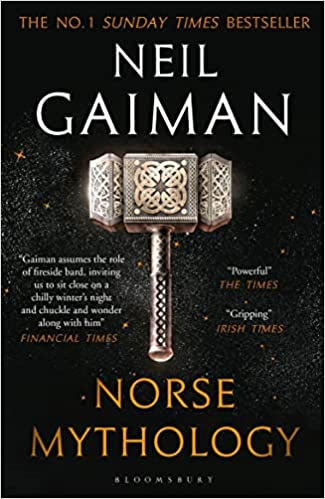
But Neil Gaiman has done plenty more in this area. He seems to have a love of Norse mythology. There is his book Norse Mythology, which retells the myths in a highly entertaining way. His introduction explains how he started with the Marvel comics, then went on to Roger Lancelyn Green, who wrote several retellings of various myths and legends(he was a friend of Tolkien, by the way). Roger Lancelyn Green’s Asgard was a Viking hall, very different from the Asgard of Stan Lee and Jack Kirby. 


There aren’t many Norse myths still around, because most were written down only after Christianity arrived. In this retelling, Neil Gaiman wrote all the ones you are likely to find in your reading.  


In Odd And The Frost Giants, Odd, an orphan whose father was killed in an accident on his way home from a Viking raid, meets three Norse gods stuck in animal form and goes back to Asgard with them, helping them reclaim it from the invading Frost Giants. One of those, incidentally, had managed to marry Freya, as in the myths various giants were wanting to do. She has made him regret it.


Gaiman has written his own retelling of Hansel And Gretel, in which he uses research about mediaeval famines to explain the children’s abandonment by their parents and the witch’s cannibalism. 


Probably the most famous of his books that uses myth and legend is American Gods. The premise is that the various peoples who migrated to America brought their gods with them - literally. There is a road trip by the hero, Shadow Moon with Mr Wednesday, who is, of course, Odin. Odin has plans for a battle between the old gods, like himself, and the new gods people are worshipping in the present day, such as Media. There are chapters in between the main ones, labelled “Coming To America”, written by the Egyptian god Thoth, who is living in America,  running a small funeral parlour with fellow god Anubis. A wonderful book, and full of myths and legends from everywhere.


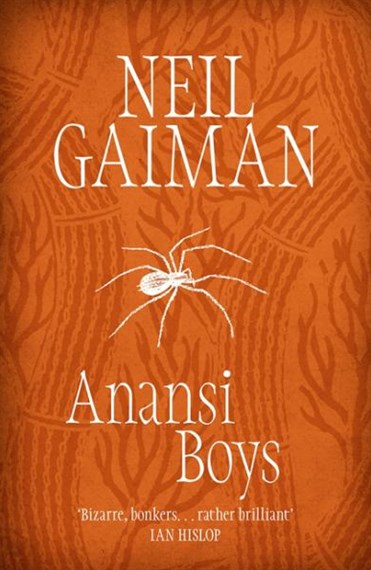
This novel is followed up by Anansi Boys, which is centred around the sons of African spider god Anansi, who had lived in America as Mr Nancy and appeared in American Gods, though it’s not a sequel and can be read standalone. He died while singing karaoke at a club, grabbing at a woman’s breasts while falling. The main character is Charlie Nancy, a mild mannered clerk working for a dishonest talent agent. Charlie(known as Fat Charlie, though no longer fat), who lives in England since his parents divorced, goes to his father’s funeral in Florida, where he meets some old ladies who knew him in his childhood, who advise him to speak to a spider if he wants to see the brother he didn’t know he had. He impulsively does so and regrets it. Spider, his brother, got all their father’s godly qualities. He interferes with Charlie’s job(probably just as well for Charlie as he is better able to handle the crooked boss) and dates Charlie’s fiancée, who doesn’t know he isn’t Charlie. He just wants Spider to go away, but it doesn’t work the way he expected and he has to fix it.


This novel takes readers into the world of African mythology, especially the stories of Anansi, who is a trickster god. It has been dramatised by the BBC as a radio play, with Lenny Henry as Mr Nancy/Anansi. 


I see from Wikipedia that there is a forthcoming TV miniseries of the book. That’s something to look forward to!