Search This Blog

Monday, May 30, 2022

On Returning To Reading Fan Fiction

 I have done a few posts on fan fiction here, though not recently. I wrote about 150 fan stories in my time, based on series such as Star Trek, Blake’s 7 and Robin Of Sherwood, then stopped when I, a. ran out of ideas, in the middle of a story and b. started getting paid to write. 


What is fan fiction, in case you aren’t familiar with it? It’s using existing films, TV shows, books and even games to write fiction of your own. Some fan stories are very good, others appallingly badly written, but even those have their fans, something I know from comments made on them. 


Not everyone stopped when they started being paid. Jenny Pausacker, an Aussie YA novelist who moved to England, was a big fan of Kerr Avon, one of the protagonists of Blake’s 7, and wrote online fanfic under a pen name(may still be doing it, I never found out what the pen name was). She even wrote an Avon-like character into a novel. Kerry Greenwood(best known for her Phryne Fisher books) said she composes Dr Who fanfic in her head. Not long ago, I told Diane Duane, author of the Young Wizards series, on Twitter, that I had read some of her fan fiction way back when, and her reply was, “What makes you think I have stopped?”


I have several shelves of fanzines, bought in the days when people were publishing them in print. I even edited a few myself! 


But nobody is doing that now. There are fan fiction web sites; the best known one is Fan Fiction Net, which publishes stories from a huge number of universes. I used to read stories on that site, mostly based on books. 


Some were based on the Harry Potter series. Draco Malfoy was a popular hero in those, because everybody loves a bad boy, right? Even Professor Severus Snape had his own Mary Sue tales. In one of them, written before the final book explained why Snape had no love interest in his life, he marries the niece of Auror  Madeye Moody and they move to Sherlock Holmes’ cottage. 


My favourite was a humorous Lord Of The Rings story, “Fellowship Of The Thousands” in which the Fellowship leave Rivendell accompanied by an entire army of Mary Sues - humans, elf maidens, Dwarf girls, etc., more than enough for each of the Fellowship members. The story is told from the viewpoint of Boromir, who is resurrected when his own Mary Sue cries over his dead body. A very funny tale that has great fun sending up the tropes.


By the way, I used to know the fan writer who coined the term Mary Sue to describe the sweet young thing who has a PhD at 16, is related to Spock by adoption and is adored by the entire bridge crew. The author’s name is Paula Smith and she wrote a tongue in cheek piece only a few hundred words long using every trope she could think of in that type of story, with a heroine called Mary Sue; I have lost track of Paula(my pen pal), but I’m betting she never dreamed how far her little story would go.


Another friend, Diane Marchant, unwittingly started slash fiction, ie erotic m/m stories, called slash because it started with Kirk/Spock. She wrote something erotic on the end of a letter to someone big in Trek fandom, as a joke, and next thing she knew it had been published and everyone was doing their own stories about what Kirk and Spock get up to behind the scenes; while people take it very seriously these days, Diane’s preferred pairing was Spock and Nurse Chapel. She has passed away, so no chance to ask her now how she feels. It has moved on to many fandoms, but in those days all we had was Star Trek, and only the original series.

As I said, I used to read the stories on Fan Fiction Net, but I’ve now discovered Archive Of Our Own, which I prefer because you can download stories as e-books and delete them when finished - or when they turn out to be too dreadful to finish. Furthermore, some inspire or commission fan art, taking me right back to the days when I was reading and publishing printed fanzines.


 Many authors write entire sagas, some well over 100,000 words long, publishing a chapter a week. It has got me thinking; if fan writers can do a chapter a week, why can’t I, in my own universes? Something to think about.


Meanwhile, I’m back to reading fan fiction, something I haven’t done for quite a while. I will never write it again, but it’s fun to pick a universe and a genre on the web site and read stories set in that world. Some of them are so good that I want to tell the author it’s time to move on to create their own universes. Of course, I may very well be reading something by Diane Duane or Jenny Pausacker, for all I know…


Others will never sell anything, but they are having fun and even they have their fans. 


So why write stories set in someone else’s world? When I started writing it, it was mostly because our show had been cancelled and we wanted more. Sometimes it was because there was something that didn’t make sense and we wanted to fill in the hole. Other times, we wondered what happened after the episode, or “what if”? 


And then there are those fan writers who create their own characters in someone else’s universe. In a way, Star Trek: Lower Decks, a very funny animated series set on one of Starfleet’s less important ships, about a bunch of Ensigns, reminds me of a series of fan stories written in a fanzine published by my friend Paula Smith. It feels like fan fiction. 


These days, there are even fan videos on YouTube. There is a film about the three Black sisters from Harry Potter, Narcissa, Andromeda and Bellatrix, written, filmed and performed by fans. I found another film set in the Blake’s 7 universe, with original characters. 


Who knew, way back when we were just wanting more Star Trek that it would come so far? 


Anyone willing to admit here to writing fan fiction, or even just reading it?

Thursday, May 26, 2022

Happy World Dracula Day!


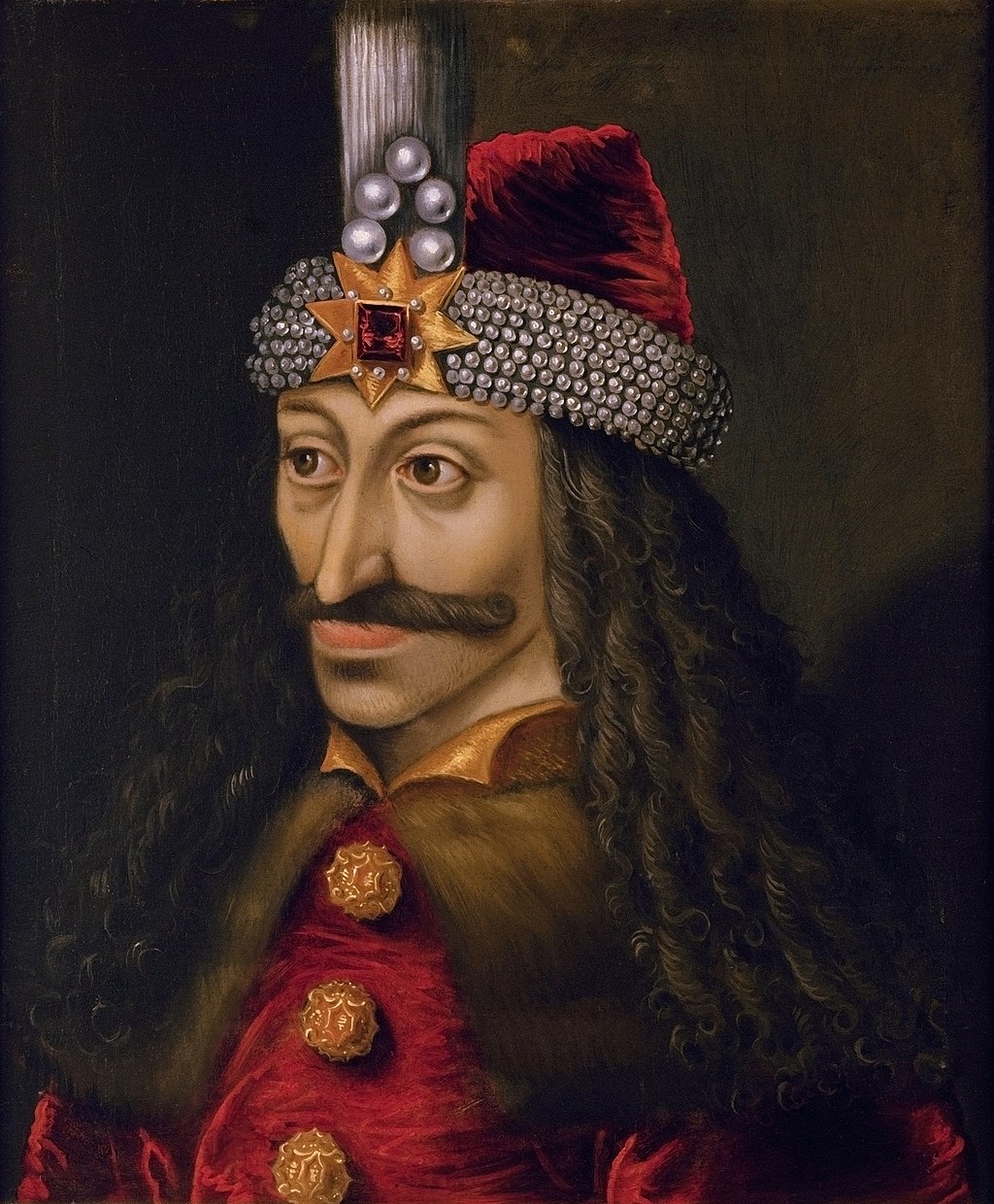
Vlad the Impaler. Public Domain.


So, I am told it’s World Dracula Day! Isn’t it amazing how many things have their own day? 


I remember researching the real Dracula for my very first book, Monsters And Creatures Of The Night. He was called Vlad the Impaler for a charming habit he had of impaling his enemies, but it was not his only fun thing. There is the story of how he treated some diplomats who didn’t remove their hats in his presence. Anyone else would have had his minions snatch the hats off them, but not Vlad - he got those hats nailed to their heads! Another time, when out riding, he spotted a peasant whose wife had clearly not been doing her job at keeping his clothes tidy. The wife was executed and Vlad, in his “kindness”, gave the man a new wife.  


Despite all this and more, he became a national hero in Romania for defending the country in the 15th century. I think the family was still around in the present day, though they had to adopt someone to keep going. 


In the 19th century, an Irish theatre man called Bram Stoker wrote a novel we all know. Dracula was not the only vampire novel around, but it’s the one we all think about when we think vampires, isn’t it? 


The novel is surprisingly easy reading. It’s written in the form of letters and diary entries. I do recommend it if you haven’t read it yet. You should be able to find it on Project Gutenberg. 


A thing you may not know if you haven’t read it is that Dracula doesn’t have to hide out in the dark. In fact, he turns up in daylight in one scene. But being out in daylight weakens his powers, so not his preferred time to be out! 


There is a play based on the novel - I was involved with a production when I was at university - and films were being made from the silent era onwards. The most famous, of course, was the 1931 version with Bela Lugosi, who was buried in his Dracula cloak. There have been so many versions since then that it’s too much to discuss here, but you have probably seen at least one.


But the novel has inspired so many books as well, and influenced the view of vampires in general.


My favourite is Dan Simmons’ novel Children Of The Night. In it, Dracula actually is Vlad the Impaler and he is not undead. The vampirism thing is hereditary; using blood makes the cells of the lucky ones regenerate, keeping them alive and well for centuries. Vlad is still around and he thinks the Stoker novel is dumb. He has replaced a love of conquest with a love of business and done very well. And he is fed up with his family…


Another favourite was Anno Dracula, first of a series by Kim Newman. Dracula has succeeded in wiping out his enemies and married Queen Victoria. Suddenly it’s fashionable to be a vampire! The upper crust all over England are doing it. The other stories are set later, in a world where there is a vampire section on planes. 


Of course, the view of vampires has changed from the time of  Dracula. Twilight anybody? There was a YA novel I read, I wish I could remember the title and author, in which a nerdy teenage boy claims to be a vampire to get girls.


In fact, our students - the girls, anyway - went wild over Twilight. I don’t think I could get any of them interested in a villain vampire like Dracula. 


What do you think? Do you like your vampires villainous or prefer them sexy? 


Wednesday, May 25, 2022

On Re-Viewing The Day The Earth Stood Still

Movie Poster. Fair Use.


 I have just finished re-viewing the Robert Wise film, The Day The Earth Stood Still, with Michael Rennie and Patricia Neal.  It’s an old favourite of mine, comfort viewing from many years ago. I do have the ebook of Farewell To The Master, on which it’s based, but haven’t got around to reading yet. 


It came out in the early 1950s, a time when most SF movies were about alien invasions, with scary beings from other worlds. This one showed sympathy to the alien and made a good point about the people of our world not necessarily being the good guys. 


In case you aren’t familiar with it, Klaatu, the hero, has been sent to Earth with a message. Basically, it’s like neighbours complaining about the noise from next door. He comes from a group of planets which live in complete peace because they have to. Their police force is made up of robots which can wipe out entire worlds that misbehave! He brings one with him, Gort.


 Klaatu finally addresses  a meeting of scientists called because the UN members won’t get together except under their conditions and the Americans want him to talk to their President. He lets them know that the neighbours are worried because space flight is in its way and they really can’t be having with that violence coming their way, so fix it or risk being wiped out.


This is after he has been shot at twice, the second time actually killed, but resurrected by Gort.  


It has religious themes - Klaatu escapes from the hospital where he is being kept, and gets a room under the name of Carpenter. He performs a miracle, stopping all electricity world-wide except for hospitals and planes to show his power. He dies and is resurrected. He even refers to “the almighty being”, the only one who knows when he will die again.


There were things other than the story which I appreciated this time around. There is, of course, the amazing music of Bernard Herrmann - especially that theremin in the main theme. 


I also loved what the director did with it. Apart from the main characters, such as Klaatu, young widow Helen Benson and her son Bobby, there were characters who never spoke at all, but who had their own stories to tell. 


There were individual soldiers, gathered behind officers who did have lines. There was a group of French peasants gathered at an outdoor cafe in their village, listening to the radio announcement of the visiting flying saucer. A woman in a taxi smoked as she listened to the cab’s radio. 


These people all had stories of their own - where was that woman going? What did she and the driver discuss afterwards?


  What about the French group? What did they talk about after the radio announcement? Was it just a relaxed cafe visit that turned into more? 


How about that soldier who shot at Klaatu after he foolishly got out a gift for the US President while surrounded by tanks and guns?  He seemed nervous. Maybe he wondered if he should have waited for orders? Or shot to kill?


Even people in the streets seemed to know where they were going and have emotions about what was happening. 


It says something that we do wonder about people who, in any other film, would have just been extras.


Strange, really, isn’t it? I guess it’s something I have noticed and appreciated more after many viewings.

Do you have a favourite classic movie? 

Wednesday, May 11, 2022

A Guest Post by David Pauly


 Recently, I received an inquiry from David Pauly, author, lawyer, qualified French chef, who has also written quite a few books in his Nostraterra fantasy series. I’ll let him tell you about it below. Among other things, David’s writing helped him get a wife! 


Take it away, David! 


I have always been interested in fantasy books, beginning with the Chronicles of Narnia and The Lord of the Rings.  I always wondered after finishing these series and others what would happen after the story ends. So I set out to create my fantasy world, which tells the story of what happens after the war against darkness is over. 


At the time, I was recently divorced, living in the east mountains of Albuquerque, and besides karate class three times per week, I had a lot of time on my hands.  So one night, I started writing and in a few days, I had some pages, and then the first finished chapter.  I sent this to my brother, another fantasy fan, and he was impressed with my rough draft and encouraged me to continue.  


I had very little self-confidence in creative writing, as I had been told all through school, including university, that my ideas were far-fetched, I had no sense of writing structure and that my grammar was atrocious.  So, I had to conquer a lot of self-doubts to even begin writing.


I had the luxury/curse of being a self-employed lawyer and unless I had morning court, I could stay up the night before and write.  I soon developed a comfortable routine: open a bottle of red wine, light scented candles, and put on the headphones to listen to creative inspiring music, which in my case means progressive rock like Pink Floyd, Genesis, and Tangerine Dream.


 After finishing the book two years later, I began re-writing it again to make it flow properly.  Once done, despite sending out dozens of query letters, the only publisher that would accept my book was a vanity press.  I was determined to see if this would work and ordered 200 trade paperback copies.  Despite my best efforts at trying to sell them myself, it did not work and I got down on myself for a while.  


I only received a couple of reviews and those pointed out that the book still seemed to be a work in progress, with too many plot holes and grammatical mistakes.  I bit the proverbial bullet and hired an editor to review my work.  He provided many examples of where and how I needed to fix my book, and after another two years of back and forth, the book was finished.

At this time, I finally thought about dating again and went on Eharmony to see how it would go.  I met a brilliant woman from Vietnam with whom I had a lot in common, but she was wary of giving me her contact details in Vietnam as I might be a serial killer or some other weirdo!  I sent her the book, which she read, and seeing that I was creative without being too crazy, she initiated contact and we were married 6 months later, and remain happy with our 10-year-old daughter to this day.  


I split the book into three separate novels, to make it easier to market.  The first novel, Assassins, introduces the reader to my world, where I blend the politics of the 1990s and 2000s into a medieval fantasy world.  Despite my editor’s insistence, I could not make an individual antagonist and protagonist; it just didn’t flow with my story.  Instead, the book has several important characters, all flawed in some way, who believe that not only are their motivations self-interested, but they are acting in a way that they believe is best for their race and the world at large.  

Each race has a moderate faction that wants to get along with the other races but also has a radical smaller faction that distrusts the other races and wants to take as much of the world as they can from others.

Finally, one of my hopes in writing this series, and I continue to write the second series, is to inspire others to write their own story.  I would urge you to look at the ideas in which you are interested, the genre is irrelevant, and just start writing to express your ideas and get them written down  You just might surprise yourself that you are cable of writing something that expresses your talent and interests well.

 I know that I did.


David’s books are available from the usual web sites, such as Amazon and Book Depository. If you live in Australia, you can find them at Dymock’s bookshops. He tells me there is about to be an audiobook! 


Monday, May 02, 2022

A To Z Challenge 2022: Shakespeare - Concluding Thoughts


It has been a very enjoyable month, challenging myself with my memories of the Bard. And it’s been a lot of fun hearing from you all, sharing your own thoughts on the works of Shakespeare. Thank you for that.


There were a lot of plays and characters I missed out on because there are so very many. I suppose I could have talked about a few of the sonnets. Just so you know, my favourite is not the one absolutely everyone knows, number 18, “Shall I compare thee to a summer’s day” but 130, “My mistress’ eyes are nothing like the sun”, with its gentle humour.


Did you know there is a play he co-wrote, The Two Noble Kinsmen? I have the Riverside Shakespeare which includes it, but not many Complete Works have it. Maybe another year I can find a way to squeeze it in.


But I did cover my favourite plays. 


Every year I wonder if I should take part in the Challenge, and every year I come up with a subject that works for me and brings me fellow bloggers to join in and share the fun. And I like the fact that it makes me write something every day, even if it’s just a blog post.


I couldn’t have asked for a better bunch of visitors than I got this year. I’m sorry if it took me a while to return your visits, but I have had some family commitments that interrupted me, making me give priority to posing over anything else. But I will be returning your visits in the next few days. 


I hope you will continue to visit me too, when The Great Raven gets back to normal. I’m planning a guest post and a review in the next couple of days. 


Thanks for your support, guys!

Saturday, April 30, 2022

A To Z Challenge 2022: Shakespeare - Z Is For Zzzz…


Macbeth and the Three Witches


 Hullo, everyone! Today I’m bringing you the final post in my series about William Shakespeare and his plays!  Z is not a common letter in Shakespeare. But I’m quite pleased that I have only had to cheat twice.


So, here we go. Z is for Zzzz… in other words, sleep. 


You wouldn’t think it would be important in this kind of story, but it does give you something to think about. 


People have nightmares in Shakespeare. In Richard III, for example, George of Clarence, Richard’s brother, has one early in the play. He makes a very long speech about it, to Robert Brakenbury, who runs the Tower prison. Here is a link, as it’s too long to quote in full.

http://www.shakespeare-online.com/plays/richardiii_1_4.html


Interestingly, while his brother plays a part in the nightmare, Clarence doesn’t think of him as doing anything bad on purpose. He says Richard fell overboard and accidentally knocked him off too. 


Soon after, he is taken away and drowned in a butt of malmsey wine; the nightmare was an omen. 


Near the end of the play, Richard himself has a bad night, just before his final battle, approached by the ghosts of his victims, while Richmond, the future Henry VII, has a sweet sleep. 


At least these guys sleep. That is more than can be said for the Macbeths. 


At the start of the play, Lady Macbeth talks her husband into killing the king in his sleep. Then she finishes the job by smearing blood over the faces of King Duncan’s sleeping servants, to lay the guilt on them. Macbeth then kills then and says, basically, “Oh, I had to kill them, they killed the king, I got so angry!”


So, this unpleasant couple are punished via sleep - or lack of it, anyway. 


In Macbeth’s case, he hears a voice say, “Sleep no more, Macbeth doth murder sleep.” Which he has, by killing the king and his attendants, all while they are asleep.


He realises this, so perhaps insomnia is the price of his feelings of guilt; sleep is for the innocent. “…the innocent sleep that ravels up the sleeve of care, the death of each day’s life, sore labour’s bath, balm of hurt minds, great nature’s second course.” 


It’s a great way to think of sleep! 


You would think that a villain like him, willing to kill and keep killing to get the throne and keep it, would sleep quite soundly, feeling no guilt whatever once it’s done, but no. 


Lady Macbeth’s guilt leads to sleepwalking and eventually suicide. She sleeps all right, but during her sleep she relives all the stuff she did on that dreadful night. That night, she said, “A little water clears us of this deed,” while keeping her head, but now she washes and washes, and “All the perfumes of Arabia will not sweeten this little hand.”   


So, both guilty parties pay for their evil deeds with their precious sleep. 


It does seem the punishment fits the crime!


One more Shakespeare tidbit, though not about sleep. Did you know that Tolkien’s Ents, those sentient walking trees, were inspired by this play? It’s true! 


Like so many of us, including me, he thought the bit about Birnam Wood coming to Dunsinane was cheating. What connection did it have to a bunch of soldiers carrying branches, for goodness’ sake? It annoyed him, so he thought, what would happen if Birnam Wood really could come to Dunsinane?


And that is how the Ents were born! 


See you Monday for my concluding post! I hope you have enjoyed this journey through the stories of the Bard as much as I have writing them.


Friday, April 29, 2022

A To Z Challenge 2022: Shakespeare - Y Is For Yorick


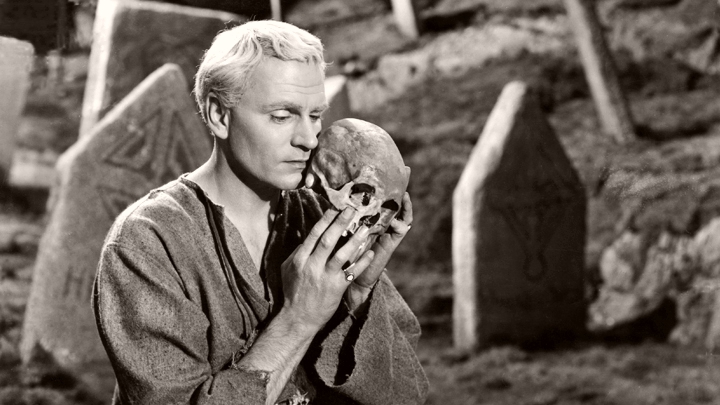
Laurence Olivier’s Hamlet with Yorick. Fair Use. 


So, at nearly the end of the Challenge, I’ve come up with the only Y I could think of in Shakespeare. There may be more, of course. 


Who is Yorick? He was the jester at the Danish royal court in Hamlet. We never actually meet him, because he is dead, and has been for twenty-three years by Act 5 of Hamlet! We just hear about him in the Gravedigger scene. But the image of Hamlet holding a skull is iconic; it’s only one scene, late in the play, but when most of us think of Hamlet, that’s the image we see. The photo above is Laurence Olivier in the 1940s movie; the Gravedigger was played by Stanley Holloway, later to play the role of Eliza Doolittle’s father in My Fair Lady


Hamlet and his friend Horatio have arrived home, and are in the churchyard, where Yorick is being dug up to make room for Ophelia, whose funeral is about to happen. They meet a couple of gravediggers, one of whom speaks to them. 


There is a conversation about the Gravedigger’s job, how long bodies last and so on. 


Then he lifts out a skull. When Hamlet asks whose it is, the Gravedigger chuckles and tells him it was Yorick. This man remembers Yorick all right, telling Hamlet and Horatio that he remembers Yorick once pouring a flagon of Rhenish wine on his head. “A pestilence on him for a mad rogue!”


 Presumably even the castle gravediggers are invited to feasts there, and the wine pouring was for the amusement of the feasting people. 


Hamlet asks to hold the skull and reminisces on his childhood memories of the man. 


“Alas, poor Yorick!” he tells his friend. “I knew him, Horatio. A man of infinite jest, of most excellent fancy…” He remembers getting “a thousand” piggy backs on Yorick’s back, kissing him and watching him play. Now Hamlet is sad, seeing what’s left of him. That leads to his thoughts about life and death in general, moving away from the jester who made him happy as a child to - well, everyone. The most beautiful woman will end this way, he says. The most famous generals in world history might well be plugging a barrel somewhere - everyone will end here. 


And soon after, Ophelia’s funeral procession arrives and Yorick is not really relevant any more. But several moments of Shakespeare’s longest play are devoted to someone Hamlet cared about deeply but whom we never meet. 


Here is a link to the Gravedigger scene as performed by Laurence Olivier and Stanley Holloway. 


https://youtu.be/WAbuojia1zc


Tomorrow will be my final Shakespeare post. Z is for…Zzzz. If you want to know more, see you then! 


Thursday, April 28, 2022

A To Z Challenge 2022: Shakespeare X Is For eXtras


Today I will be posting about stuff I couldn’t fit into other posts. I did mention a book with a Shakespeare theme, A Midsummer Tempest by Poul Anderson. 


But that was a fantasy. Here is an alternative universe novel about Shakespeare himself, and a couple of plays he didn’t write in our world. It is a perfectly good historical novel, except it didn’t happen.


One of my very favourite books by American writer of alternative universe fiction Harry Turtledove is Ruled Britannia. I have read it so many times it is looking rather shabby. I had to buy an ebook! 


In Ruled Britannia, the author asks, what if the Spanish Armada had succeeded in conquering England? 


Nine years later, Elizabeth I is in the Tower. Lord Burleigh is alive and free, for some reason. The Spanish have their soldiers in London. The Spanish Inquisition has been replaced by an equally keen English Inquisition, happily burning heretics.


Christopher Marlowe wasn’t assassinated, and has written more plays, some of them performed by Shakespeare’s company. 


The story, though, is seen from the viewpoint of two people. One is Shakespeare, of course. The other is Lope De Vega, who was Spain’s answer to Shakespeare, though he wrote a lot more. A few of his plays were translated into English, and I have one of those mentioned in the novel, La Dana Boba(The Foolish Lady), which I bought on Apple Books. So, yes, a real person. 


In our world, he was in the Armada, but never reached England. In Ruled Britannia, he is a Lieutenant in the occupying army, but still manages to write and produce plays. He also hangs out at Shakespeare’s theatre and goes backstage to chat with the cast, whom he thinks like him. Um, no, not really. But they can’t be rude.


He loves women, plural, which ends up getting him into huge trouble.


Shakespeare is commissioned to write two plays. One of the commissions is from the Spanish, who want him to write a play celebrating the life of Phillip II, who is dying, to be performed on report of his death. The other is a much more dangerous commission, from Lord Burleigh, who wants him to write a play inspiring the English to rise up against their oppressors. 


He gets paid a huge amount by both sides, but how much money will be worth the danger of writing a play called Boudicca in an occupied country? He doesn’t have the choice, though. If he said no, he would be assassinated because of what he knows. 


So, the play is written secretly, but also the actors and crew have to be carefully checked out - there are, after all, lifelong Catholics and other supporters of the current regime. 


And rehearsals are not easy either, even when everyone in the company can be trusted, with Lope De Vega turning up to what he assumes are rehearsals for King Phillip, in which he is playing a role. 


In some ways, it reminded me of a TV miniseries called An Englishman’s Castle, in which the conquerors are the Nazis and the rebels are the cast of a soap opera designed to reconcile the English to their situation. But it’s about Shakespeare! 


There is a character called Walter Strawberry, who is obviously meant to be Dogberry from Much Ado About Nothing, and quotes from the two plays are by other playwrights. There are also plenty of quotes from existing Shakespeare plays scattered throughout the dialogue. 


Anyway, a wonderful novel! You can buy it in ebook on Apple Books and worth checking Kindle as well. 


A humorous Shakespeare-themed short story by Turtledove that is also available in ebook is “We Haven’t Got There Yet.”


In it, Shakespeare hears that a theatre company has ripped off his play Hamlet. Furious, he turns up at the theatre, intending to have a serious word with the plagiarists. However, he sees the play first, and absolutely loves it. The play is, of course, Tom Stoppard’s Rosencrantz And Guildenstern Are Dead. Going backstage afterwards, he meets the actors, who admit to being time travellers.  


Tomorrow there will be a very short post on the only Y I can think of in Shakespeare’s work - Yorick! See you then. 


Wednesday, April 27, 2022

A To Z Challenge: Shakespeare - W Is For The Winter’s Tale


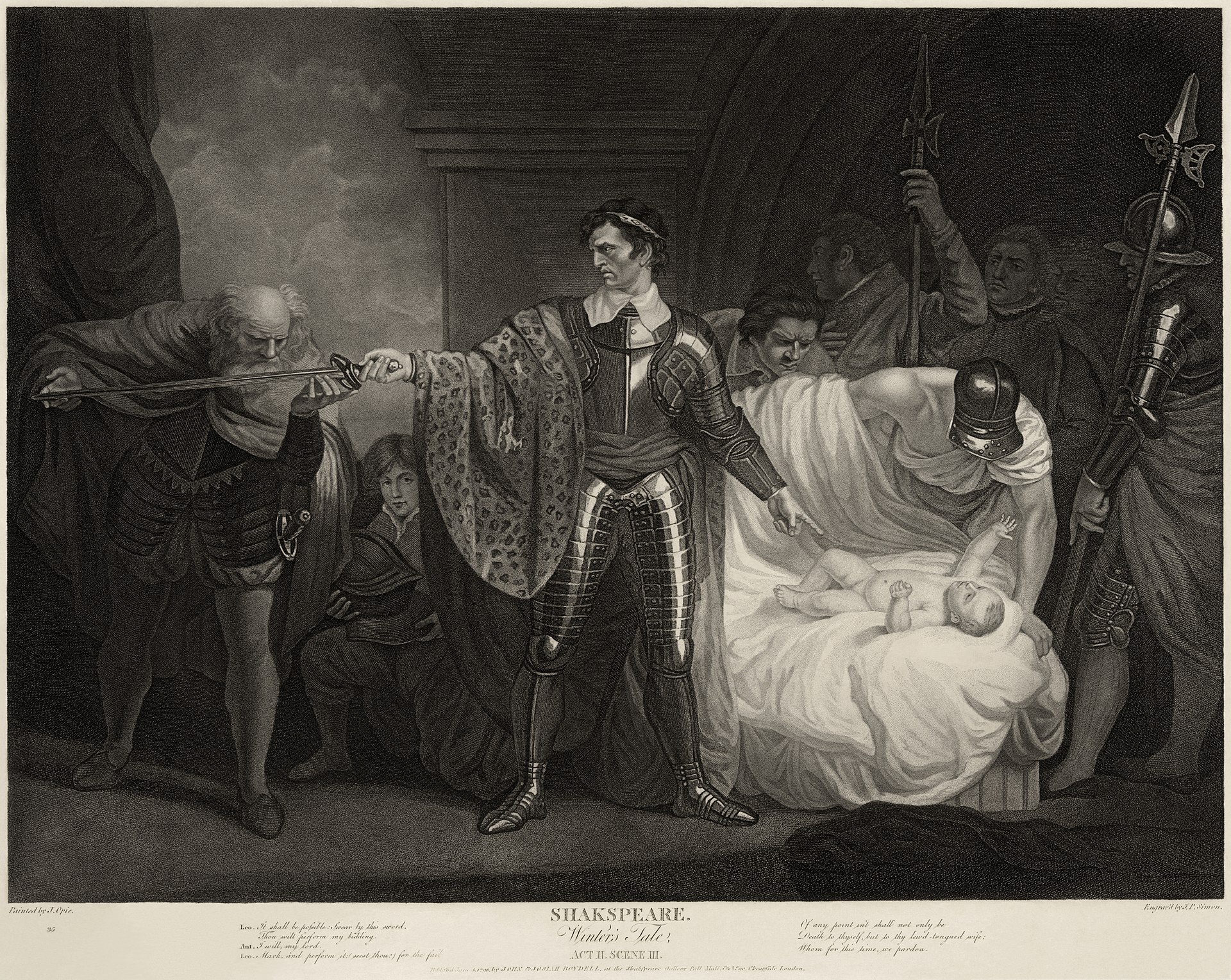
Leontes being an idiot. Public Domain.

In my L post, we learned of that dreadful man, King Leontes, who destroyed his own family and his relationship with his best friend because…(checks notes) his wife persuaded his friend to stay a bit longer when he couldn’t, and touched hands in a friendly manner…


Let’s continue and talk about the whole play. 


So, that idiot Leontes puts his Queen, Hermione, on trial. Word comes into the courtroom that their little boy Mamilius has died of stress at his mother’s treatment. Hermione faints and is carried off. Her loyal lady Paulina returns a while later with a baby girl, pleading with Leontes to check her out and see how much the child looks like him. He orders the baby to be abandoned and orders Paulina’s husband, Antigonus, to do the dirty deed. 


Then Leontes hears his wife has died. He never does ask to look at the body or have a funeral. Interesting, that.


Polixenes, the friend, flees with the help of a courtier called Camillo, who goes with him.


Antigonus arrives in Bohemia, that landlocked country which, in Shakespeare’s imagination, has a sea coast, and makes a speech saying he thought he might as well leave her in her real father’s kingdom. This is the famous “Exit, pursued by a bear” scene. 


The child is found and brought up by a shepherd and his son(who saw Antigonus being eaten by the bear).


Sixteen years later, Perdita is a beautiful young woman, in love with a young man called Florizel, who is really the son of King Polixenes. There is a sheep shearing festival and a lot of singing and dancing. (When we performed this play at university I played the role of Mopsa, the young shepherd’s girlfriend, and got to sing a song with Dorcas, the other shepherdess, and Autolycus, a pedlar/pickpocket). Perdita, of course, is too dignified to do any of this stuff; she is a princess, though she doesn’t know it, and behaves like one. This is a case of nature versus nurture, and nature will always win.


Among the audience are King Polixenes and Camillo, in disguise.  Polixenes has heard that his son has been dating a peasant girl and wants to know what’s going on. He is impressed with Perdita’s beauty and dignity, especially when he hears her speak her famous flower speech, but come on, this is a peasant! No way is she marrying his son! 


Polixenes reveals himself and orders the young couple to break up. However, Camillo, who has become homesick, takes them aside and advises them to go to Sicilia, the home of Leontes. He will go with them. They are followed by the terrified shepherd and his son, who are afraid of what the king might do to them for letting his son romance Perdita, and bring along the stuff found with her as a baby, to prove she was adopted.


Leontes is a much-changed man and is pleased to see Florizel and Perdita, whom he assumes(correctly, as it happens) is a princess. 


Polixenes turns up, as do the shepherds, and, after a lot of discussion, it’s realised that Perdita is Leontes’ daughter. This all happens offstage and we hear about it from the shepherds who, to their delight, are made “gentlemen” as a reward for having looked after Perdita.


Remember what I said about Leontes not having seen his wife’s body or given her a funeral?


Paulina invites everybody to her house, to see a statue of  Hermione which is just completed. Of course, we can figure out what’s next. It’s the real Hermione, who has been hidden all these years, and pretends to be a statue; Leontes does remark that the statue looks much older than his Queen. 


 Or maybe it was magic, but I don’t think so. Anyway, Leontes doesn’t care, he has his wife back and has turned into a much nicer man. 


A pity about his son. That character actually is dead, alas! 


Oh, and the widowed Paulina gets to marry Camillo.


I first saw this play on a school excursion to the touring Royal Shakespeare Company when I was in Year 12. The roles of Hermione and Perdita were both played by the same actress, as is fairly common these days, though they do have to have someone else doing it, silently, in the last scene when both characters are in the same room. The actress was a much younger Dame Judi Dench. If you have only seen her as an older woman, you probably can’t imagine her young, but she would have been in her thirties then. She was wonderful! 


There have been a fair number of productions over the years. The first film I saw, late at night, on a black and white TV, was made in 1967, with Laurence Harvey as Leontes, Moira Redmond as Hermione and Jim Dale, who has become an amazing audiobook reader(He did the American Harry Potter books) as the mischievous Autolycus. I remember that the first half of the story, in Sicilia, was done in Mycenaean style costumes, then in Bohemia everyone was dressed Elizabethan. It may be my faulty memory, but it’s a strong one. 


See you tomorrow when X will be for EXtras, about stuff I hadn’t room for in other posts!


Tuesday, April 26, 2022

A To Z Challenge 2022: Shakespeare - V Is For Volumnia, Virgilia, Valeria


Volumnia and Coriolanus. Public Domain


In my C post I wrote about the play Coriolanus, mentioning the hero’s mother, Volumnia. 


Volumnia is one of Shakespeare’s more powerful women, though the play is not performed as often as others such as Hamlet or the Scottish Play. She has to be, with a son who is a general and for whom she has ambitions.


Volumnia has brought up her boy to believe that the lower classes are scum, who don’t deserve to be looked after. Unfortunately for him,  those people have a vote! So, if it takes showing them the wounds he got defending them to get their support, something he considers baby kissing, too bad. He isn’t going to do it. And Volumnia is a part of that. 


She lives vicariously through him. In her first scene she tells her daughter in law, Virgilia, that while other mothers were worried about what would happen to their sons, she was sending hers off to war, and he came back a hero! When Virgilia asks what she wild have done if he had died, Volumnia replies, “Then his good report should have been my son.” In other words, she would rather be the mother of a dead hero than a live son who was nothing special. She confirms this in the next few lines, saying she would rather have had eleven of a dozen sons die as heroes than have one who was a wimp. 


She wants him to be wounded, which proves his hero credentials, when Virgilia is worrying for her man. Early in the play, she proudly announces that he has twenty seven wounds.


The scene in which she, Virgilia, their friend Valeria and her grandson turn up at the enemy camp can be interpreted differently. She tells her son that if he carries on with his attack on Rome, nobody is going to win; either he will be dragged through the streets as a prisoner or his family will suffer. In the production I was in at university, our Volumnia was a local TV star who had given up her TV show to study English. She performed it proudly, never suggesting that she had done anything wrong. 


I am still watching the film version with Vanessa Redgrave in the role, so I’m not sure how she will do that scene, but in the National Theatre production, directed by the wonderful Josie Rourke(who also did that Tate/Tennant Much Ado About Nothing), it was interpreted differently by Deborah Findlay. She had her hair hanging loose after wearing it up. She lowered her eyes and spoke softly, as someone who knew that in the end, all this was her fault and he was going to die. But she still had to persuade him. I rather liked that interpretation- doing it the other way just makes the viewer say, “Oh, for goodness’ sake, she just doesn’t get it!”


There are two other women in the play. One is Valeria, a chirpy, cheerful family friend who arrives at their home to ask Volumnia and Virgilia to go out for the afternoon. Valeria has a similar attitude to Volumnia’s, and describes with great relish how she saw Volumnia’s grandson chasing a butterfly and tearing it with his teeth, saying - in Shakespearean language - that he is a real chip off the old block. 


Volumnia says happily that “he had rather see the swords and hear a drum than look upon his schoolmaster.”


Virgilia drily calls her son “a crack, madam,” meaning a young rogue. She refuses firmly to go out while she hasn’t yet heard from her husband. 


She is the gentlest of the women in this play. She is not crazy about the idea of her husband being wounded, and worries for him, while her mother-in-law thinks of it as proof of his manliness - and a chance to win the job of consul.

But Coriolanus loves her; she is the only one to whom he shows any tenderness or gentleness, calling her “my gracious silence.” 


She doesn’t get many lines, but she makes the most of them and in the scene in which Coriolanus’s women go to the enemy camp to beg him to stop, she and Volumnia are in accord. 


Tomorrow- The Winter’s Tale


Sunday, April 24, 2022

A To Z Challenge 2022: Shakespeare - U Is For Upstart Crow


The book in which Greene is rude about Shakespeare. Public Domain.


Who would have thought you could turn the life of Shakespeare into a sitcom? Yet that happened in 2016, when a TV series was produced to commemorate the 400th anniversary of Shakespeare’s death. It is written by Ben Elton, well known for such comedies as Blackadder and The Young Ones, and stars David Mitchell, who makes a very good and convincing Shakespeare.


 The title comes from the Elizabethan novelist Robert Greene, who was very rude about Shakespeare, calling him “an upstart crow, beautified in our feathers”, to accuse him of plagiarism, which was ironic, given that he pinched that line from Roman writer Horace! 


Even more ironically, Shakespeare did later use one of Greene’s novels, Pandosto, as a basis for The Winter’s Tale.


Robert Greene is a regular character in Upstart Crow, as the villain. The actor playing Greene, Mark Heap, was in the radio play of Good Omens, in the much more benign role of angel Aziraphale. 


There are three seasons and some specials, including a recent “Lockdown” episode in which the characters are in lockdown due to the plague.


The series is about Shakespeare’s years in London, from 1592 onwards. He is renting an apartment from the mother of series regular Kate, a young woman who wants desperately to go on stage, but can’t because women in England were not allowed to perform in those days. It doesn’t stop her from complaining about it or Shakespeare from telling her she can’t. 


Christopher Marlowe is another regular character, who hides out in Shakespeare’s digs after he survives his assassination attempt. Yep, Marlowe didn’t get murdered after all! It’s implied that Shakespeare actually writes some of Marlowe’s plays, a joke on the suggestion that Marlowe wrote his plays. 


Another regular is Shakespeare’s servant, Bottom, who is not very bright.


Each episode centres around one of Shakespeare’s plays. He goes back to Stratford each episode, where he visits his family - his wife Anne Hathaway, the three children and his parents - and complains about the public transport. Each episode ends with him discussing the story at the fire with Anne. His father, John Shakespeare, is shown as a rather vulgar man, who spends a lot of time sitting at the table on a chamber pot. 


The actors in his company are Richard Burbage, Henry Condell and Will Kempe. Another genuine historical character is Mistress Lucy, the pub keeper inspired by a real African woman called Lucy Negro. 


His daughter Susanna is shown as a strong young woman who doesn’t take nonsense from anyone, reads his plays and gives him advice he listens to. In the Much Ado About Nothing episode, Shakespeare tries the whole Hero thing with a boy she likes, but she punches the unlucky youth when he tries to apologise. In the Merchant Of Venice episode, she has a job at a Dame school, where she makes use of an adapted version of the “Hath not a Jew eyes” speech to help a boy in her class who has been getting bullied for his “simple” nature. 


That was a particularly good episode. Shakespeare wants to avoid overdoing the antisemitism in it, so when Richard Burbage wants to do Shylock as an over -the-top baby eating Jew, Shakespeare auditions others for the role. It doesn’t work out, because the very good actor who gets the job(sending up Mark Rylance) turns out to have been working for Robert Greene. So Richard Burbage gets to do the baby eating Jew after all. But that scene where the young boy successfully uses Shakespeare’s speech to make his classmates understand was very touching. 


Shakespeare’s friends don’t consider A Midsummer Night’s Dream funny until the donkey head is introduced, but think Hamlet is hilarious, much to Shakespeare’s annoyance. 


It was a very funny series, which you can watch whether or not you are a regular Shakespeare fan. In fact, it might get some people checking out the plays.


Tomorrow’s post will be on those women of Coriolanus, Volumnia and Virgilia. See you then!