Search This Blog

Friday, November 27, 2020

Two Books By Frances Hardinge: A Guest Review By Jane Routley


Today I would like to welcome guest reviewer Jane Routley to The Great Raven. If you have been following this blog for a while, you may have read her guest post about her work.

 This time, Jane is keen to share a world she has recently discovered, created by YA author Frances Hardinge.


Take it away, Jane! 


Several times during this year’s N.Z. Worldcon, the name  Frances Hardinge was mentioned by a number of panellists as a writer to go on to you’ve finished all of Rowling or Tolkien.  

So I tracked some down.  So far I’ve only had time to read her two Mosca Mye books – Fly by Night and Twilight Robbery, but I’m totally hooked.  

Mosca Mye is a strong-willed 11 year old girl who loves words and reading in a world in which most people fear the written word.  Orphaned, she leaves her village in the company of marvellously named con-man Eponymous Clent and her pet goose Saracen (otherwise known as the goose apocalypse).  Highwaymen, thieves, mad dukes, sinister guild men and floating coffee houses populate their following adventures, a rich rambunctious tapestry enhanced by wonderful names and joyful word play.  This is a world which looks like 17th Century England, but in which a series of small states exist in uneasy truce after a vicious civil war and an even more vicious religious war. 

Most people in this world worship the Beloved, a pantheon of small gods with wonderful and sometimes punning names, such as Goodman Palpitattle, he who keeps the flies out of jam and butter churns and Goodlady Whenyouleast,  Lady of reunions.  

The bookshelves are full of fantasy novels about feisty orphans taking on the world, but Hardinge’s books feel so fresh and original.  I adored the stubborn and spiky Mosca and the cunning Mr Clent.  The plot was so intricate and yet fell into place so effortlessly I was completely charmed and also envious.  

The plotting, the world building, the story telling and the sophisticated but never dull themes of rebellion, censorship, religious tolerance and the struggle for a fairer world are all marvellous and both books romp gloriously along.  And the blurbs on her other books sound wonderful.  Cities where faces don’t show emotions?  Trees which replace lies for truth?  Can’t wait to read them.    

Sunday, November 22, 2020

Bitter Seeds By Ian Tregillis. Milkweed Tryptich Book 1. Hachette, 2010


This novel was mentioned by a panellist at the World Fantasy Convention. It sounded intriguing so I bought it in Apple Books. As it has been out for ten years, it might be easier to buy in ebook than print. Fortunately, I prefer ebooks these days. 


The year is 1939 and British secret agent Raybould Marsh has been sent to Spain to get some information from a Nazi defector. Weird things happen, the defector bursts into flames just before he can hand over the goods and Marsh escapes with just some film that needs to be put together. He also encounters a strange woman on his way to the last ship out of the country. Something weird is going on.


The Nazis have produced some super powered people, by experimenting on orphans, to help with their invasion plans. One does flames, another walks through walls and then there is the most dangerous, an oracle who can predict the future. 


The only way to fight them is with magic, practised by warlocks. Only trouble is that you can’t just do magic. You have to negotiate with otherworldly beings, the Eidolons, which really don’t like humans. There is always a price for their help - a price that involves blood and, often, death - somebody else’s death. So, what do you do? Just how much are you prepared to sacrifice to keep your country safe?


The story is seen from three viewpoints - Marsh, his university friend Will, a warlock, and Klaus, the German who walks through walls. 


It’s a historical thriller with fantastical elements. It also has characters worth caring about. Poor Will is the one who must negotiate with the Eidolons, knowing he will have to agree to the deaths of innocent people and not even the enemy, but his own people, to stop the invasion of England. 


And there are people at the top who are only too willing to sacrifice others for their needs... 


It is interesting to read a story in which the good guys are prepared to do bad things.


I thoroughly enjoyed this book, and will definitely download the next one in the trilogy. 


The trilogy is available in both Apple and Kindle formats. It’s also in audiobook. 

Saturday, November 21, 2020

Music And Fantasy 2 - Kate Constable!

 In my last post, on the subject of music and fantasy, I neglected to mention the Chanters of Tremaris trilogy by Aussie author and fellow Melbournian Kate Constable. 


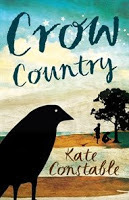
This is particularly embarrassing because I’ve read most of her books, including two wonderful time-slip fantasies, Crow Country and Cicada Summer, both of which were borrowed a lot from my school library. I can only plead that I read the trilogy in the early 2000s, and The Taste Of Lightning, a fourth book in that universe, in 2007. 


In fact, here is my review of that novel, posted soon after it came out.  https://suebursztynski.blogspot.com/2007/02/new-kate-constable-and-catherine-jinks_4920.html


If any books have connected music and fantasy it’s those four! 


And here is my review of her time-slip fantasy, Crow Country, which won the 2012 Children’s Book Council of Australia award for Younger Readers. https://suebursztynski.blogspot.com/2011/08/crow-country-by-kate-constable.html


You can buy them all on line, in print or ebook, at your favourite on line bookseller, including her new book, The January Stars, which I haven’t read yet but will. Go get some - you won’t regret it! 


Friday, November 13, 2020

Music And Fantasy

Spanish Vihuelas -Public Domain

 I’m still catching up with World Fantasy Convention panels, which will be up till December 1. Last night I watched a panel on the subject of music and fantasy. I admit I hadn’t heard of any of the panellists, but they were all musicians as well as writers. One was an opera singer, another plays metal, a third was a rapper.


One mentioned the idea of magic systems connected with music, which I think is interesting, and have come across before. The moderator connected music and fantasy with reading your work aloud to yourself, something I do, and it does help, but it’s not music. 


While they did mention authors with music in their fantasy, there were quite a few nobody mentioned, so I thought I might talk about some here. 


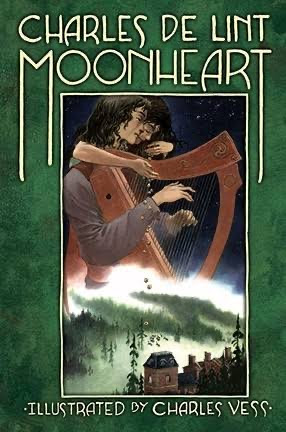
The one I thought should really have been mentioned was Charles De Lint. He’s a musician himself, who plays the mandolin(he met his wife when she needed lessons), and composes songs, but music is a huge part of his fantasy. The Newford stories are full of it, and I have to say I would move to his little town of Newford tomorrow if it existed. It’s a place where music of all kinds fills the cafes, along with musicians, artists and poets, and where there are fairies in the local park. His novel Moonheart had the Celtic bard Taliesin in it, and a heroine who works to the music of folk band Silly Wizard. I bought my first Silly Wizard album after reading it. I’ve been lucky enough to meet the De Lints at a con, some years ago, and they performed for the con goers as well as jamming in the foyer with a harpist fan. If that’s not a great mix of fantasy and music, I don’t know what is, but no one on the panel mentioned him.


By the way - filk music is a great combination of music and fantasy/SF too, songs composed by fans and writers, on SF themes. Some big name writers have been filk composers and singers, such as Poul Anderson, Gordon R Dickson and Joe Haldeman(who was at the World SF and Fantasy Cons). Not mentioned on that panel.


Tolkien - who did get a brief mention - wove songs into his fiction. In the very first chapter of The Hobbit, the Dwarves are carrying their instruments with them when they arrive at Bag End. After dinner, Thorin Oakenshield, leader of the Dwarves, says, “Now for some music!” and out come the instruments, and they tell their story via song. 


Lord Of The Rings includes more songs, just because that’s part of the culture of that world, whether it’s hobbits singing about their lovely bath or Aragorn singing about Beren  and Luthien, or even that cheery walking tree Treebeard. 


Elizabeth Ann Scarborough’s Songkiller Saga is a trilogy of novels about music. Hell has decided that folk music is keeping humans happy. It has to go. So American musicians forget their songs - only Americans, it seems - and real music is replaced by the equivalent of shallow advertising jingles. They can’t get across the border to Canada or have Canadian musicians arrive for a planned folk festival, so a group of them escape to Britain to learn songs all over again. By the way, real people and bands are mentioned, including Charles De Lint, who can’t get to their festival. In Britain, they have a lot of adventures as they learn their folk songs again and battle the forces of Hell, including the Debauchery Devil, who used to be the Queen of Faerie, until that dreadful woman Janet rescued Tam Lin from being sacrificed to Hell. Since she couldn’t pay the rent, she was taken instead. 


It’s a sweet and delightful trilogy, and it made me realise that folk music was a lot broader than I had thought it was. So again, I went out and bought albums it would never have occurred to me to try before.


These are some classic music-themed fantasies, but recently I have read Aussie author Narrelle Harris’s book Kitty And Cadaver, which has a system of music-based magic. The main characters are a group of musician ghostbusters who travel around, perform gigs and fight demons, vampires and ghosts with their music. 


I’ve known Narrelle since she was in her teens and was my pen pal, but I can recommend this book without bias. I nominated it for a Hugo Award, though it never reached the shortlist.


Someone on the panel suggested that songs and storytelling went together, which is certainly true of folk music; in the Songkiller Saga, in fact, the characters find themselves inside folk songs, living the lives of the characters such as Barbara Allen and the Two Sisters. 


Can you think of a music themed fantasy novel not mentioned here? 


Sunday, November 08, 2020

Me And Sinbad


                                                              Public Domain

 I’ve recently been searching the markets for potential homes for my existing stories, as well as potential homes for stories I might write, eg themed anthologies. It’s not easy to find a home for the stories I have. There are a few, written over the last few years, which have not sold, for one reason or another. Two of them are novella length, one Arthurian, the other an urban fantasy murder mystery with werewolves. Hardly anyone is buying novellas, or if they are, not the kind I have written. 


So, when I found a themed anthology based on the Arabian Nights, I got very excited for about two minutes, because I have a story on that theme! In it, Aladdin is not a nice young man - well, he isn’t in the original fairy tale, in which he is presented as a lazy good for nothing who is not bothering to run his late father’s tailor shop, so needs a wish-granting djinn to survive. But in my story, he’s thoroughly nasty. The story is seen from the viewpoint of the Princess and the Djinn. 


Yes! A market at last, right? Um, no. Guess which was the only story on that theme they don’t want? I gather they have had too much Disneyfied Aladdin. 


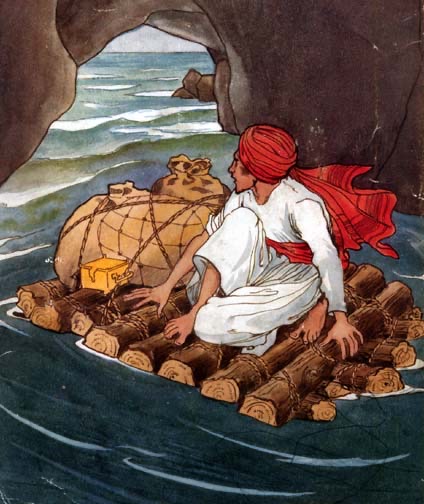
So... I downloaded a copy of the 1001 Nights, though I do have one somewhere in paperback and read it years ago, to reread and get ideas. I am considering having a go at a Sinbad story. There is plenty of potential for a rousing fantasy adventure in this. 


You are no doubt familiar with it, the story of the guy who went on seven voyages and had various adventures. Ray Harryhausen did some Sinbad movies, one of which featured Tom Baker as a baddie, another of which had another Doctor, PatrickTroughton, as a nutty but likeable Greek scientist with a daughter. 


But the original Sinbad isn’t a swashbuckling adventurer, he’s not even a sailor as such. He’s a merchant, though one who gets bored sitting at home, so he likes adventure. 


In the 1001 Nights, Sinbad is telling his story over seven days, to a bunch of friends and a porter who wants to know why he has to work hard for a living while Sinbad is hugely rich. 


“Well, you know, I wasn’t always rich,” says Sinbad over dinner. And he tells his story. Most of the voyages start with Sinbad getting bored and putting together some goods to sell and sailing off in a ship which gets wrecked in a storm. He is always the sole survivor, even if a few others are with him at first. They generally get eaten. 


Somehow, whether he is threatened by a sort of Arabian Nights version of the Cyclops or the Old Man Of The Sea(unlike in Greek myth, he doesn’t shape shift, he sits on your back and won’t let go), he escapes and ends up coming home richer than before, usually due to finding gems of one kind or another. A couple of times he also gets his original goods back because the ship was okay after all. 


Interestingly, Sinbad’s voyages have a bit of the flavour of the story told by Odysseus to the Phaeacians in Homer’s Odyssey


So, do I give Sinbad an eighth voyage, perhaps? Even though he is noft a young man any more, and already protested when the Caliph asked him to be an ambassador? Should I slip in some Greek mythology? Am I even allowed to? I will have to ask. Meanwhile my brain is churning with possibilities, and I was playing with them in my mind in the local pool today. I do find I can “write” stuff in my head while swimming.


Wish me luck!   

Monday, November 02, 2020

World Fantasy Awards 2020


                                                      The award. Fair use.
                                                   
 Today was the end of the World Fantasy Convention 2020, though not for me, as I’m still making my way through recordings of panels I missed over the weekend. There have been some terrific panels, which I will share with you as soon as I get them sorted out in some kind of order. Today, I watched one on science in fantasy. One of the panellists was the fabulous Joe Haldeman, author of the classic The Forever War and other amazing books. I’ll post again tomorrow. 


Meanwhile, here are the nominees and  winners of the World Fantasy Awards. Unlike the Hugos, these are judged rather than voted for. The head of the con committee, Ginny Smith, introduced the con guests, each of whom made a speech, then the winners were announced by famous editors Ellen Datlow, who edits anthologies, and Gordon Van Gelder, who has also edited books, but is best known for the many years he spent editing Fantasy And SF, a magazine I haven’t tried yet, as it’s huge. 


Most of the winners knew they had won and had prepared speeches, but one of them, Dr Ebony Elizabeth Thomas, hadn’t been told, for some reason, maybe they forgot. Anyway, her reaction was a delighted, “What, I won?” and somehow she managed to make a decent speech anyway. Her book was an academic tome about the role of race in a number of fantasy classics(see below). I tried to buy it when I went into the city today, but one shop said they didn’t stock it at all, and the other had it on their web site, but said it was print on demand, which is what they do these days when a book is basically out of print, but people still want it. I can only assume that, like many academic style books, they only printed a small number of copies. I said I was happy to order it, but the gent said he really wanted to contact the publisher and would get in touch with me when he heard. So I left my number. You can, it seems, get it direct from the (US) publisher, but if I can get it from a bookshop I would rather do that. 

You can check out any of the titles below(some were on the Hugo short list and I have them)via the links. The winners are in bold.


I was thrilled to see at least one Aussie winner, Kathleen Jennings, for art. She has an unfair amount of talent, dammit - she can illustrate and write! But it’s nice to see our land down under represented!


World Fantasy Awards 2020


2020 Lifetime Achievement Awards

Rowena Morrill
Karen Joy Fowler


Novel

Novella

Short Fiction

Anthology

Collection

Artist

Special Award – Professional


Special Award – Non-Professional

Judges: Gwenda Bond, Galen Dara, Michael Kelly, Victor LaValle, Adam Roberts

Thursday, October 29, 2020

World Fantasy Convention 2020 - Day 1!


At the start of this year, I was hoping to attend one science fiction convention, ConZealand, this year’s Worldcon. Due to COVID 19 the face to face con couldn’t happen, but as you will know from earlier posts here, the committee rejigged the whole thing and went virtual - and others have done the same. As a result, I have been able to enjoy conventions I would never be able to travel to. I was able to do NASFIC for free, a generous offer by the con committee. 


And today I began my third convention for the year, the World Fantasy Convention, something I have only ever heard of, never attended. 


Due to the difference in time zones(we are 17 hours ahead of Salt Lake City in Utah), it was still Wednesday over there when they held their pre-con workshops, so not really Day 1, but for me it was Day 1, and much enjoyed.


The first webinar, which I saw at 6.00 am my time, was World Building, by David Farland(the pen name of David Wolverton) a man who has done a huge amount of it in his writing life, which has included writing Star Wars novels and bestselling novels in his own worlds, teaching creative writing at university, judging, film production and editing. I confess I’d never heard of him, but he was very interesting and entertaining to hear, and I felt I was learning a lot. Even for his Star Wars novel The Courtship Of Princess Leia he created a planet of his own.


World building, he told us, can be as big as a planet or as small as a room, and should show only the tip of the iceberg. He spoke of the worlds of Dune and Middle-Earth, and pointed out that yes, Tolkien wrote classics, but spent so many years creating his world that he didn’t have time to write much else besides the two novels for which he is famous. I do see his point, though I remember Frank Herbert, whom I met at a session at Space Age Bookshop in Melbourne, saying that he had not written a single world of his classic novel Dune till he had the universe completely worked out. And it’s the only book I have ever compared in my mind to Lord Of The Rings, due to the amazing world building, though I prefer the Tolkien book because I loved the characters, while I didn’t particularly like the characters in Dune


But as a pantser, not a plotter, I feel there is much to be said for doing your research, yes, then just getting on with the story bubbling in your mind. I would certainly never get anything written if I did all the work Herbert did before writing my book! 


He went on to talk about all the details you really need to consider when creating your world, whether it’s a planet or a generation spaceship. Even a fantasy world needs to make sense physically. He did say a planet with multiple moons was okay, as long as you had them far enough from each other in orbit not to break each other up. Nice to know, as my world in Wolfborn had three moons, and I hoped it was correctly worked out. 


He had got as far as animals and plants when he was given his ten minute warning. This was a two hour session, but not finished. I would have loved to hear more, or at least see the rest of the slides, which looked intriguing! 


I had time to get up and do a few necessary things while listening to the second session, by David Butler, on query letters, whether for publishers or agents. That was also entertaining and useful. David, another very successful writer, gave sound advice about what to put in and what absolutely not to put in, and why. He said that when you send a query, it should, if possible, contain three paragraphs, 1. This story sounds good. 2. Ooh, this story sounds really good and 3. Business. He got us, as an exercise, to do 1 and 3. Number 1 was basically the sort of thing English teachers tell you to do - the character wants something badly, has a problem achieving it, so sets off on the quest because if they fail there will be consequences. I used this template to write a three sentence blurb for Wolfborn, and he liked it. 


He said this blurb was an exercise his wife’s agent makes her do every time. Number 3 was Business, where you tell them how long the story is, whether it is stand alone or is part of a series, or has potential for a series and paste in the first ten pages, and ask if they want to see the rest. You do not tell them you once had drinks with them at a bar or mention the name of someone famous they represent(why should they invest time in your first novel when they have that big name as a client? Especially if you have written the same type of fiction Famous Author writes!). It’s all common sense.


He said you should keep sending inquiries to agents who don’t answer until they say no. He also mentioned Publishers Marketplace - expensive if you keep subscribing, but you can invest the price of a book in a month’s subscription and use it to find a list of agents to query. They are all professionals, and none of them is running a scam - they are vetted before being included. 


He sent us three templates he uses - of course, I included my email address in the list when he offered.


My final session was a 50 minute panel on the subject of horses. It was three horse-expert ladies, led by Joyce Reynolds-Ward. It was very useful, like the others, and my friend, Gillian Polack, who was in the audience, gave some links to historical coach timetables, much like bus timetables, which gave some idea of how long it would take to get between various places in England.


If you write fantasy fiction you have to use horses sooner or later, let’s face it! And they are all too often treated as furry machines. They need a lot of food and drink. They have to graze to get fibre - oats are not enough. There was talk about how, no, horses are not like dogs, though some authors make them that way, because dogs are predator animals, while horses are prey animals. 


This panel went for 50 minutes. Again, I enjoyed and felt I had learned something new.


Tomorrow morning I’ve set the alarm for even earlier than today, 5.00 am, for a session on Collecting First Editions. It is being presented by Ken Sanders, who is on Antiques Roadshow, and knows a lot about rare books. 


At 8.00 am our time the Virtual Book Bag will  be open and I will have access to a huge number of free ebooks! 


Oh, and I have already bought my first book for this con, a horse-themed story by Joyce Reynolds-Ward.


With all those freebies, surely I won’t be buying more?  

Tuesday, October 13, 2020

An Interview With Will Kostakis


Aussie writer Will Kostakis is the author of several YA novels and some short fiction. His first novel, Loathing Lola, was published when he was in his teens. I was lucky enough to hear him speak at the Centre for Youth Literature at Melbourne’s State Library when only his first book had been published. Since then, every book has been different from the one before, and it has always been a pleasure to discover something new with each. 


The Sidekicks was published in 2016 and is about three schoolboys mourning the death of a mutual friend. I reviewed it here.


The First Third, which was very popular at my school, is about a Greek boy carrying out his grandmother’s bucket list wishes, to get his family together again. Here is what I had to say about it.


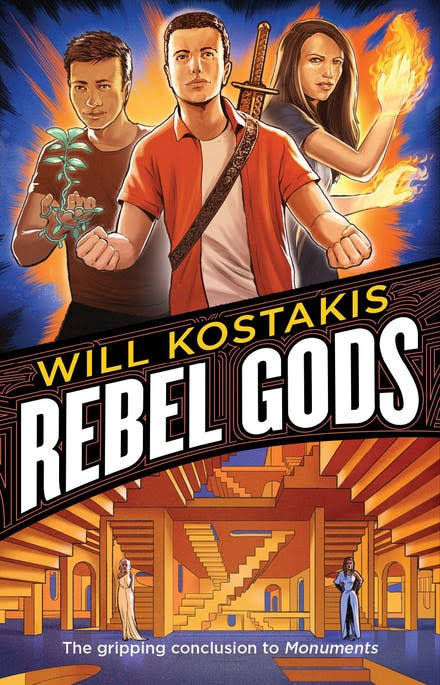
I bought his fantasy novel Monuments at the Melbourne Writers Festival last year, and reviewed it here. We didn’t have to wait too long for the sequel, Rebel Gods, which came out in August this year. I thoroughly enjoyed both books. 


 I don’t want to go into too much detail about Monuments here, in case you haven’t read it and want to, because spoilers, but my review will give you enough information to go on with. 


Today, Will has been kind enough to answer some questions about the duology. Here they are! 


GR: Let’s start with a basic question: how did you get the idea for this duology?


As a kid, my mind would wander. I would press my head against the window of Sydney trains and imagine a sprawling fantasy epic playing out across its rooftops. It was never anything particularly well-formed, and then as I started to tour schools and hear the different rumours about each campus, I realised there was a fantasy idea there: kids raiding the secret dungeons under high schools.


GR: Although all your books are different from each other, they have all, so far, been contemporary fiction. What made you decide to have a go at fantasy? 


I had that idea, but I was fearful of giving it a crack. It helped that after the one-two punch of The First Third and The Sidekicks I was worn out. I needed to write something that would make my teenage heart sing. So I returned to that fantasy epic I was dreaming up… What if gods were real and they had been hidden beneath Sydney’s schools, only to be discovered by teenagers.


GR: Many YA fantasy novels either kill off the parents early on, or send them off somewhere far away so that the hero/heroine can get on with their adventures. What made you decide to allow two of your three main characters to have families - and give the parents personalities of their own?


At first, I thought Monuments (at least, the first book), would be almost parent-less. The gods would be the only family I explored. I quickly realised that it felt hollow. My family has played such an important part of my life, writing an absent parent story felt unpleasant to me. So I beefed up Connor’s mother’s role, and it was like the novel came alive. One of my goals with Rebel Gods was to flesh Locky out, he was no longer the “love interest” we’ve known for three days. I felt it was important to see how his family informed his worldview, in the same way that Connor’s informed his. It was also important that Sally, who tragically lost both her parents, was given a story that trended towards hope and healing, and becoming a sister to Connor and looking to his mum as a mother figure was a part of that. Long story short, I set out to write a story that wasn’t family-focused, realised families are a big part of what make my books my books, and then wrote two family-focused books with gods in them. 


 GR: You have three very different protagonists in these two books. They have to learn to work together quickly, very soon after they meet, yet have different ways of seeing the world. Tell us about Sally, Locky and Connor - and did you plan them out as characters who would be able to work together to save the world? 


I always pictured our three heroes would work together to save the world – and have a few arguments in the process, so they needed to be distinct. They are each quite driven characters, but driven by different things: Connor by family, Locky by politics and Sally by grief. Who they are as characters sprouted from there.


GR Is any of the incident where Locky plants that rainbow lawn and annoys the Red Fern pastor inspired by real world incidents you know of? Obviously not the magic, but a late-night guerrilla action of some sort. 


It isn’t inspired by one particular incident … More a shout-out to moments of rebellion.


GR: Sydney is almost a character in these two books. How much is real and how much imagined? For example, how many of those places where the Monuments are hidden are based on real places?


The hiding places are inspired by different schools I’ve visited, some merged together, others poorly disguised. But overall, I tried to capture Sydney in its ordinary 2020 splendour, so that there was something for the fantasy elements to pop off.


GR:: Are you considering having another go at writing fantasy? If so, tell us about it. 


I would love to return to fantasy some day, but I’ve scratched that itch for the moment. I have a few ideas percolating, but I’m desperate to return to contemporary. The world has changed so much since I wrote The Sidekicks (released early 2016) that I really want to dive into realism again. 


GR: Are you basically a plotter or a pantser? Or something in between? You would, of course, have had to plan out Monuments and Rebel Gods to make them work, but are you the sort of writer who prepares elaborate detailed plots or just rough outlines? 


I plotted the duology extensively, then Monuments changed so radically in editing that my plan for Rebel Gods had to be tossed out. I’ve found what works for me is: settle of 10 essential scenes and an ending, and thread the needle between them. 


GR: What are you working on now? 


I just completed The Greatest Hit, a novella partly set during the Melbourne lockdown, which is out October 27 that I am incredibly excited for people to read. There are a few projects I’m tinkering away on, but mostly, I’m focusing on getting some rest. It’s been a taxing year, professionally and obviously personally (points to everything 2020), so I want to pace myself a little. But you won’t have to wait long for a new book, promise.


Thank you so much, Will, for your great interview. That is especially amazing about your having done such a major re-vamp of your first book and your plans for the second! 


If you’d like to to get these, or any of Will’s other books, they are available in ebook format either in Apple Books( ePub) or Kindle, but the paperbacks are also available at any good online store, except, for the moment, Book Depository, which is out of stock with Rebel Gods, but does have everything else.