Search This Blog

Saturday, October 31, 2015

Left On My Doormat!

Look what I got! 


It was left for me on my doormat by a wonderful postie who knew I wouldn't want to wait a week and go to the PO on Saturday morning (I live upstairs opposite a nice neighbour, so quite safe). Well, if he/she didn't know, it was still considerate. 

Christmas Press have done some great stuff since they started; this time last year it was the anthology Once Upon A Christmas, in which I had a story. This year it's a lavish hardcover book with cute dragons in it. Gorgeous, isn't it? 

I will read and report. 

ASIM Needs YOU - To Read Slush


I posted about ASIM's need for slush readers in August last year. I believe we got some, but the need goes ever on. Especially since the Hugo shortlisting.

See, whenever we are noticed, for whatever reason, we get more submissions. What we really need are more subscriptions. Even if you do intend to submit, actually reading your market seems like a good idea, right? Well, it does to me.

But when we were shortlisted, even though we were being sneered at by the likes of George R.R Martin(who said on his blog, "Andromeda Spaceways are loudly declaring they didn't know..." I put him right on that, politely, in my comment, FWIW),   it got us more submissions, not more subscriptions. And we really need more readers to handle them, maybe even those who are thinking of submitting. Once you've read some of what is coming in, you may see your own stories in a completely new light. You'll be asking yourself, "What would I want to read if I was paying out my hard earned cash for a magazine? Is what I've been submitting what I would simply love if I was paying to read it?" Or maybe, "Hey, I can do better than this!"

I receive around five or six at a time and try to get through  them all, but we're happy if you just want to take one story a week. My sister does. If you're really keen you can ask for an unlimited number.

We can't pay. The only people who get paid in this business are the contributors - writers and artists - but you'll learn a lot and have something to put on your resume while you wait for a paying gig. And you'll earn the eternal gratitude of our lovely slush wrangler Lucy Zinkiewicz, a university academic who puts around ten hours a week into this task.

I should add that you'll have a break soonish. We have two more issues to get out this year,  then we're having a short break from slushing as we do most years at Christmas/New Year.

Meanwhile, there's a lot of stories to get through. You don't have to be a professional slush reader. You don't have to be a writer, even, just a reader who loves speculative fiction.

How about it, O my readers? Do you have what it takes? If you think you do, email Lucy at asimsubmissions@gmail.com.

And here, per Zara's suggestion, is the subscription  page!

http://www.andromedaspaceways.com/shop/subscriptions/

Friday, October 30, 2015

October 31, Not A Halloween Post - Happy Birthday, Dezzy!


I'm not going to go into Halloween here, as I did a post on it this time last year. In the Northern hemisphere it's the start of winter. There are many names for it, all over the British Isles, but the celebrations and customs are similar.

But today - here in the Southern Hemisphere - it's mid spring and it's the birthday of my nephew's daughter and informal personal publicist Dezzy, who constantly promotes my writing at her Sydney school, helps in the library and is turning into a writer herself. Right now, it's online fan fiction, but who knows where this will go? At her age, I was writing plays no one would ever perform and dreadful historical fiction. 

So, in Dezzy's honour here is my birthday meme. Happy birthday, Dezzy!

Events: 

475 - Romulus Augustulus is proclaimed Western Roman Emperor. Included here because he was the last Western Roman Emperor(they were around for hundreds of years more over in Byzantium, where they were Eastern Roman Emperors). I also include him because he was a kid. His Dad put him there. There's a short story I read somewhere with him in it, but I can't remember who wrote it or what it was called. I read a lot!

1517 - Martin Luther posts his 95 Theses on the door of that church in Wittenberg and the Protestant Reformation begins. Not in itself about books or writing, but it was too important to leave out. European politics was never the same again and besides, think of all the historians and novelists who have benefited from the explosion!

1587  - Leiden University Library opens its doors. Hey, it's a library! And I believe it's still around, at least there are still libraries there.


Leiden University Library, 1610, public domain

2011 - The world's population reaches seven billion. Oh, dear... It's now known as Seven Billion Day.

There's more, but let's go on to the birthdays.


Famous Birthdays

1451 - Christopher Columbus. 'Nuff said. 

1620 - John Evelyn, he of the famous Diaries, from which we learn stuff about his era, though not as famous as his contemporary, Samuel Pepys. But he wrote plenty of books, was really good at gardening(especially trees)and he could draw too. I haven't checked him out on Gutenberg, but will. He had a daughter who also wrote at least one book, under a pen name. 

1795 - John Keats, that amazing poet who died way too early. But one of his poems was about autumn. It begins "Season of mists and mellow fruitfulness ..."

John Keats, public domain 

1876 - Natalie Clifford Barney, a rather scandalous American poet who lived most of her life in Paris, where she had an amazing salon, with famous guests from all over. She gets a mention in Kerry Greenwood's Murder In Montparnasse, as the young Phryne Fisher spends some post-Great War time in Paris, making a living as an artist's model. She has to pose in Grecian costume while Natalie Barney recites, in hopes of getting a meal afterwards and some payment.

1912 - Ollie Johnstone, one of Disney's top animators, who animated some of Disney's most famous characters. He wrote a book about it, I believe.

1930 - Michael Collins, my favourite astronaut of the Apollo 11 crew, and maybe my favourite astronaut of all time. See, he not only had a lot of amazing adventures in space and kept the mothership waiting and safe while the other two jumped around on the moon, he also wrote about it - and he did write about it, he said it wasn't ghost written - in some of the most delightful books about the history of the space program I've ever read. I used them as research material for my own children's history of the space program. He said recently, when asked, that, no, he wouldn't go back to the moon, been there done that, but he'd sign up for a Mars voyage like a shot. Happy birthday, Michael!  

1932 - Katherine Paterson, author of A Bridge To Terabithia, which I confess I haven't read, but should get around to, as a children's librarian! 

1959 - Neal Stephenson, award-winning author of a lot of thick-as-a-brick speculative fiction novels, often compared to those of William Gibson. I must admit, I find his work a bit difficult for me to follow, but that's just personal taste. I will try again some time. You never know, it took me three tries to get into Lord Of The Rings and now I adore it. Anyway, happy birthday, Neal! 

And speaking of Lord Of The Rings...

1961 - Peter Jackson, who has given us all such joy with his big screen interpretations of Tolkien's works. Happy birthday, Peter! 

I'd just like to add, as my token tribute to Halloween, that I'm reading and enjoying Lexa Cain's horror-themed YA novel The Soul Cutter, which I won in ebook at her web site. 

Wednesday, October 28, 2015

What I'm Reading Now...

Plenty, actually, but these few will do for now.

Crash, the second Twinmaker novel by Sean Williams. I've been sent that for reviewing, along with the third one, Fall. Goodness, it's non-stop action! Though, unlike some other thriller-type books, characters do occasionally stop to eat and sleep and wash up. And when they haven't had a chance to do that, it shows. 

Right now, the heroine, Clair, is running from a bunch of murderous "dupes" who all look like her love interest's decent father, who was killed early on in the first book. Somehow she seems to have recovered from a blackout without the nausea and pain that usually implies. I sometimes think that knocking characters out is many authors' way of moving from one scene to the next without having to go into detail about what happened. Still. A very exciting adventure. 

I downloaded two Ray Bradbury books the other day. One is Nine Rareties, a collection of some of his early short stories. The other is Zen In The Art Of Writing, a book about his writing, which I've just started. For some reason, that's currently free, so if you are interested now is the time to get it from the iBooks store. 

There are also a couple of Project Gutenberg books which I found after reading a blog post that mentioned them. One is a slang dictionary from the 19th century which should come in handy if I ever write something set in that era. The other is a slang dictionary original edited back in 1528 by Martin Luther! It was translated in the Victorian era, so there it is, in Gutenberg! 

There's more, but my train station is coming up, so I will finish this and post it to the world.

Saturday, October 24, 2015

Rich And Rare - The Launch!

Friday is not a night I usually go anywhere, it's family night, but my family understood that this was a special event that I shouldn't miss, so after work I trundled along to Ford Street Publishing's HQ in Abbotsford for the launch of Rich And Rare, its latest anthology, in which I have my bushranger story. 

I'd hoped to find time to have a proper meal in the city before going to Abbotsford, but I ended up leaving work late due to various things that needed finishing, so had a hasty takeaway at a small food shop  in Sunshine - at least it wasn't a franchise fast food joint and the chips were hand cut and the roll was fresh. 

Once in town I quickly caught the South Morang train to Collingwood station, which is not far from the old-style building Ford Street is now using for these events. At the station, I met a friend from the Nova Mob, the SF group I attend once a month, and we walked together.

In fact, I think about half the Nova Mob was there that night! This is the nice thing about being in SF fandom - it gives you a network. And I think, whatever Paul Collins says, he is a part of fandom, and he knows plenty of fans. 

The attendees filled the small place very quickly and chatted, sipped wine and juice, nibbled the finger foods and waited for the launch to begin. For a while I thought there might be more book signers than audience to get their books signed, but really, there were plenty of people and good sales. It hit me, suddenly, that there was only one actual child - the intended audience - in the room - and, alas, she got Hazel Edwards, who was next to me, to sign, but not me. Oh, well. I did sign for plenty of people's children and persuaded one mother to buy a copy of Crime Time for her two sons. ;-)

Well, Paul did hold a schools competition as he did last time, but got no entries this time. He then asked the State Library, but was told he had to book months ahead. Pity, because I can't think of much happening  at the CYL for the rest of this year, and a lot of librarians would have come with great pleasure. 

The book was launched by the delightful Isobelle Carmody, who drew attention to me by asking how to pronounce my name while making comments about every story in the book. That was nice, though I was approached later by a Ukrainian lady who thought I might actually be able to speak Polish. Sorry! The only Polish thing about me is my name. 


It was quite a gathering. If you'd thrown a bomb into it, you would have wiped out half the children's writers in the state and some from outside it. 

My friend George Ivanoff had kindly agreed to take me home, as long as I didn't mind waiting a while after the launch - he likes to socialise and there's a pool table he enjoys using - but when I sat down to wait and turned on my iPad, I found I had been tweeted with a message from my nephew David, who said his parents had been out looking for me! Apparently they had forgotten my plans for the evening. I looked at my phone, which I'd left in the other room with my bag and found five messages and eleven missed calls. I tried to phone but the venue has poor reception. I had to get going ASAP and call on my way. Fortunately, another friend from the Nova Mob had offered me a lift and I grabbed the opportunity. I rang my sister, who was apologetic and said she had only remembered when they were in the car. So that was okay. I got home only a short time after my sister and brother-in-law left and spent the night with Mum as I usually do. 

A nice evening in all, except the brief panic!

Just Finished Reading... Jump By Sean Williams(Twinmaker 1)


I've known a bit about this book since some of my students read it in manuscript form before it was published by Allen and Unwin back in 2013. It had mixed reactions from the kids who'd read the MS - one loved it, one didn't care for it. But I'd never got around to reading it myself.

When Mr Williams talked about it at the Reading Matters conference in May this year, I downloaded it, but only read a few pages before being distracted by something else. 

Then the publisher sent me a copy of Volume 3 to review and I thought it was about time I finally got stuck into it.(They have since then kindly sent me a copy of Volume 2 as well). 

As a Star Trek fan I found it fascinating. I grew up with the Star Trek transporter and replicators. Of course, the transporter(called d-mat in Jump) is still in the realms of science fiction and looks to stay that way for some time to come, if they don't find a way to transport something more than a photon! But the replicator(in this novel called the fabber) is actually possible, according to an article I read in New Scientist while researching for Grey Goo, a chapter book I was writing for Cengage a few years ago. It could possibly be done by nanotechnology.(I had great fun using the notion in Grey Goo) Tanith Lee also made good use of it in her Drinking Sapphire Wine novels.

In this novel, however, the fabber is an outgrowth of the d-mat. One that makes sense, to me at least. 

Remember how Dr McCoy was always grumbling about entrusting his atoms to the damned thing? Because you'd have to be destroyed and put together again to be transported. And while that was happening, the machine would have to save your pattern. There was even an episode of the animated Star Trek in which an elderly couple, a former Enterprise captain and his wife, the ship's doctor, were restored to youth during a crisis because of this fact. 

In the world of Jump, the fabber and the d-mat between them have more or less saved the world, which was close to destruction after a set of natural disasters. There is no more hunger or lack of resources. You can live in Sweden and go to school in the U.S. You can party anywhere you like. Most people don't have to work at all, though there is an administration and there are the peacekeepers(police force). You can access the Air, a much-expanded Internet, via your special contact lenses.There are rules that are supposed to make sure it's all safe. Supposed to. But even in this pleasant world, people are going to be dissatisfied with something about themselves and someone or something is out to take advantage of that...

This is the world in which teenager Clair lives and has all the usual teenage friendship/romance angst issues before realising that her friend Libby has tried something going through the Air called Improvement, which is likely to get her killed within days - and in trying to find out what's going on, Clair is on the run in a breathtaking, non-stop adventure.  

I love that the author has thought, really thought, about what the implications of the transporter and the replicator might be, in a way that Trek didn't. (I think the original reason for the Star Trek transporter was to save on SFX so the ship didn't have to land in every episode). I won't say more because spoilers, but I thoroughly  enjoyed it. I can't wait to read the next book, which I will review formally.  

Wednesday, October 21, 2015

Back To The Future 2! October 21, 2015!

Just a short post tonight. This has been discussed on the radio and elsewhere. To be honest, I've only seen the movie once or twice, though I do have the DVD as part of my boxed set. It's the weakest of the three, IMO. But still, it's set on Wednesday, October 21st 2015, and tribute should be paid. The first film is a classic and the third almost as good. And Michael J Fox was running around trying to do both that and the TV series he was in at the time.

We don't have hover boards, thank goodness! It's bad enough trying to scramble out of the way of regular skateboards, without having to worry about flying ones. We don't have flying cars and probably won't have any in the near future, if ever. We do have flat screen TVs, though I have an old style box, myself, bought only a few years ago. I like them better.

I think SF writers are more careful these days with their predictions. But when you see films such as 2001, you just don't care. It's amazing stuff anyway.

But I remember, a few years ago, finding an old non fiction book on my library shelves, predicting life in the year 2000, and getting it all very wrong. I gave it to one of the teachers who did an English unit on the theme of The Future, so she could show her class how people thought of the future in the past.

Come to think of it, there's a Jules Verne novel called Paris 2000, or some such - I bought a copy but have mislaid it. We can forgive M.Verne for any errors he might have made, because he took the science known at the time quite seriously. I recall that H.G Wells sneered at his story about going to the moon and Verne said that at least he'd done his research, unlike Wells, whose method of getting to the moon had been made up.

In the end, we have to suspend disbelief when the writing is good. 

Thursday, October 15, 2015

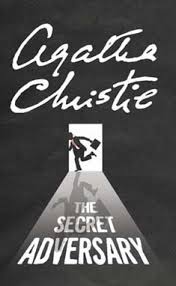
Finishing My Reread... The Secret Adversary By Agatha Christie


This is the first Tommy and Tuppence novel. Tommy and Tuppence are a couple who have adventures and solve mysteries together. In this first one, they have just met again after the Great War. Both of them are out of work and Tuppence is considering going home to her large family, though not keen on the idea. They get the idea of starting up a business called the Young Adventurers, advertise and suddenly find themselves in the middle of an adventure involving secret papers that must NOT be allowed to get into the hands of the enemy, an American millionaire looking for his missing cousin, a survivor of the Lusitania, a femme fatale and the elusive Mr Brown...

I think Agatha Christie let her hair down with this one and had fun. It's not a whodunnit, just a thriller/adventure, with a lot of humour. I enjoy it every time. I have to keep reminding myself that the book was published in 1922 and the "roaring twenties" were just beginning. There's a photo of my grandmother as a young woman, that must have been taken maybe a few years before and she definitely doesn't look like the liberated woman Tuppence is. She has a long coat and a big-brimmed hat and I think her dress, under the coat, must have been just above her ankles at best. What a difference a few years made!

One thing I wonder is - why didn't Alfred Hitchcock turn The Secret Adversary into a movie? It would have made a great Hitchcock!

What do you think?

Saturday, October 10, 2015

Finally Reading... Blood Queen by Rhiannon Hart and Jump by Sean Williams

My friend Rhiannon Hart, whose first two books in the Lharmell series were published by Random House Australia, kindly offered me a copy of the final volume, Blood Queen, which she has self published. It has taken me a while to finally get stuck into it and there will be a review when it's done. So far, oh, dear, spoilers, and how do I do the review without releasing them? One thing, though, you do have to have read the first two to be able to follow this one, so why not read them while you wait for my review?

The second book I have FINALLY got around to, is Jump, the first of the Twinmaker trilogy by Sean Williams, published by Allen and Unwin. I really had to, because guess what the publishers have sent me for reviewing? Right! The third volume! I may see if I can get Volume 2 from the lovely Clare Keighery, if I promise to review that too. And I must admit, Jump is proving to be an entertaining read, though I haven't so far had any interest from my library users. But you never know - recently a student borrowed and loved Ambelin Kwaymullina's Tribe trilogy and that's one that has been gathering dust. Maybe when I have read Jump myself, I can entice at least one student.

It's a YA novel on the theme of what the world might be like when you have two things that Star Trek takes for granted: the transporter and the replicator. And in this world, they are connected - quite logically, really, because if you can take things apart and put them back together, as you do with a transporter, you've got the pattern, right? So you should be able to make it. I wonder if I can get an interview with the author? We'll see.

Anyway, that's my "finally got around to reading..." What's yours?

Friday, October 09, 2015

Books I Had To Read

Reading a blog post in which the blogger complained bitterly about Walt Whitman's Leaves Of Grass, one of those national classics kids have to read because, well, it's a national classic, made me think of the books I've had to read in my time. 

Until about Year 10, there were no set texts that I can remember. We read what we wanted and wrote book reports. If the teacher was being especially creative, we were allowed to do these in the form of a book dust jacket - something I'm sorry to say has come back in my school at Year 7 level, where, until this year, there was a creative response that involved book trailers and fan fiction and such things that let the kids use their imaginations and show that they had understood the books. 

Anyway. At Year 10, we had to read John Wyndham's The Chrysalids, which I took home and read in an evening. Next day I asked my teacher,"What do I do now?" His response was,"I don't know. I haven't prepared anything yet. You were supposed to take three weeks." 

He was a nice man, but not a very good teacher. There should have been reading and discussion in class and some work given to us as we went. I'm not sure he had even read it himself yet. 

I did enjoy The Chrysalids, which was about a future dystopia in which, after a nuclear war, there is a Puritanical society where anyone with a mutation was banished to the lands still affected by the radiation. The children from whose viewpoint the story was told had an invisible mutation: telepathy. That could have been great for class discussion, though, having reread it, I loved it again, but felt that the style was a bit dated. I wouldn't set it, though I would invite good readers to try it. 

Our  Shakespeare that year was Julius Caesar. Again, we didn't actually read or discuss it in class. We saw the movie with James Mason and Marlon Brando(a very sexy Mark Antony), but that was it. I had so looked forward to discussing this in class, having read my sister's copy before I was out of primary school. I am not even sure the teacher ever read the essay I wrote. I don't think any school does that one any more; our own kids are doing Romeo And Juliet this year, and that one has been the Year 10 Shakespeare for many years. Probably more appropriate for teenagers - I was a very strange teenager, one who would have enjoyed any Shakespeare.  

The next year's texts were Catcher In The Rye and Brave New World, both of which I had already read and loved, our Shakespeare was Richard III. I've already mentioned in previous posts that this was the year I discovered Richard and went on to read Daughter Of Time and join the Richard III Society; we had a wonderful English teacher that year. I've downloaded both novels to my iPad recently. Going by all the complaints on Goodreads, Catcher In The Rye is not all that popular these days, but it's known as the "first" YA novel and it used to be an act of rebellion to read it, one of those "under the covers with a torch" books. Probably because there have been so many YA novels since it was published it no longer has the effect it once did and is a bit dated. The ultimate indignity is that it's now a set school text! Brave New World is, I think, still relevant, though I don't know if anyone still sets it. 

I get a bit of a mishmash in remembering my Year 12 books, because I did both English and literature, so there were a lot of books to read and I can't quite recall which books I had to read for what.

Here are some of them: the poet was Lord Byron. We had to read the Prologue to The Canterbury Tales. I loved both, but I wasn't very good at writing about poetry, alas! Reading it, writing it, but not writing about it.

The Jane Austen was Pride And Prejudice. I confess it took me a couple of re-reads to appreciate that one, though if you have to study Jane Austen at high school level, that one is probably the best. That was before all the dramatisations made this novel such a big deal - and well before Colin Firth emerged from the lake in his wet shirt! We only had the book and, while the teacher was much better than the one I had in Year 10, she couldn't quite get me enthused about the books we studied. Not her fault. 

The Dickens was Great Expectations, which I did enjoy. I have to agree with my sister that the hero,Pip, is "a little shit!" Peter Carey seems to think the same, judging by his novel Jack Maggs

We did The Importance Of Being Earnest - that year the Drama Club performed it. I got to be Lady Bracknell. It was a good thing to do, because we had to discuss the characters and how they should say the lines and why. 

The Shakespeare was King Lear and if I'd always been a fan, that one turned me into a raving Bardoholic. I remember my copy falling open to the scene where Lear banishes Cordelia with that passionate speech... and I was hooked for life.

We read James Baldwin's Go Tell It On The Mountain which, alas, I can't remember at all, and Darkness At Noon by Arthur Koestler. That one is about a former Party leader who is imprisoned and expecting to be shot any day. He has flashbacks and thinks about all the horrible things he's done for the Party in his time, and whether or not the end justifies the means. And he talks to the prisoner in the next cell by Morse code, as they can't talk any other way. I have read all three in that "trilogy".  It wasn't a trilogy in the normal sense, just three books on similar themes. I read The Gladiators, his novel about Spartacus, when I was about twelve or thirteen. The final was Arrival And Departure, which I read in my university years. 

You can see that the types of books we had to read for English in those days were very different from today. A lot more complicated,a lot more assumption you could handle them. 

And not one Australian book in the lot! 

What do you remember from school days? Did it affect you? If you are still at school what do you think of your set books? Are there any authors you'd read again? 

Thursday, October 08, 2015

Just Finished Reading... The Rest Of Us Just Live Here by Patrick Ness

I bought this from iBooks only Wednesday and had it finished yesterday. I'd read a review on Tsana's Reads blog and it sounded like fun, and so it was. 


Imagine if you lived in Sunnydale, or its equivalent, but weren't a part of Buffy the Vampire Slayer's Scooby Gang. All that stuff would still be happening but not to you, although you might still notice things going on, especially if you went to the same school.

In this novel, we see the goings-on from the viewpoints of a bunch of (mostly) ordinary kids, who have enough problems without worrying about whether evil beings from another dimension are trying to take over the world. The Chosen Ones are known as indie kids. Their adventures are happening off the main page, though we do get a paragraph or two about it at the start of each chapter. 

Actually, I have always loved Buffy because, in the middle of all those vampire and demon invasions, characters would be shrieking,"You stole my boyfriend!" 

In this case, in an unnamed small town, which does have semi-regular paranormal events(soul-sucking ghosts, vampire romances, a plague of gods and goddesses), we see what's happening elsewhere in the town, although the paranormal events do impact on the lives of those who are just trying to finish their exams, get a date to the prom and overcome truly serious anorexia and OCD problems. Mikey, the hero, is the one with OCD, his sister is a recovering anorexic, their father an alcoholic and their mother a politician who does care about them, but is mostly worried about her current campaign. These problems do have to be overcome, even as they pray for their school not to be burned down by the struggle between indie kids and  paranormal creatures...again. (It's only been eight years since the last time!) This is definitely a gentle poke at Buffy.

Despite all that, there is a should-be indie kid among them, Mikey's best friend Jared, a demigod, whose grandmother was the goddess of cats - part of the plague of gods, who had settled down with a mortal before returning to the divine realms. Jared is such a nice boy! And cats adore him, including mountain lions. But he is trying to live a normal life, apart from healing cats and the occasional human.

It isn't as funny as it sounds; there is gentle humour as the author pokes fun at the current passion for YA paranormal books, but there are enough serious problems to make you think.

Anyway, I enjoyed it. It's my first Patrick Ness book, though I do have  another on my iPad, to be read later.

Monday, October 05, 2015

Special Nepotistic Promo Post!

I've just had an email from my brother, who is a member of a terrific a capella group called the Ice Haloes. You can find them easily enough on YouTube, where there are bits from their performances. Then, if you live in Melbourne, you can go to one of their concerts. Or you can buy their new CD, which is just out. And this week, they're on radio, as mentioned below.

Here is the email. 

Hey everyone - a quick heads up about the fact that we are going to be LIVE on the radio this Sunday October 11.

The Ice Haloes will be the featured guests on Melbourne's 88.3 Southern FM during the weekly program "Sunday Sessions". From 4 PM (or soon after), we'll be performing songs live from our new CD Cover Stories and chatting with the host, Mark Missen.

Even if you don't live in Melbourne, you can listen in to the show live on the interwebs (do the arithmetic if you live in a different time zone) from the website:
http://www.southernfm.com.au/tag/live-sunday-sessions/


 Bringing Acapella to the airwaves! 

See you at our next gig! Don't forget we have our CD Launch on November 21.Tickets can be bought via www.icehaloes.com

Cheers,
Peggy, Belinda, Adam & Maurice.


This is the cover of their album(that's my brother, Maurice, on the right. He's the group's bass)


At one point, Maurice was part of an a capella group which sang mostly(but not entirely) "beautiful Georgian folk songs about cutting trees in the forest". We're not Georgian. But the group was, and needed a bass.

That's how he got into a capella singing. I've seen the Ice Haloes perform and, trust me, they're good! Check them out on YouTube.

Saturday, October 03, 2015

New Book I'm Reading...

I read a post on The History Girls blog, by my friend Gillian Polack, in which she mentioned a fascinating book she had read recently, A Drizzle Of Honey: The Lives And Recipes Of Spain's Secret Jews by David M Gitlitz and Linda Kay Davidson.


Of course, I had to have it and it was available on iBooks, so...

It's proving an enjoyable read. There are quite a few history-themed cook books out there, yes. I have a few myself. The Heston Blumenthal one about medieval cooking is great! But it's more of a history book than a cookbook. Which is fine for research and even a bit for cooking.

But this one has a bit of everything and it's not just "how to cook the way they did in medieval Spain" or even "how Jews cooked in medieval Spain" but about what could happen to you in Spain if you were caught cooking in a certain way or at certain times that might suggest you were secretly Jewish, especially after the Inquisition turned up. And a lot of these recipes are based on trial records, when people's neighbours and servants noticed that someone was doing things the Jewish way, maybe too fond of eggplant and chick peas, cooking your Saturday meal on Friday, having a salad with the girls on Saturday arvo... The evidence against one man who was burned at the stake included a type of casserole he had cooked! This has to be the first cookbook I've read where cooking could get you killed.

The authors have found recipes in a number of medieval Spanish and Moorish cookbooks that sounded like the ones mentioned in the trial records. They have made sure the ingredients were available in your average supermarket. And since so many have a lot of saffron in them(as they say, if you used the amount given in some of the recipes you'd have to take out a second mortgage!), they only include saffron where you really can't manage without it. If you just want the colouring, they say, turmeric will do.

Anyway, it looks good so far. I'm hoping to find something I can try, for which I have the ingredients in my pantry, fridge or fruit bowl!

Meanwhile, back to the book.


Guest Post - Aleah Taylor


Today I would like to welcome to The Great Raven debut Aussie children's author Aleah Taylor who, like me, took a while to find her ideal publisher. I hope this is only the first sale of many, Aleah! 

If you want to buy the book, either in paperback or in ebook, you should be able to get it from Amazon here, from the publisher's web site and I see that in Australia you can order it through Gleebooks. There will be more web sites selling it soon - it has only been out for a week. 

I'll let Aleah tell you all about it. 


I’ve considered myself a writer since I could hold a pen. Some of my earliest memories are of looking at bookshelves and wondering when my book would be up there too. However, I never really attempted to write a novel until I was eighteen. Instead I wrote short stories galore and poetry, songs and scripts. I didn’t really feel a strong urge to write a book, until one day I looked at my son and just knew he had to be character in a book. So my book ‘Mystery on Mount Dusk’, started to come to life. I based both of the main boy characters on different sides of my son’s personality and the book flowed. I would sit for hours on end typing furiously, writing books for children is just so fun

My book is about a ten year old boy named George Mutton who moves to a mysterious little town on top of a mountain, Mount Dusk. There he discovers his new best friend Charlie Redwin and soon the boys uncover that Charlie’s evil guardian Uncle Hubert, is up to even more wicked things than they thought. Hubert Redwin is conjuring spirits back from the grave and entrapping innocent people’s souls in trees. The boys, with George’s little sister Maggie and Charlie’s twin sister Yvonne, vow to set the trapped souls free and rid the town of the evil man who has cursed it. But it’s all more complicated than they think and now they are the ones in danger from ghostly apparitions and ancient magic, darker than they could ever have imagined…


Every time I finished writing a chapter my heart would beat a little faster, I was one step closer to the vision of me holding a completed manuscript, ready to send it off to eager publishers. When that day finally came I typed the last sentence and squealed with joy, merrily telling all of my friends and family that I’d done it! I’d finally finished my book after a year of writing! But, of course, that’s when the real work starts. The fun part is over and now it’s time to convince people you don’t know that they should read your book and eventually publish it. The rejections hurt, I thought I was prepared for it but I wasn’t. My heart would ache with each line of the rejection letter, or I’d get no response and slowly day by day hope would wither away to dust.

After eight long years of looking for a publisher I’d had enough. I promised myself that I would contact one last publisher and if they didn’t like it, I was done. A year went past with no response and so I resigned myself to the idea that I might be left with self-publishing and that was okay. Dreams of traditional publishers are often dashed and I was just one of the many unlucky ones.

Then I got an email.

I was still in my pajamas, munching on breakfast and checking my inbox when I saw it, from NeverlandPublishing. I quickly threw my spoon down and tried to calm my pulse before clicking on the email. Finally I was reading it and tears instantly sprang to my eyes… I was going to be offered a publishing contract! I didn’t know what to do with myself, I laughed, I cried, I tried to call everyone I knew with shaky fingers eagerly tapping the phone screen. After running to my mother’s house and telling her it finally seemed real. I was a published author and people were finally going to read my book.

Now my book has just been released and slowly but surely the news of my book is spreading. Nine years of hoping, wishing, pleading my case and fiercely championing my work has paid off. I’ve heard a few comments from my first readers and each comment has sent a warmth through my heart. I just love hearing that something I worked so hard at is making people happy, making them love the written word that I too love so much. I feel like ‘Mystery on Mount Dusk’ is a child of mine, all grown up and out in the world doing fabulous things. I hope that every young set of eyes to devour my book lights up with glee at the words I put on the page. I also hope that new authors who might be reading this take heart that there is hope, even when you think you’re done with hope.

Aleah Taylor

Monday, September 28, 2015

Just Finished Reading... The Man In The High Castle by Philip K Dick

I admit this is my first Philip K Dick novel, though I do have a collection of his short stories. There's a little introduction at the start, by Eric Brown. Apparently, he didn't become really famous till the year he died, when the film Bladerunner came out. Then his SF books were reprinted and his mainstream stuff finally got an airing. Well, Bladerunner has become a classic in its own right. Pity he didn't live to see his massive success.

What I find fascinating about this alternative universe novel is that there's another alternative universe novel inside it.

The novel is set in a world in which the Axis won World War II. The year is 1962 and Martin Bormann is in power. The Germans and the Japanese have divided the world between them - especially the former US, in which the story is set. The Japanese - who are not so bad - rule the West Coast, the Germans the East, and in between are the Rocky Mountain states, which don't quite belong to either. The Japanese have brought with them the I Ching and many of the main characters use its wisdom as an oracle to help them make decisions.

But in this AU world, the man of the title has written a novel that is banned in the Nazi states and officially banned by the Japanese, who are more laid-back about it. In any case, it's a hugely popular novel, an AU tale in which the Allies won the war. Of course, everyone reads it or wants to read it.

The story is seen from a number of different viewpoints. That happens a lot in Harry Turtledove, but somehow I never got lost in this one as I do in the more complicated Turtledove novels.

I did find the ending a bit strange - and most of the ends were left untied - apparently deliberately. I think I may need to do a reread at some stage. But I'm glad I finally got to read it; I suspect it has had a lot of influence on later AU novels of this kind.

It's currently going cheap on iBooks if you want to give it a go.

Saturday, September 26, 2015

On This Day: September 27

Events: tonight a supermoon/harvest moon/lunar eclipse...Anyway, be outdoors between around 9.00 and 10.00 pm and the moon will be up there, big, round and red! If there isn't a cloud cover.

On this day in history: 

1822: Jean-Francois Champollion announces he has translated the Rosetta Stone. Very exciting event for the likes of me. It made a huge difference in the study of ancient Egypt, reading hieroglyphics. Yay!

1905: Albert Einstein's paper on E=mc2(squared) is published. Huge difference both to science and future science fiction!

1968: the musical Hair opens in London, where it keeps playing until 1973, when it's shut down by a collapsing rooftop! I saw that show when I was in high school. I felt a bit naughty because of all the fuss about the nude scene, but when it happened, it was a few seconds and the lights were dim - you couldn't tell the difference between male and female, even!  I remember thinking, "What was all that fuss about?" And in the end, it became a classic show with music we still hum.

1998: This year, Google has claimed this date for its 17th birthday, though it has claimed several other days over the years. Anyway, some time in September. Happy birthday, Google. I've had a lot of use from you - and who would have thought the word would become a verb?

Birthdays:

 I could only find one of writerly interest to me, that of John Marsden, author of the Tomorrow series, about "what if Australia was invaded and a bunch of teens were out on a hike at the time?". The heroine, Ellie, told it from her viewpoint. This was long before books like The Hunger Games and such, with their tough, strong heroines. I have to admit that I only read the first four in the series - I felt at the time that it could have ended with Book 3. But the kids didn't, and it was, for some years, a series that was borrowed constantly from my library. These days they mostly gather dust, which is a pity, but every now and then a student discovers them...

His books have sold in the millions and he has written novels that appealed both to boys and girls, not an easy job!  It does help that he's a teacher, but still - not easy. Happy birthday, John! 

There's also Greg Morris, who played Barney, the technician in Mission Impossible, a series I loved in my teens. Not a writer, but something of which I have fond memories. Barney didn't go out and act during the missions; he sat quietly building, fiddling with switches and dials and generally creating the stuff without which the others couldn't have carried out their missions. Mr Morris made a guest appearance in the remade series, in which his son, who played Barney's son, was a regular cast member.   

I must add that I enjoyed the remake too - it was filmed here in Australia, one season in Melbourne, and it was great fun spotting familiar landmarks made up to be other landmarks. The National Gallery of Victoria was the New York Museum of Modern Art. The State Library became the Cairo museum of antiquities. Even our Chinatown, Little Bourke St, was "somewhere in Asia". And the Sovereign Hill gold rush theme park was some American millionaire's private Western town.

Today is World Tourism Day - a pity I haven't done much tourism in recent years.

And it's the feast day of St Vincent De Paul, one of the Church's nicer saints, in whose honour we have the Vinnies, who do a lot of good for people who need it. He had quite an exciting life, possibly more exciting than he would have liked, before he died on this day in 1660, but did a lot of good. 

Check out this public domain portrait of him - isn't that a benign face? 


Theophilus Grey And The Demon Thief by Catherine Jinks. Sydney: Allen And Unwin, 2015.


Twelve year old Theophilus Grey(generally known as Philo) is the leader of a team of link boys. In eighteenth century London, theirs is a necessary job, escorting clients home late at night by torchlight. There is rivalry between them and the newer lamp lighters, but they still have plenty of work. Philo and his crew work for a former law clerk, Garnet Hooke, who is too ill to leave his home and has made a new career both as the employer of the team and someone who gathers information for the magistrates, for payment. A third occupation is as a "cunning man", a sort of male version of a wise woman, giving advice. That becomes important in the course of the novel.

Now some people in London's underworld are beginning to drop into unconsciousness for no apparent reason, and the word is spreading that the reasons are supernatural. Philo is prepared to consider that possibility, and try to find out who - or what - is behind it all. Is there a connection between this and the sudden crime wave in the area? Will he find out what is going in before anyone he cares about is hurt?

This book, like Catherine Jinks's other historical novels, has clearly been thoroughly researched to draw the reader into the era in which it is set. There is the sight, smell and flavour of eighteenth century England, and the slang of the time, with a handy glossary at the end for anyone who couldn't work it out from context. It's a world in which a twelve year old boy is mature enough to lead a team and feel responsibility for them. His quick wits and knowledge of the streets and lawbreakers of London save his clients from being robbed on the way home and even save lives. 

I couldn't help thinking, as I read, of Leon Garfield, who wrote a lot of children's historical fiction set in the same era - and I must dip me lid to this author, who has written convincingly about a number of eras, from the Middle Ages to the time in which this novel is set. 

It would have been nice to have a brief note at the end about the historical background, especially as the. author refers frequently to a certain magistrate whom young readers wouldn't know was a famous novelist as well. 

 I did feel it took a while for the story to build up, perhaps a little too long before the hero began to move from wondering what was going on to try to do something to find out. But it did speed up after the slow burn. 

Recommended for children from late primary to early secondary school.

Wednesday, September 23, 2015

Finally Finished Reading... Forge by Laurie Halse Anderson

I bought this at the Reading Matters conference earlier this year. Laurie Halse Anderson is new to me, but she spoke very well at the conference. She does both contemporary and historical fiction. Forge is the sequel to Chains. Both are set during the American Revolution. In Chains, the viewpoint was that of Isabel, a slave whose mistress had left Isabel and her younger sister, Ruth, their freedom in her will, but whose nephew sold them anyway. Isabel's sister was sold away during the course of the novel. Understandably furious, Isabel had made plans for her escape, after being let down by the Patriots for whom she had been stealing information from her Tory master. She'd been doing that on the understanding that these were the good guys, who would help her get her freedom and find her sister. She had been persuaded by a fellow slave, Curzon, who was working for the Patriots.

The two of them have escaped together, after she helped him out of a Tory prison, but between Chains and Forge, Isabel has left Curzon and this novel is seen from his viewpoint, though he does meet her again later in the book. And Curzon, unlike Isabel, still believes that the Patriots are the good guys. He has been fighting with the American army after his master promised him freedom and money for doing so, and hadn't intended to do any more fighting, but somehow he does end up back in the army, with real friends as well as a nasty enemy or two, and while it's no fun - this is Valley Forge, where a lot of stuff ups led to the men going cold and hungry and getting sick - at least he gets some respect. At least until his former master turns up and has changed his mind...

I remember hearing the author talk about how she came to write these books, about how she would "totally have dated" Benjamin Franklin, till she found out he was a slave owner, who freed his slaves only in his will(and he died in his eighties). That led to more research and she has done quite a lot for both these books. The fact is, of the first eleven US Presidents, only four didn't own slaves, one of them being John Adams, which pleases me since I loved the musical of which he was the hero. And while the Patriots of that time rambled on about freedom, they weren't including African slaves in "life, liberty and the pursuit of happiness". That didn't stop them from recruiting African Americans when Washington finally decided it was a good idea to let them join.  And, as the author says in her notes, there just wasn't anywhere they could go to escape from slavery altogether, since it was legal in all thirteen states and Canada. Understandably there were quite a few who fought for the British, who had promised freedom to any who joined them. Unfortunately, when the Americans won and the British fled, many of these were abandoned to their fate.

I really must check out some of the books in Laurie Halse Anderson's bibliography!

Meanwhile, I'm wondering if the third book in this series is available yet. It's wonderful historical fiction and I'd like to see what happens next to Curzon and Isabel.

Tuesday, September 22, 2015

Finally Got Around To Reading... The Fuller Memorandum By Charles Stross

I'm pretty sure I'm not the only one who buys a book that looks good and then puts it on the shelf for who knows how long before getting around to reading it. In the case if thus one, I'd actually read the first two in the series and loved them. So why has it taken so long?

I haven't a clue. But I've been in bed with a bad cold and this one fell off the pile next to my bed and - well, next thing I knew I was reading it and finishing it within a day. And very pleased I am, too. Someone had warned me that this novel was grimmer than the first two in the Laundry series, and it was, but there was still plenty to chuckle over.

In case you're not familiar with the Laundry books, the Laundry is a British Civil Service organisation which has its agents working against creatures from a Lovecraftian otherworld - something like Terry Pratchett's Dungeon Dimensions, which were also inspired by Lovecraft. There really are scary things out there and our hero, Bob Howard, and his colleagues and his wife, a fellow agent, are battling against them when not battling against the administration's need to count the paperclips(in this novel you find out why the paperclips are important). The author has great fun with it all.

This novel is pretty gruesome, with horrible things happening to innocent people. There's a wacko religious cult that figures since the world is going to be overwhelmed by Dungeon Dimensions critters in only a couple of years, they might as well bring it on now. Bob and his wife Mo both have their hands full.

But there's still humour. I couldn't help chuckling over Bob's purchase of what he calls a JesusPhone -  an iPhone which he insists must have a glamour over it to make someone otherwise sensible like himself fork out a lot of cash for it - and then some pals from his work turning up that night and installing some apps which you'll never find on a real world iPhone, but which come in very handy later on when he's battling evil creatures. Almost enough to make me go and buy an iPhone!

And those paperclips...

I believe there have been more Laundry stories since then, must chase them up.

Saturday, September 19, 2015

New Goodies On My Cyber Bookshelves

Yesterday I stumbled across Philip K Dick's classic AU novel The Man In The High Castle, on the short-time $4.99 or less shelf in iBooks. Of course I had to have it. I'm guessing it has been out of print for some time, but everywhere, everywhere, I read about it. This is an AU what-if-the-Axis had won WWII novel written long before everyone else caught on to the idea. It was written in 1961, before Turtledove became the premier writer of this kind of AU! I've just made a start.

I've bought two Judy Blume novels in honour of Banned Books Week, Are You There God? It's Me, Margaret and Forever. Both of them are on the ALA most-challenged list. Yeesh! Some folk seriously need to get a life instead of interfering with the reading lives of others. And I say this as one who runs a school library. There are books I won't have in my library because they aren't suited to younger readers, just as films are rated G to R, but if the kids want to get their own copies, that's their business, between them and their families. And they do, believe me! I've seen some of them taking those books to their literacy classes. They'll outgrow their understandable urge for the sensationalist and I'll be there with real books for them, the kind that  won't make huge sales for a few years and then be forgotten when the next bit of sensationalist reading comes along. And if they don't outgrow it, well, again, up to them.


Next up: The Last Train From Kummersdorf by Leslie Wilson, a History Girl who talked about it on the blog. I thought it might be of interest to kids who had read and loved Morris Gleitzman's Once series. So far, not really similar, but interesting. The characters are older and smoke, and neither of them is Jewish. I'll see how I go, anyway. I think the older ones might like it.


I have downloaded my friend Lan Chan's new novel, Poison, and have read the only the first few pages, but it looks good so far.


I acquired Suetonius's The Twelve Caesars, because I couldn't find my own copy and desperately needed the bit about Julius Caesar's encounter with the pirates for my work in progress. I've had a copy since I was thirteen, a birthday gift from my school friend Andrea, who knew of my love of history. This one is a classic which was translated by Robert Graves, who used it as inspiration for his novel I, Claudius. It's the basis for how we see the early emperors of Rome in general. Any cliche you've ever heard about them - Nero's "fiddling while Rome burned" , Caligula's horse made a Senator, etc. - it all came from Suetonius. I love it, because some of it is memory of his own - for example, his memory of seeing, as a boy, a ninety year old man stripped to find out if he was circumcised, because Emperor Domitian was going after Jews. And some of it is his father's memories, from when his Dad had been serving the Emperor Otho. "I remember my father telling me..." It feels real, it's not just some dusty old academic writing from hundreds of years later. After I've finished my story, I will go back for a full reread. Of course, I chose the Robert Graves translation, the familiar one, even though I could have had the Project Gutenberg version for free.


I've re-acquired two Andre Norton novels which had disappeared after my first iPad broke and hadn't been saved in my backups. Did you know a few of them are now out of copyright and available on Gutenberg? I didn't till now - I got them first on the Baen free web site. Andre Norton was a favourite writer of mine when I was first discovering science fiction. I still love her, though I haven't been reading the books in a while.


I bought Lee At The Alamo, a Harry Turtledove novelette which was not too expensive, though what I really want is Guns Of The South, one of my favourites, which doesn't seem to be available at this stage, or not in the Australian iBooks page, anyway.


There's Nicola Upson's Fear In The Sunlight, an Archie Penrose novel. It's part of a series of novels in which the crime writer Josephine Tey is a character, but the real protagonist is policeman Archie Penrose, who actually solves the mysteries. In this one there's something about Alfred Hitchcock and the specially-built village of  Portmeirion. I think that's where they filmed that spec fic TV series The Prisoner? It cost me about $2.99 on iBooks. I thought, Why not? I quite enjoyed the first one after it became clear that Josephine Tey, author of the Inspector Grant novels, wasn't the sleuth. I'm not generally keen on books with real people as sleuths, though I have read some out of curiosity. 

I originally got Murray Leinster's collection, A Logic Named Joe when it was going free on the Baen web site, but it went missing after its backup failed me and I had to pay for it this time. I had to have it, of course. Apart from my love of Murray Leinster's classic science fiction(and I still can't find his story "First Contact" online anywhere)who can resist the title story in which the author predicts the Internet back in the 1940s?

I got a copy of Green Valentine(already reviewed on this site) and finally, the two Agatha Christie Project Gutenberg books which had gone missing on my cyber book shelf. The Mysterious Affair At Styles even had a nicer cover than my original copy. I took the version of The Secret Adversary with the original Gutenberg-supplied cover.

So, my recent ebook acquisitions. Got any of your own to share?
.